Question
Why do stable nuclei never have more protons than neutrons?

Answer

Stable nuclei never have more protons than neutrons because protons are positively charged and repel one another electrically. This repulsion becomes so great in nuclei with more than 10 protons or so, that an excess of neutrons which produce only attractive forces, is required for stability.

Need a full question paper?

Generate a complete, print-ready paper with questions like this in minutes — across 16+ boards, with answer keys.
Start Generating Free

Similar questions

Suggest a method to produce a rainbow in your house.
The eyepiece of an astronomical telescope has a focal length of 10cm. The telescope is focused for normal vision of distant objects when the tube length is 1.0m. Find the focal length of the objective and the magnifying power of the telescope.
A convex lens of focal length f1 is kept in contact with a concave lens of focal length f2. Find the focal length of the combination.
Can a plane mirror ever form a real image?
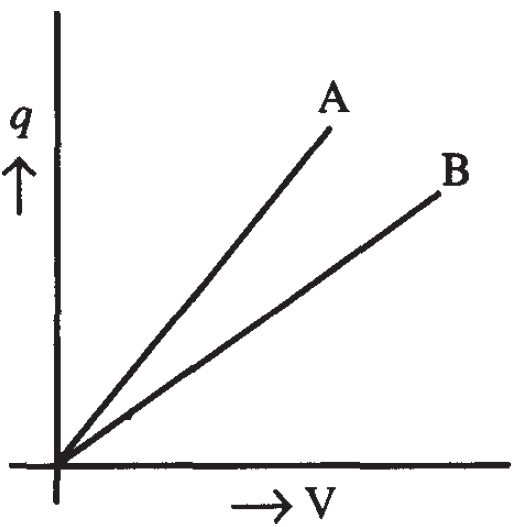
The given graph shows the variation of charge q versus potential difference V for two capacitors C1 and C2. The two capacitors have same plate separation, but the plate area of C2 is double than that of C1. Which of the lines in the graph correspond to C1 and C2 and why?

Explain that in day to day life we can't get coherent sources using two sodium lamps.
A rod of aluminum whose area of crosssection is $4.00 \times 10^{-6} m^2$. A current of 5.00 A is flowing through it. Find the drift velocity of electrons in the rod. Density of aluminium is and atomic mass is 27 . It is to be assumed that one electron is obtained from one atom.
A proton and an alpha particle having the same kinetic energy are, in turn, passed through a region of the uniform magnetic field, acting normal to the plane of the paper and travel in circular paths. Deduce the ratio of the radii of the circular paths described by them.
In Exercises 7.3 and 7.4, what is the net power absorbed by each circuit over a complete cycle. Explain your answer.
Write down the conditions for constructive and destructive interference in terms of path difference.