Question
Why do we group data?

Answer

The data obtained in original form are called raw data. Raw data does not give any useful information and is rather confusing to mind. Data is grouped so that it becomes understandable and can be interpreted. According to various characteristics groups are formed by us. After grouping the data, we are in position to make calculations of certain values which will help us in describing and analyzing the data.

Need a full question paper?

Generate a complete, print-ready paper with questions like this in minutes — across 16+ boards, with answer keys.
Start Generating Free

Similar questions

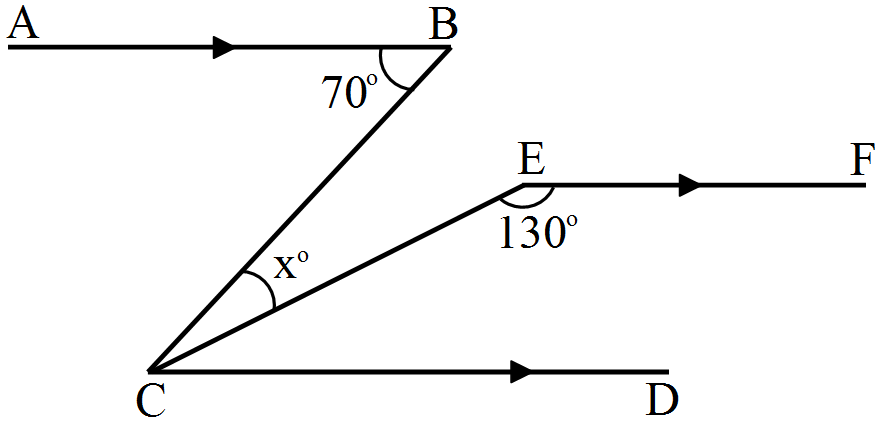
In the given figure, AB || CD || EF. Find the value of x.
Factorize:$\Big(\text{x}^2+\frac{1}{\text{x}^2}\Big)-4\Big(\text{x}+\frac{1}{\text{x}}\Big)+6$
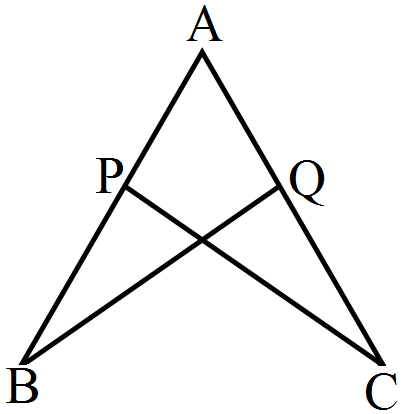
In the given figure, if $\text{AB}=\text{AC}$ and $\angle\text{B}=\angle\text{C}.$ Prove that $\text{PQ}=\text{CP}.$
If a hollow sphere of internal and external diameters $4cm$ and  $8cm$ respectively melted into a cone of base diameter $8cm$, then find the height of the cone.
Find the lateral surface area of a petrol storage tank is 4.2m in diameter and 4.5m high. How much steel was actually used, if $\frac{1}{12}$ of the steel actually used was wasted in making the closed tank?
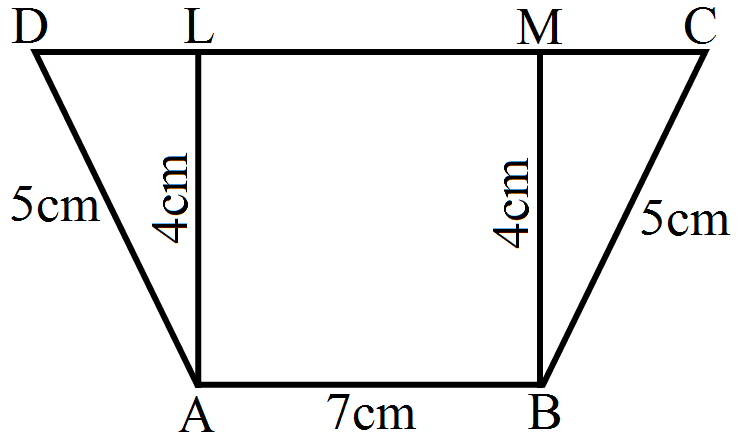
In the adjoining figure, ABCD is a trapezium in which AB || DC; AB = 7cm; AD = BC = 5cm and the distance between AB and DC is 4cm. Find the length of DC and hence, find the area of trap. ABCD.
Given below is a cumulative frequency distribution table showing ages of the people living in a locality:
Age in years
No. of years
Above 108
0
Above 96
1
Above 84
3
Above 72
5
Above 60
20
Above 48
158
Above 36
427
Above 24
809
Above 12
1026
Above 0
1124
Prepare a frequency distribution table.
Locate $\sqrt{10}$ on the number line.
It being given that $\sqrt{3}=1.732,\sqrt{5}=2.236,\sqrt{6}=2.449$ and $\sqrt{10}=3.162,$ find to three places of decimal, the value of the following:$\frac{3+\sqrt{5}}{3-\sqrt{5}}$
In a cricket match, a batsman hits a boundary 6 times out of 30 balls he plays. Find the probability that a ball played:
  1. He hit boundary
  2. He does not hit a boundary.