Gujarat BoardEnglish MediumSTD 12 ScienceBIOLOGYMolecular Basis of Inheritance3 Marks
Question
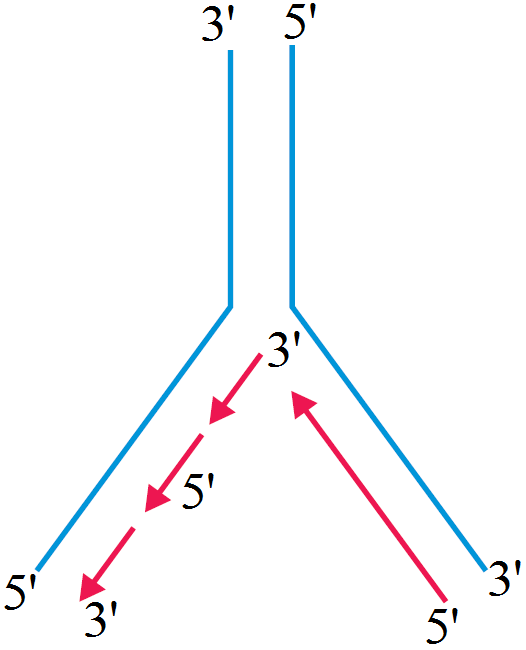
Why do you see two different types of replicating strands in the given DNA replication fork? Explain. Name these strands.
✓
Answer
Both the strands of parent DNA function as template strands.
On the template strand with 3' → 5' polarity, the new strand is synthesised as a continuous stretch as the DNA polymerase can carry out polymerisation of the nucleotides only in 5' → 3' direction; this is called continuous synthesis and the strand is called leading strand.
On the other template strand with 5 → 3' polarity, the new strand is synthesised from the point of replication fork, also in 5' → 3' direction, but in short stretches; they are later joined by DNA-ligases to form a strand, called lagging strand.
Need a full question paper?
Generate a complete, print-ready paper with questions like this in minutes — across 16+ boards, with answer keys.