Question
Why is Agrobacterium tumefaciens a good cloning vector? Explain.

Answer

If any desired/foreign gene is linked with, Ti plasmid of Agrobacterium tumefaciens, The bacterium is modified into non-pathogenic, Plasmid is cloned into multiple copies, Can delivered into a variety of plants, Desired chemical will be produced.

Need a full question paper?

Generate a complete, print-ready paper with questions like this in minutes — across 16+ boards, with answer keys.
Start Generating Free

Similar questions

Discuss the significance of heavy isotope of nitrogen in the Meselson and Stahl’s experiment.
Describe the initiation process of transcription in bacteria.
Discuss: "Different levels of biodiversity".
Name the specific enzyme responsible for nucleotide polymerisation in DNA replication. Write two characteristic features of this enzyme. Name the region on E.coli DNA, where this enzyme can initiate replication.
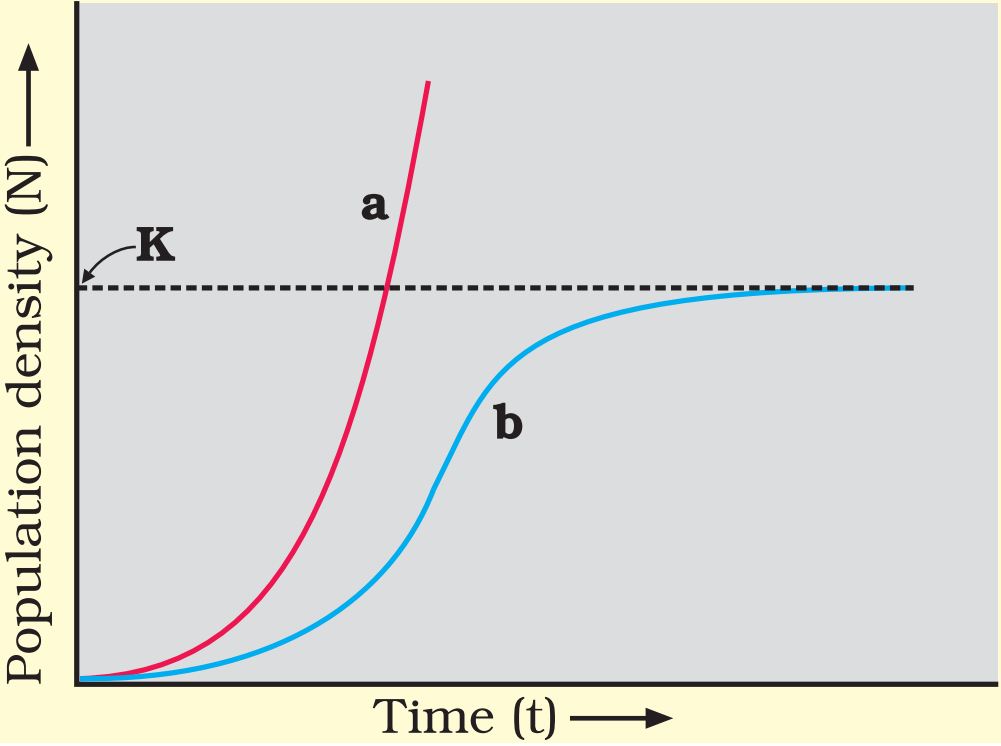
Study the population growth curves in the graph given below and answer the questions which follow?

  1. Identify the growth curves 'a' and 'b'.
  2. Which one of them is considered a more realistic one and why?
  3. If $\frac{\text{dN}}{\text{dt}}=\text{r N}\Big(\frac{\text{K}-\text{N}}{\text{K}}\Big)$ is the equation of the logistic growth curve, what does K stand for?
  4. What is symbolised by N?
Recombinant DNA-technology is of great importance in the field of medicine. With the help of a flow chart, show how this technology has been used in preparing genetically engineered human insulins.
What is Saheli? Write any three differences between Saheli and Multiload 375.
How do you distinguish between humification and mineralisation?
A person is born with a hereditary disease with a weakened immune system due to deficiency of an enzyme. Suggest a technique for complete cure for this disease, identify the deficient enzyme and explain the technique used for cure.
Digrammatically represent the experimental steps in cloning and expressing an human gene (say the gene for growth hormone) into a bacterium like E. coli ?