Question
Why is it important to use SI units while recording measurements?

Answer

→ Using SI units is super important in science, engineering, and everyday life because it makes sure everyone is on the same page. SI, which stands for the International System of Units, gives us a standard set of units like meters for length, kilograms for mass, and seconds for time. The significance includes:
→ SI units are recognized and used almost everywhere in the world.
→ This means that scientists, engineers, and people from different countries can easily understand and compare measurements without confusion.
→ The SI system is based on powers of 10, which makes conversions and calculations much simpler.
→ example, converting meters to kilometers is just a matter of multiplying or dividing by 1000.
→ Using SI units reduces the chance of errors in measurements and calculations.
→ When everyone uses the same units, it's easier to ensure that results are accurate and reliable.
→ SI units provide a common language for expressing measurements.
→ This makes it easier for people in different fields to communicate and share information effectively.
→ Using SI units promotes fair and consistent trade practices between countries.
→ When measurements are standardized, it's easier to ensure that products meet quality standards and are priced fairly.
Need a full question paper?

Generate a complete, print-ready paper with questions like this in minutes — across 16+ boards, with answer keys.

Start Generating Free

Similar questions

“Forest is a dynamic entity, full of life and vitality”. Explain briefly.
How can you use onions as an olfactory indicator?
Draw in your notebook the symbols to represent the following components of electrical circuits: connecting wires, switch in the ‘OFF’ position, bulb, cell, switch in the ‘ON’ position, and battery
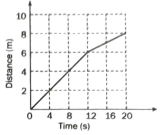
Given below in a figure is the distance-time graph of the motion of an object.
Image
(i) What will be the position of the object at 20 s?
(ii) What will be the distance travelled by the object in 12 s?
(iii) What is the average speed of the object?
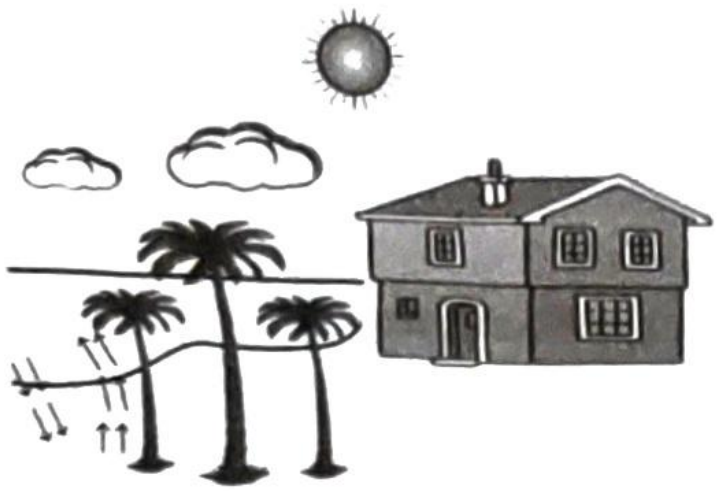
The question assesses the student's ability to identify and explain heat transfer process in real life situations.
Image
(i) By what method of heat transfer does heat energy from the sun reach the earth?
(ii) Select the process of heat transfer which causes a breeze (wind) over land and sea. 
(a) Conduction $\quad$ (b) Convection $\quad$ (c) Radiation
(iii) Explain in term of heat transfer, why houses at coastal area often have their windows facing the sea?
(iv) Suggest two domestic insulation techniques that the houses build at coastal areas could have to maintain constant temperatures.
Explain with the help of an activity that when seven colours are mixed together, then white colour is formed.
Compare images formed by a pinhole camera and a plane mirror.
Describe an activity to test the nature of substances using litmus paper.
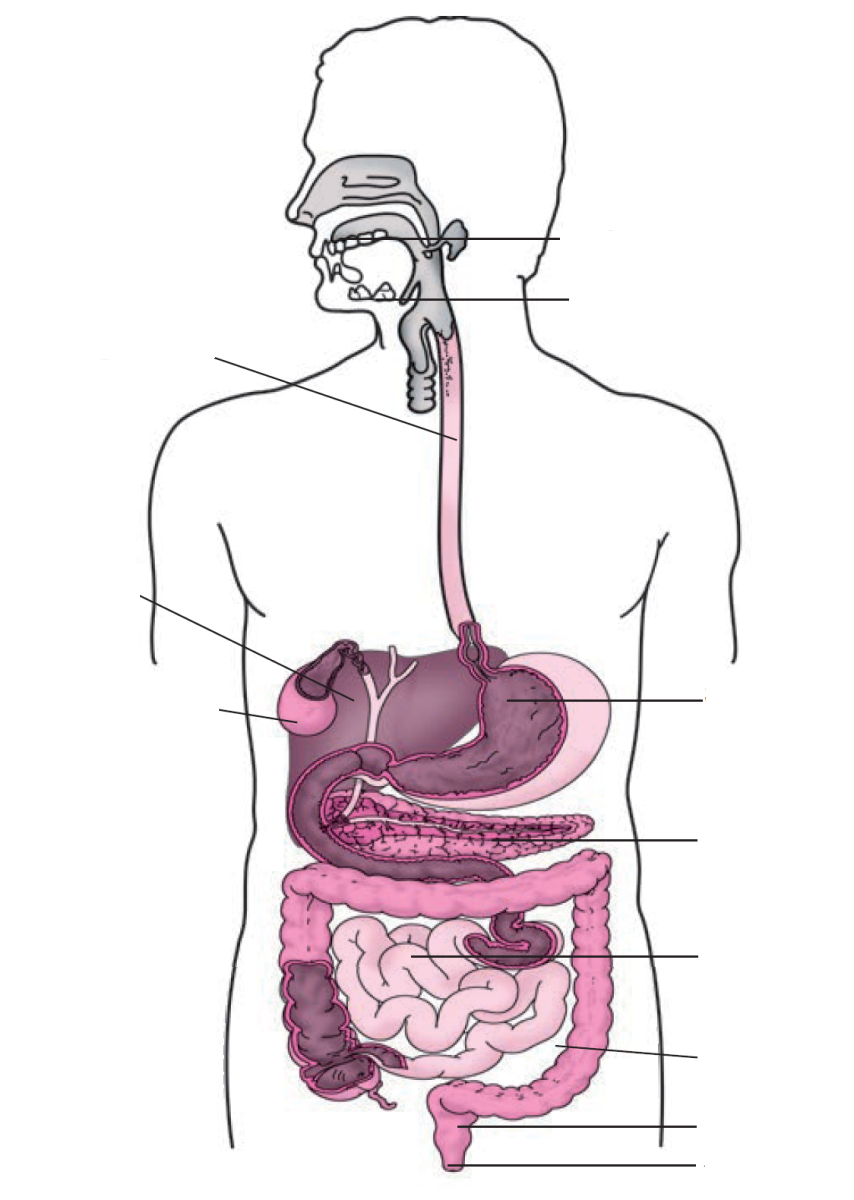
Label the following fig of digestive system.
Image
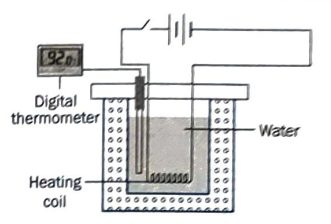
A student performs an experiment where he uses a heating coil to heat the water as shown in the figure. The initial temperature of the water is measured as $10^{\circ} C$. After switching it ON for 5 min, the student records the temperature of the water as $18^{\circ} C$.
Image

The water is allowed to return back to its initial temperature. The activity is then repeated with another heating coil having half the length of the original heating coil. He notices that after 5 min, the temperature of the water reads $14^{\circ} C$. Which statement can be concluded based on the activity?
(a) Reading on thermometer reduces with time.
(b) Temperature of water drops with every repetition.
(c) Length of the material affects the amount of heating.
(d) Temperature of the water increases after a certain period of time.