Question
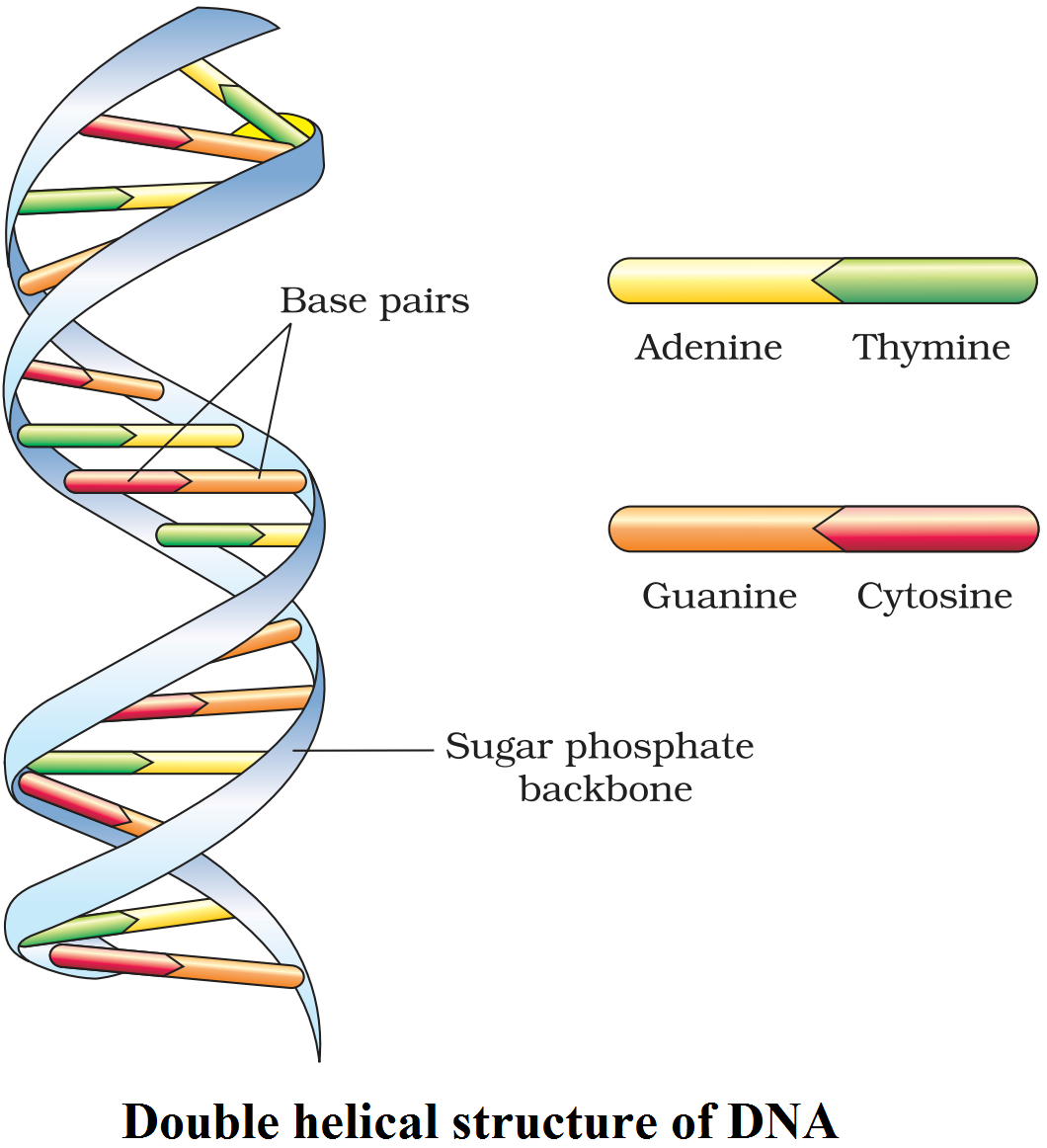
With the help of a diagram explain the structure of DNA.

Answer

The structure of DNA is detailed below:
  1. Deoxyribonucleic acid (DNA) is composed of two polynucleotide strands which form a ladder.
  2. The nitrogenous bases in DNA store the information for the synthesis of polypeptide chains, essentially coding for every feature of the entire organism.
  3. The two polynucleotide strands run 'antiparallel' (in opposite directions, parallel to one another) to each other, with nitrogenous bases projecting inwards.
  4. The antiparallel strands twist in a complete DNA structure, forming a double helix.
  5. The strands are held together by hydrogen bonds between the nitrogenous bases which lie opposite to each other.
  6. Bases bonded together are termed 'paired' and are very specific as to which base they will join.
  7. A purine will only pair with a pyrimidine. The purine adenine will always pair with the pyrimidine thymine (A-T). The purine guanine will only pair with the pyrimidine cytosine (G-C). These base pairings are termed complementary base pairings.
  8. Purines will always bond with pyrimidines because purines are larger molecules composed of a double ring structure. So, in order to ensure that the polynucleotide strands are equally spaced apart, the larger bases must pair with the smaller bases.
  9. The root for specific complementary base pairings is the number of hydrogen bonding sites available. Adenine and thymine have two sites each, whereas guanine and cytosine have three sites each.

Need a full question paper?

Generate a complete, print-ready paper with questions like this in minutes — across 16+ boards, with answer keys.

Start Generating Free

Similar questions

  1. What is a trophic level in an ecosystem? What is ‘standing crop’ with reference to it?
  2. Explain the role of the ‘first trophic level’ in an ecosystem.
  3. How is the detritus food chain connected with the grazing food chain in a natural ecosystem?
What is spermatogenesis? Explain the process briefly.
  1. Draw a labelled diagrammatic view of human male reproductive system.
  2. Differentiate between:
  • Vas deferens and Vasa efferentia.
  • Spermatogenesis and spermiogenesis.
Observe the representation of genes involved in the lac operon given below.
  1. Identify the region where the repressor protein will attach normally.
  2. Under certain conditions repressor is unable to attach at this site. Explain.
  3. If repressor fails to attach to the said site what products will be formed by z, y and a?
  4. Analyse why this kind of regulation is called negative regulation.
One chromosome contains one molecule of DNA. In eukaryotes the length of the DNA molecule is enormously large. Explain how such a long molecule fits into the tiny chromosomes seen at metaphase.
a. Draw the embryo sac of a flowering plant and label the following:
i. Central cell
ii. Chalazal end
iii. Synergids
b. Name the cell and explain the process it undergoes to develop into an embryo sac.
c. Explain the development of endosperm in coconut.
Describe the structure of human sperm.###Describe the structure of sperm with suitable diagram. Also define supermatogenesis.
Discuss the different barrier of innate immunity.
Discuss transgenic animals. Explain any four ways in which such animals can be beneficial for humans.
  1. How is artificial hybridisation considered a crop improvement programme?
  2. Explain the process of artificial hybridisation, if
  1. Female parent bears bisexual flowers.
  2. Female parent bears unisexual flowers.