Question
Write a note on relationship between Accounting Information System, Manufacturing Information System and Human Resource System.
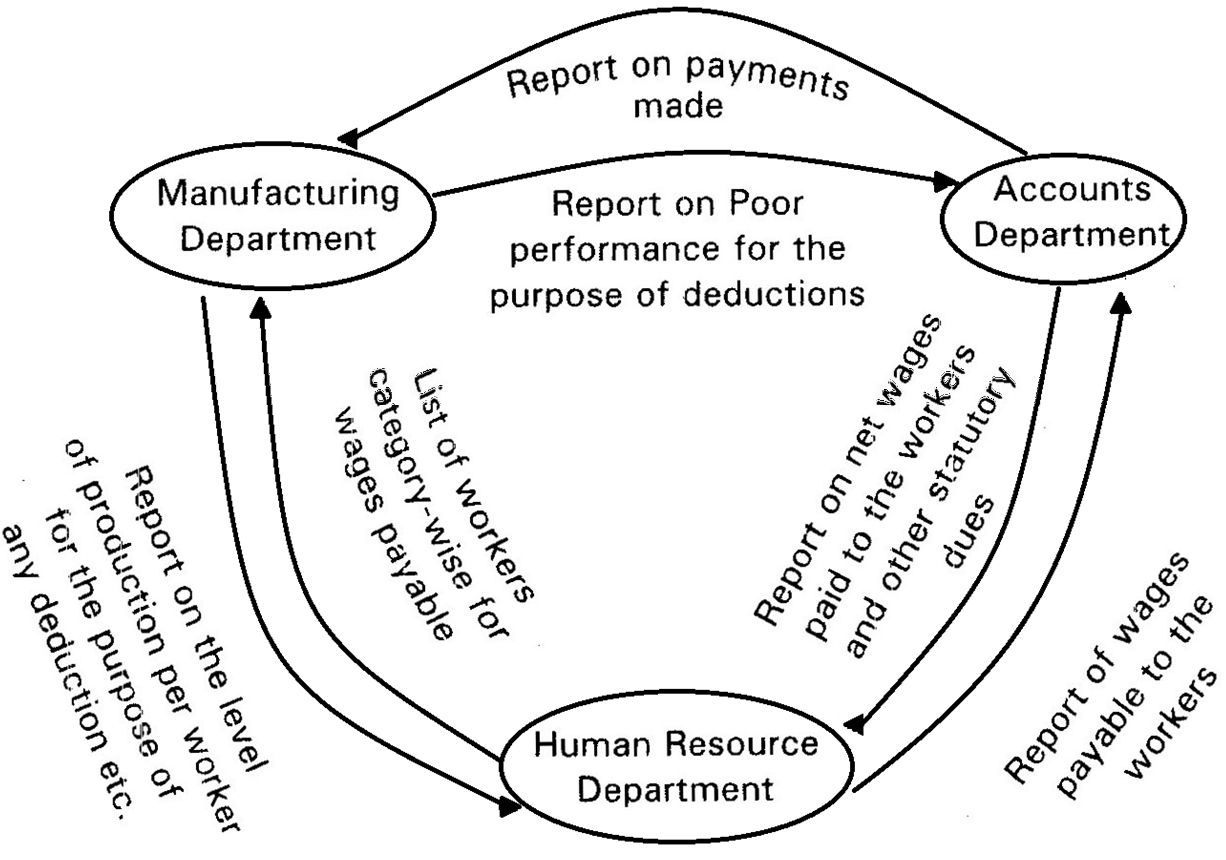 The above diagram depicts how the three functional departments are mutually related. The human resource department sends a list of number of workers, their category their level of skill etc. to the manufacturing department and to the accounts department. The manufacturing department on receiving such list sends a report of level of production achieved by each worker and other deductions to be made from their wages on various Accounts. This report is send by the manufacturing department to both Accounts department as well as the HR department. The accounts department on receiving such reports make its own calculations of the various statutory payments and dues of the workers and make the final payments and send the report of the same to both HR Department as well as the manufacturing department to monitor the performance of the workers.
Generate a complete, print-ready paper with questions like this in minutes — across 16+ boards, with answer keys.
|
2019
|
|
₹
|
|
June 1
|
Cash Balance
|
5,000
|
|
June 1
|
Bank Balance
|
17,500
|
|
June 5
|
Cash received from sale of personal asset deposited in firm's account
|
5,000
|
|
June 6
|
Cheque received as advance against sale, paid into bank
|
50,000
|
|
June 7
|
Paid S. Bose by cheque
|
12,500
|
|
|
Discount received
|
200
|
|
June 9
|
Paid wages in cash
|
3,000
|
|
June 20
|
Received a cheque from A. Mukherjee and sent it to bank
|
6,000
|
| June 21 | Drawn from Bank | 5,000 |
| June 29 | Paid office salaries in cash | 4,000 |
| June 30 | Sold goods in cash for ₹ 8,000 plus CGST and SGST @ 6% each and banked the same | |
| June 30 | Paid rent by cheque including CGST and SGST @ 6% each | 1,120 |
| June 30 | Paid into Bank | 7,500 |
| 2019 | ₹ | |||
| April 1 | Cash balance ₹ 2,000, bank balance ₹ 24,500 | |||
| April 2 | Cash sales ₹ 60,000 plus CGST and SGST @ 6% each | |||
| April 5 | Deposited in Bank | 50,000 | ||
| April 7 | Issued cheque to Sohan | 10,000 | ||
| April 9 | Sold goods for cash ₹ 10,000 plus CGST and SGST @ 6% each | |||
| April 12 | Received a cheque from National Insurance Co. Ltd. against claim lodged last year | 19,800 | ||
| April 14 | Sold goods to Niraj of ₹ 25,000 plus CGST and SGST @ 6% each, received cash ₹ 10,000 and balance by cheque. Allowed him discount ₹ 500 | |||
| April 16 | Purchased furniture for ₹ 10,000 plus CGST and SGST @ 6% each, paid for furniture by cheque | |||
| April 18 | Sold old furniture for ₹ 10,000 plus CGST and SGST @ 6% each and received cash | |||
| April 20 | Paid into bank cheque of Niraj and cash | 2,500 | ||
| April 22 | Paid to Suman by cheque | 2,500 | ||
| April 26 | Suman's cheque returned on technical ground and paid cash for equal amount | |||
| April 28 | Bank charged its commission of ₹ 300 plus CGST and SGST @ 6% each | |||
| April 29 | Bank paid insurance premium as per standing instructions | 2,500 | ||
| April 30 | Nigam paid into bank directly, intimation received on the same day | 5,000 | ||