Question
Write a note on types of Assets with one example of each.

Answer

Assets in the Balance Sheet are divided into two parts as follows:
  1. Fixed Assets: Fixed Assets are those assets that are acquired for continued use and not for resale. They may be tangible assets like land, building, plant and machinery, furniture and fixtures, etc., or intangible assets like goodwill, patents, etc.
  1. Tangible Fixed Assets are those fixed assets which can be seen and touched, e.g., Land and Building, Plant and Machinery, Furniture, etc.
  2. Intangible Fixed Assets are those fixed assets which are not in a physical form, i.e., they can neither be seen nor touched, e.g, goodwill of a firm or the know-how which it possesses, patents, trademarks, coputer software, etc.
  1. Current Assets: Thssets: These are the assets of business which are held for reslae or for converting into cash. These are the assets which are likely to be realised within a period of one year or during the period of normal operating cycle. A business earns profit by sale of these assets but not by keeping them in hand. Examples are unsold goods, debtors, bills receivalbe, bank balance, cash in hand, etc. These assets are temporary in nature and may change from time to time. These are sometimes referred to as floating or circulating assets.

Need a full question paper?

Generate a complete, print-ready paper with questions like this in minutes — across 16+ boards, with answer keys.

Start Generating Free

Similar questions

What do you understand by Grouping of Accounts?
Which of the following errors will affect the Trial Balance?
  1. The total of the Sales Book has not been posted to the Sales Account.
  2. ₹ 1,000 paid as installation charges of a new machine has been debited to Repairs Account.
  3. Goods costing ₹ 4,000 taken by the proprietor for personal use have been debited to Debtors’ Account.
  4. ₹ 1,000 paid for repairs to building have been debited to Building Account.
What are Direct Expenses? Give two examples.
Record the following transactions in the Purchases Return Book of Kamla Stores, Delhi for April, 2019:
2019  
April 6 Returned goods to Ramesh Brothers, Delhi purchased for ₹ 5,000 plus CGST and SGST @ 6% each
April 8 Returned goods to Sohan Brothers, Meerut purchased for ₹ 10,000 plus IGST @ 12%
April 17 Returned goods to Mahesh Brothers of ₹ 2,000 plus CGST and SGST @ 6% each
Give the similarities of Cash Book with Journal?
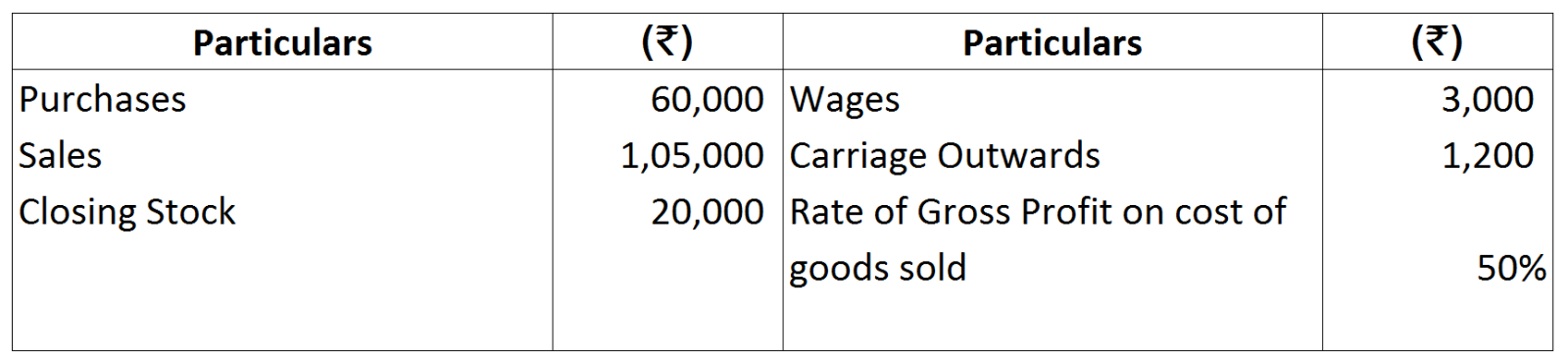
From the following particulars, ascertain the value of Opening Stock:
Rectify the following errors by passing Journal entries:
  1. Old furniture sold for ₹ 500 has been credited to Sales Account.
  2. Machinery purchased on credit from Raman for ₹ 2,000 recorded through Purchases Book as ₹ 16,000.
  3. Cash received from Rajat ₹ 5,000 was posted to the debit of Bhagat as ₹ 6,000.
  4. Depreciation provided on machinery ₹ 3,000 was posted to Machinery Account as ₹ 300.
Creditors on 1st April, 2017 were ₹ 15,000, Purchases on credit were ₹ 30,000, Cash paid to Creditors during 2017-18 was ₹ 20,000, Returns Outward (regarding credit purchases) were ₹ 1,000 and Bills Payable accepted during the year ₹ 10,000. Find the balance of Creditors on 31st March, 2018.
Define a Trial Balance. Why is it prepared?
How is a Bank Reconciliation Statement prepared?