Question
Write a short note on uterus.

Answer

Uterus (Womb):
  • It is a single, hollow, muscular, pear-shaped structure supported by ligaments and attached to the pelvic wall.
  • It is present between the urinary bladder and the rectum.
  • The lower part of the uterus is very narrow and is called cervix. The cavity of the cervix is called cervical canal, which forms the birth canal along with vagina.
  • The wall of the uterus has three layers of tissue:
  • Perimetrium: Outer, thin covering of the uterus wall.
  • Myometrium: Middle, thick layer of smooth muscle fibres which contracts strongly during delivery of the baby.
  • Endometrium: Inner layer, that contains glands and many blood vessels. It undergoes cyclical changes during the menstrual cycle.

Need a full question paper?

Generate a complete, print-ready paper with questions like this in minutes — across 16+ boards, with answer keys.

Start Generating Free

Similar questions

Study the 3 representative figures of age pyramid relating to human population given below and answer the following question:

  1. Mention the names given to the 3 kinds of age profiles (i), (ii), and (iii).
  2. Which one of them is ideal for a population and why?
  3. How do such age-profile studies help policy makers get concerned about our growing population and prepare for future planning? (say for example: for the year 2022.)
[Hint. The age profile you would name as stable was prepared on the data available on January 2007].
Answer the following questions:

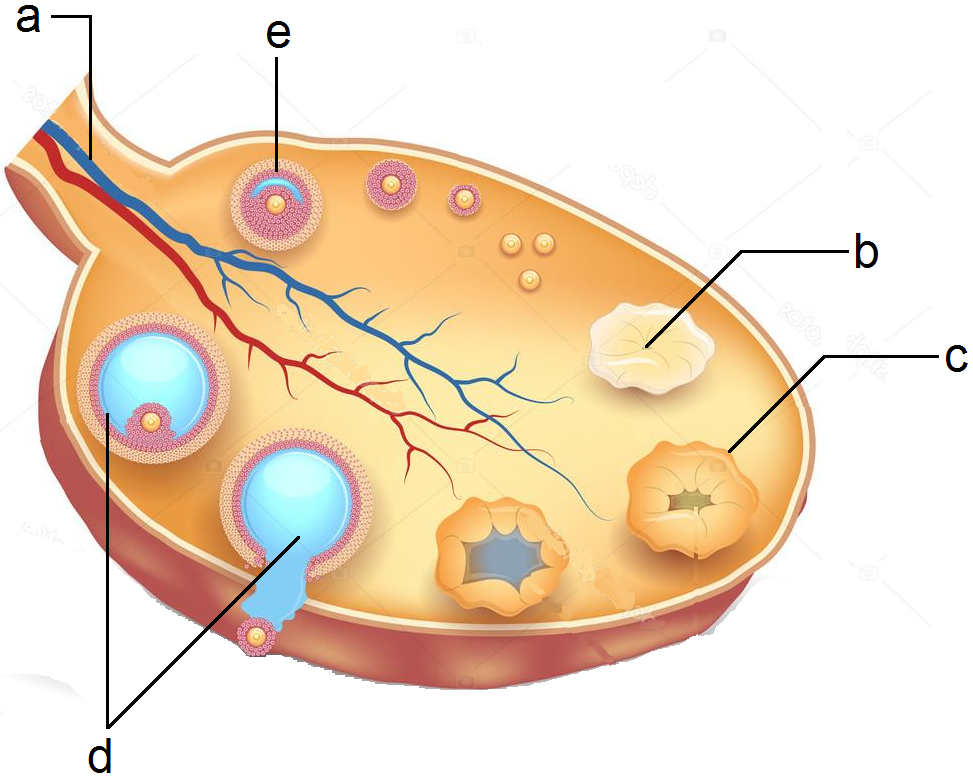
Given below is the T.S. of human ovary. Identify the following in the diagram:

  1. Corpus luteum.
  2. Secondary oocyte.
  3. Antrum.
  4. Primary follicle.
  5. Blood vessels.
What is Gametogenesis? Explain in detail the process of spermatogenesis and oogenesis.
If a population growing exponentially double in size in 3 years, what is the intrinsic rate of increase (r) of the population?
What are the various advantages of using genetically modified plants to increase the overall yield of the crop?
A true breeding pea plant homozygous for axial violet flowers is crossed with another pea plant with terminal white flowers (aavv).
List the Mendel’s generalisations that can be derived from the above cross.
Thalassemia and haemophilia are both Mendelian disorders related to blood. Write the symptoms of the diseases. Explain with the help of crosses the difference in the inheritance pattern of the two diseases.

OR

Why are thalassemia and hemophilia categorised as Mendelian disorders? Write the symptoms of these diseases. Explain their pattern of inheritance in humans. Write the genotypes of the normal parents producing a haemophilic son.

Name any two chromosomal aberration associated disorders.
State the Mendelian principle which can be derived from such a cross and not from monohybrid cross.
Explain the process of fertilisation in human female, and trace the postfertilisation events in a sequential order up to implantation of the embryo.

OR

Explain the process of fertilisation and implantation in humans.