Question
Write a short note.
Homologous series

Answer

  1. The series of carbon compounds formed by joining the same functional group in the place of a particular hydrogen atom on the carbon chains having sequentially increasing length is called homologous series.
  2. There are different homologous series in accordance with the functional group. For example, homologous series of alcohols, homologous series of carboxylic acids, homologous series of aldehydes, etc.
  3. All the members of the homologous series are homologues of each other and they can be represented by the same general molecular formula.
  4. Physical properties generally show a gradual change with the increase in molecular mass in the series whereas chemical properties of the members of the series show similarity because of the presence of the same functional group in them.

Need a full question paper?

Generate a complete, print-ready paper with questions like this in minutes — across 16+ boards, with answer keys.
Start Generating Free

Similar questions

Name the defect of vision which can be corrected by a diverging lens. Show clearly by a ray diagram how the lens corrects the defect.
Giving their structures, state the number of single bonds, double bonds and triple bonds in the following compounds:
  1. Ethyne.
  2. Ethene.
  3. Benzene.
Compare and contrast biomass and hydroelectricity as sources of energy.
How does the tendency to lose electrons change as we go down in group 1 of the periodic table? Why does it change this way?
Leaves of a healthy potted plant were coated with vaseline. Will this plant remain healthy for long? Give reason for your answer.
A convex lens produces an inverted image magnified three times of an object placed at a distance of 15cm from it. Calculate focal length of the lens.
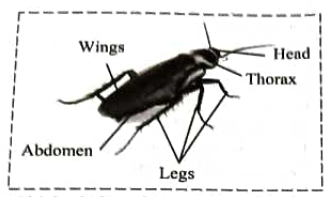
Observe the following diagram. Write the answers of the following questions.
Image
i. To which phylum does the animal included in the diagram belong?
ii. What is the exoskeleton made up?
iii. What is the symmetry?
Explain briefly, how rainwater harvesting is done from open spaces around the buildings in city areas.
In the nuclear reactor of a power plant:
  1. How do control rods control the rate of fission?
  2. How is heat removed from the reactor core, and what use is made of this heat?
When a piece of limestone reacts with dilute HCl, a gas X is produced. When gas X is passed through lime water then a white precipitate Y is formed. On passing excess of gas X, the white precipitate dissolves forming a soluble compound Z.
  1. What are X, Y and Z?
  2. Write equations for the reactions which take place:
  1. When limestone reacts with dilute HCl.
  2. When gas X reacts with lime water to form white precipitate Y.
  3. When excess of gas X dissolves white precipitate Y to form a soluble compound Z.