Question
Write an essay on crop protection management.

Answer

Crop protection is the science and practice of managing plant diseases, weeds and other pests (both vertebrate and invertebrate) that damage agricultural crops and forestry. Agricultural crops include field crops (maize, wheat, rice, etc), vegetable crops (potatoes, cabbages, etc) and fruits. The crops in field are exposed to many factor. The crop plants may be damaged by insects, birds, rodents, bacteria, etc.
The management of crop protection includes:
  1. Pesticide-based approaches such as herbicides, insecticides and fungicides.
  2. Biological pest control approaches such as cover crops, trap crops and beetle banks.
  3. Barrier-based approaches such as agrotextiles and bird netting.
  4. Animal psychology-based approaches such as bird scarers.
  5. Biotechnology-based approaches such as plant breeding and genetic modification.
Need a full question paper?

Generate a complete, print-ready paper with questions like this in minutes — across 16+ boards, with answer keys.

Start Generating Free

Similar questions

Explain the transformation of energy in the following cases:
  1. A ball thrown upwards.
  2. A stone dropped from the roof of a building.
What do you mean by passive and active transport? Write a note on diffusion.
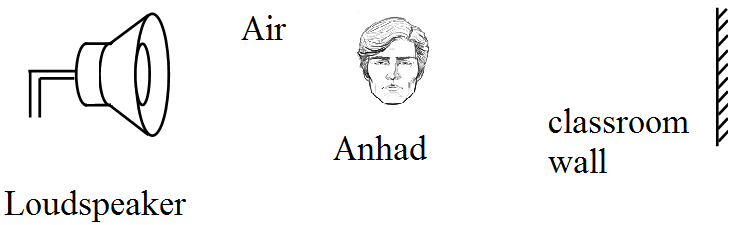
In an experiment, Anhad studies sound waves. He sets up a loudspeaker to produce sound as shown below:
Anhad adjusts the signal to the loudspeaker to give a sound of frequency 200Hz.
  1. What happens to the air in-between Anhas and the loudspeaker?
  2. Explain how Anhad receives sound in both ears.
A truck of mass $M$ is moved under a force $F.$ If the truck is then loaded with an object equal to the mass of the truck and the driving force is halved, then how does the acceleration change?
A train travels the first 15km at a uniform speed of 30 km/h; the next 75km at a uniform speed of 50km/h; and the last 10km at a uniform speed of 20km/h.
Calculate the average speed for the entire train journey.
One of the forms of a naturally occurring solid compound $P$ is usually used for making the floors of houses. On adding a few drops of dilute hydrochloric acid to $P,$ brisk effervescence are produced. When $50g$ of reactant $P$ was heated strongly, than $22g$ of a gas $Q$ and $28g$ of a solid $R$ were produced as products. Gas $Q$ is the same which produced brisk effervescence on adding dilute $\text{HCl}$ to $P.$ Gas $Q$ is said to cause global warming whereas solid $R$ is used for white$-$washing.
  1. What is $(i)$ solid $P (ii)$ gas $Q,$ and $(iii)$ solid $R.$
  2. What is the total mass of $Q$ and $R$ obtained from $50g$ of $P$?
  3. How does the total mass of $Q$ and $R$ formed compare with the mass of $P$ taken?
  4. What conclusion do you get from the comparison of masses of products and reactant?
  5. Which law of chemical combination is illustrated by the example given in this problem?
Explain composite fish culture system with examples. State the major problem associated with this system. Can fish culture be done in any type of combination? If yes, explain.
$A, B$ and $C$ are all liquids. Liquid A has a comparatively low boiling point. On heating, liquid a vaporizes completely without leaving behind any residue. Liquid $A$ is being used increasingly as a fuel in motor vehicles either alone or by mixing with petrol. Liquid $B$ has a very high boiling point. It also vaporizes completely on heating, without leaving any residue. Liquid $B$ is a conductor of electricity and used in making thermometers. Liquid $c$ has a moderate boiling point. On heating, liquid $C$ vaporises leaving behind a white solid $D$ which is used in cooking vegetables. The condensation of vapours from $C$ give a liquid $E$ which turns anhydrous $CuSO_4$ to blue.
  1. Which liquid could be an element? Name this element.
  2. Which liquid could be a mixture? Name this mixture.
  3. Which liquid could be a compound? Name this compound.
  4. What could the solid $D$ be?
  5. What do you think is liquid $E$?
There is a water reservoir (river) near a village. Due to insufficient rain, farmers are worried about their crops. Suggest and explain the irrigation practice that can be adopted to supply water to the entire agricultural land in the village.
State and explain Kepler’s laws of planetary motion. Draw diagrams to illustrate these laws.