Question
Write down four main characters of Annelida.

Answer

  1. Body triploblastic, bilaterally symmetrical, soft, elongated, vermiform and cylindrical or dorsoventrally flattened.
  2. Exoskeleton absent; body is covered by a thin cuticle.
  3. Alimentary canal is tube-like, complete and extends straight from mouth to anus.
  4. Reproduction is by sexual means. Sexes may be united (hermaphroditic) or separate.
Example: Nereis (sand worm) and Hirudinaria (leech).

Need a full question paper?

Generate a complete, print-ready paper with questions like this in minutes — across 16+ boards, with answer keys.
Start Generating Free

Similar questions

Explain the methods of, prevention of malaria.
State and explain in brief the four major factors, which are causes of disease.
Calculate the density of an object of volume $3 \mathrm{~m}^3$ and mass $9 \ kg$ . State wheater this object will float or sink in water.
Give reason for your answer.
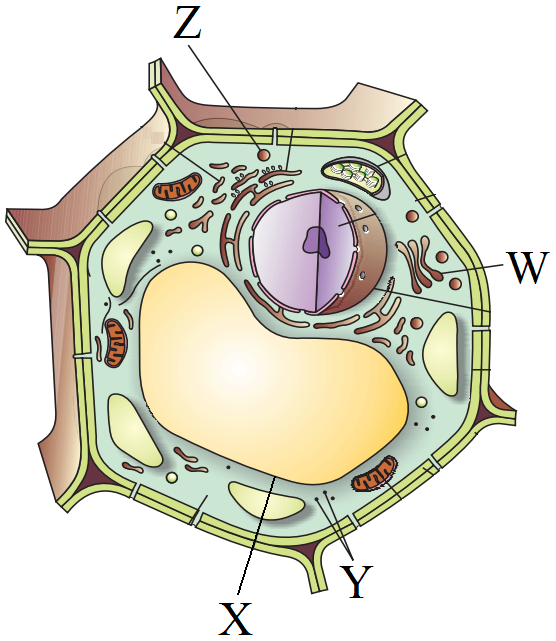
  1. Label $W, X, Y$, and $Z.$
  2. Which is the covering membrane of $X$ known as?
  3. Which of them contain hydrolytic enzymes?
  4. Which one of them takes part in storage modification and packaging of various chemicals?
Explain why, osmosis can be considered to be a special kind of diffusion. Classify the following into $(i)$ osmosis, and $(ii)$ diffusion:
  1. Swelling up of a raisin on keeping in water.
  2. Spreading of virus on sneezing.
  3. Earthworm dying on coming in contact with common salt.
  4. Shrinking of grapes kept in thick sugar syrup.
  5. Preserving of pickles in salt.
  6. Spreading of smell of cake being baked in the kitchen.
  7. Aquatic animals using oxygen dissolved in water during respiration.
An electron moving with a velocity of $5 \times 10^4 ms^{-1}$ enters into a uniform electric field and acquires a uniform acceleration of $10^4 ms^{-2}$ in the direction of its initial motion.
i. Calculate the time in which the electron would acquire a velocity double of its initial velocity.
ii. How much distance the electron would cover in this time?
State the universal law of gravitation. Name the scientist who gave this law.
How can you calculate the magnification of a microscope?
Define the terms ‘frequency’, ‘wavelength’ and ‘velocity’ of a sound wave. What is the relation between them?
Write the functions of parenchyma, collenchymas and sclerenchyma.