Question
Write short notes on:
- Mitochondria.
- Plastids.
Write short notes on:
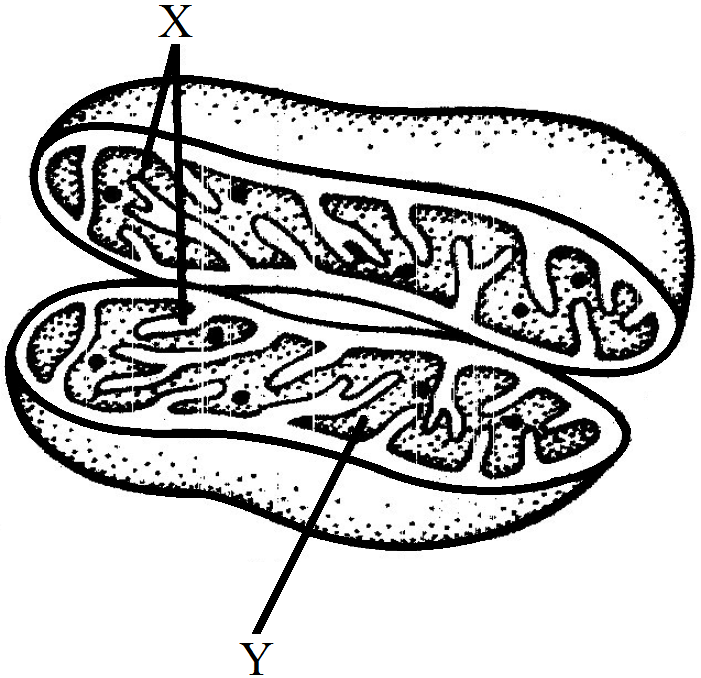
Mitochondria: The mitochondria are tiny bodies of varying shapes and size. Each mitochondria is bounded by a double membrane envelope. Outer membrane is porous. The inner membrane is thrown into folds. These folds are called cristae and are studded with small rounded bodies known as F1 particles or oxysomes. The interior cavity of the mitochondria is filled with a proteinaceous matrix which contains a few small-sized ribosomes, a circular DNA molecule and phosphate granules. Mitochondria are sites of cellular respiration.
Plastids: Plastids occur in most plant cells and are absent in animal cells. They have their own genome and ribosomes. There are three types of plastids: chromoplasts, chloroplasts and leucoplasts.
Generate a complete, print-ready paper with questions like this in minutes — across 16+ boards, with answer keys.
Describe some flight adapiations of the birds.
Identify the plant bodies, which are commonly named as “cryptogamae”. State and explain two characteristics which are exhibited by each category of these plant bodies.
Briefly describe:
Infectious agents.
Write a note on collenchymas.
List three groups of plants. Which plants are referred to as vascular plants? Out of these which group is further classified on the basis of number of cotyledon? State its two characteristics.
Write a note on lichens.
What is humus? What are its functions?
What is the difference between plasma membrane and cell wall? Give the functions of each one.