Read the following and answer any four questions from (i) to (v) given below: Stem cells hold the potential for manifold applications in biotechnology based next generation therapeutics. Scientists are trying to formulate better and more personalised treatment modalities against some seemingly irremediable diseases, by harnessing body's own stem cells and stem cell niche. Stem cells of different origin and level of potency are being investigated for tissue regeneration, treatment of bone defect, drug testing, gene therapy and cell based therapy for muscle damage, spinal cord injury, cancer therapy, etc. 'Tile properties of embryonic and adult stem cells to either self-renew or differentiate into multiple cell lineages make them an attractive source for cell therapies, tissue engineering and as model system for drug screening.
- Stem cells are widely used in medical research. Which property of stem cells makes them particularly useful in this research?
- They can be fused together to form a zygote.
- They can divide and eventually give rise to a whole organism.
- They can divide and be made to differentiate into various types of cell.
- They will continue to divide indefinitely.
- Stem cells can be divided into four main types. Which of the four types of stem cell can differentiate into a limited range of tissues?
- Adult stem cells.
- Embryonic stem cells.
- Fetal stem cells.
- Zygotic stem cells.
- Which feature of stem cells obtained from blood in the umbilical cord enables their use in the treatment of a variety of blood cancers?
- They can differentiate into bone marrow cells.
- They can differentiate into any cellular component of blood.
- They can replace blood stem cells affected by cancer.
- They are totipotent.
- The search for pluripotent stem cells is intense. The spennatogonium is the diploid precursor of haploid sperm in the development pathway of mouse gametes as shown below.
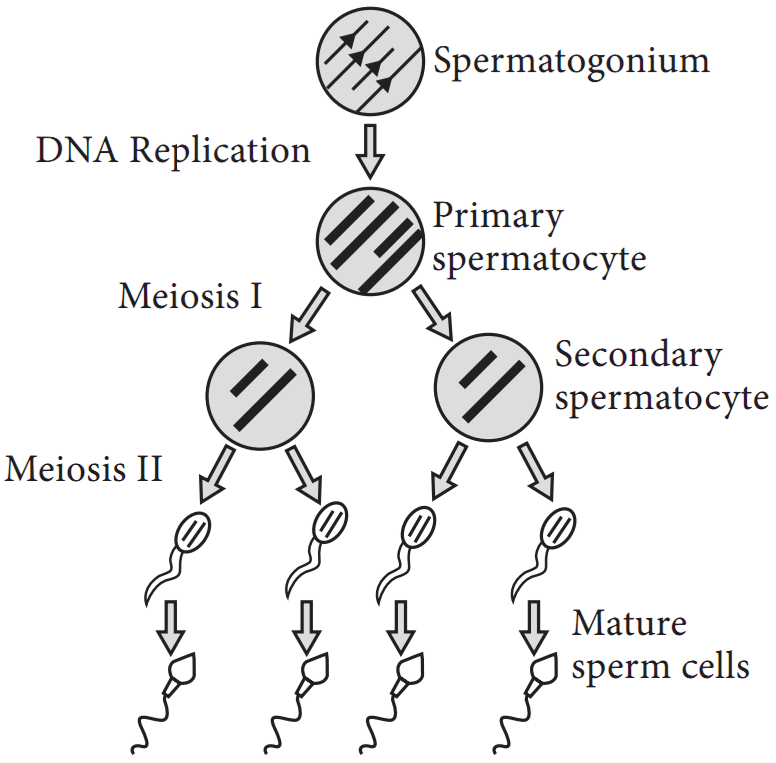
Scientists were interested to find out which stages of sperm development have stem cell capacity. Two experiments were carried out using sterile host males with testes that lacked germ cells. The results are shown in the table.
| | Type of cells used | Result |
| Experiment 1 | Secondary spermatocytes were injected | Fertility was not restored |
| Experiment 2 | Spermatogonia were injected | Fertility was restored for the rest of the mouse's life |
What property of a stem cell is missing in the secondary spermatocytes?
- Specialisation.
- Self-renewal.
- Commitment.
- A proper stem-cell niche.
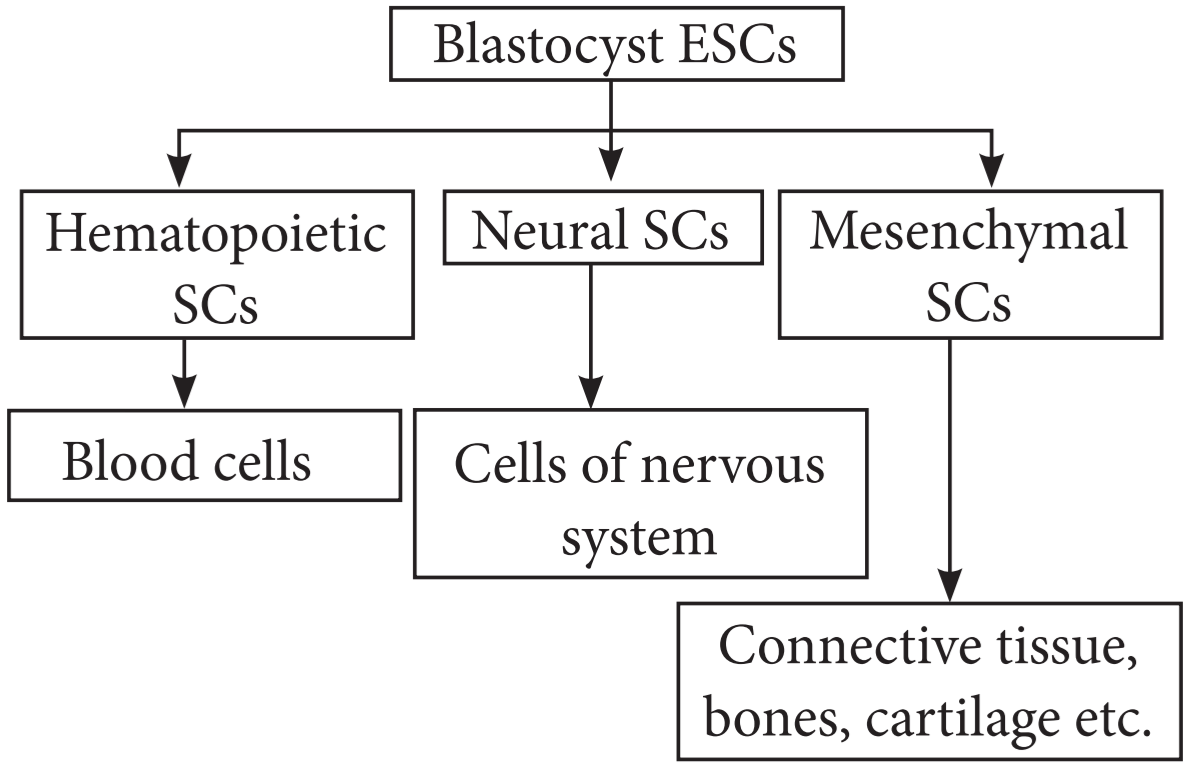
- Which feature of embryonic stem cells (ESCs) is illustrated below?
- ESCs are capable of dividing.
- ESCs are multipotent.
- ESCs are pluripotent.
- ES Cs show plasticity.
