Question
Write the chemical equation for the following conversion (not more than 2 steps):
Acetaldehyde to butane-1,3-diol.

Answer

$\text{CH}_3\text{CHO}\xrightarrow[\text{NaOH}]{\text{dilute}}\text{CH}_3\text{CH}-\text{CH}_2\text{CHO}\xrightarrow{\text{NaBH}_4}\text{CH}_3-\text{CH}-\text{CH}_2-\text{CH}_2\\ ^\text{Acetaldehyde}\ \ \ \ \ \ \ \ \ \ \ \ \ \ \ \ \ \ \ \ | \ \ \ \ \ \ \ \ \ \ \ \ \ \ \ \ \ \ \ \ \ \ \ \ \ \ \ \ \ \ \ \ \ \ \ \ \ \ \ \ \ \ \ \ \ \ \ \ \ \ \ \ | \ \ \ \ \ \ \ \ \ \ \ \ \ \ \ \ \ \ \ \ \ \ | \\ \ \ \ \ \ \ \ \ \ \ \ \ \ \ \ \ \ \ \ \ \ \ \ \ \ \ \ \ \ \ \ \ \ \ \ \ \ \text{OH} \ \ \ \ \ \ \ \ \ \ \ \ \ \ \ \ \ \ \ \ \ \ \ \ \ \ \ \ \ \ \ \ \ \ \ \ \ \ \ \ \ \ \ \ \ \ \ \text{OH}\ \ \ \ \ \ \ \ \ \ \ \ \ \ \ \ \ \text{OH}\\ \ \ \ \ \ \ \ \ \ \ \ \ \ \ \ \ \ \ \ \ \ \ \ \ \ \ \ \ \ \ \ \ \ \ \ \ \ \ \ \ \ \ \ \ \ \ \ \ \ \ \ \ \ \ \ \ \ \ \ \ \ \ \ \ \ \ \ \ \ \ \ \ \ \ \ \ \ \text{Butane}-1,3-\text{diol}$

Need a full question paper?

Generate a complete, print-ready paper with questions like this in minutes — across 16+ boards, with answer keys.
Start Generating Free

Similar questions

Explain with examples the terms weak and strong electrolytes.
Write chemical equations for the following reactions:
  1. Propanone is treated with dilute $\ce{Ba(OH)_2}$.
  2. Acetophenone is treated with $\ce{Zn(Hg)}$/ Conc. $\text{HCl}$
  3. Benzoyl chloride is hydrogenated in presence of $\ce{Pd/ BaSO_4}$.
Why Haloarenes undergo electrophilic substitution reactions at o and p - position? Why it is less reactive than benzene ?
Write the following reaction :
(i) Carbylamine reaction
(ii) Diazotization reaction
(iii) Hoffmann bromamide reaction
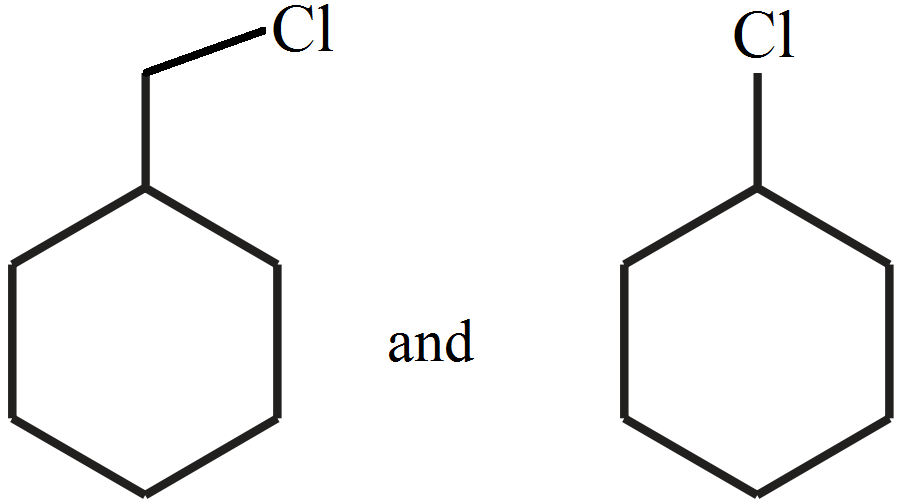
Answer the following questions: In the following pairs of halogen compounds, which would undergo $S_N1$ reaction faster? Explain.
(a) Write the product when D-glucose reacts with conc. $HNO_3$.
(b) Amino acids show amphoteric behaviour. Why?
(c) Write one difference between $\alpha$-helix and $\beta$-pleated structures of proteins.
How the following conversions can be carried out?
i. 2-Bromopropane to 1-bromopropane
ii. Chloroethane to butane
iii. Benzene to diphenyl
$3.9 g$ of benzoic acid dissolved in $49 g$ of benzene shows a depression in freezing point of $1.62 K.$ Calculate the van't Hoff factor and predict the nature of solute $($associated or dissociated$).$
$($Given: Molar mass of benzoic acid $= 122\ g\ mol^{-1}, K_f$ for benzene $= 4.9 K \ kg\ mol^{-1})$
  1. Which one of the following is a disaccharide: Starch, Maltose, Fructose, Glucose?
  2. What is the difference between fibrous protein and globular protein?
  3. Write the name of vitamin whose deficiency causes bone deformities in children.
Answer the following the questions.
Name the three major classes of carbohydrates and give an example of each of these classes.