Question
Write three ways by which we can conserve water.

Answer

  1. Harvesting of rainwater.
  2. Directing water from surplus areas to regions of scarcity.
  3. Controlling floods by interlinking of rivers.

Need a full question paper?

Generate a complete, print-ready paper with questions like this in minutes — across 16+ boards, with answer keys.
Start Generating Free

Similar questions

State the characteristics of the image formed by a plane mirror.

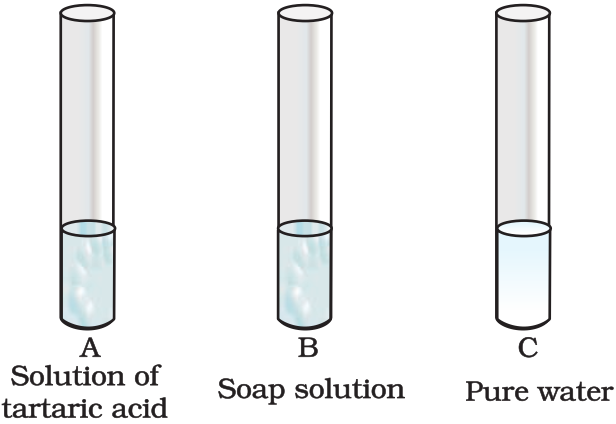
You are provided with three test tubes $A, B$ and $C$ as shown in figure with different liquids. What will you observe when you put:
  1. A piece of blue litmus paper in each test tube?
  2. A piece of red litmus paper in each test tube?
  3. A few drops of phenolphthalein solution to each test tube?
Make a table to show the donor blood group and recipient blood group.
If plant has a requirement for nitrogen, then from where will they obtain it?
Read the passage and answer the questions :
You are conducting an experiment where you add vinegar to baking soda. As soon as the two substances mix, there is a fizzing sound, and bubbles of gas begin to form, pass this gas through freshly prepared lime water. You observe that the lime water has turned milky due to formation of a precipitate.
Q.1. What type of change has occurred in this experiment?
(a) Physical change
(b) Chemical change
(c) Both physical and chemical change
(d) No change
Q.2. What is the gas that has been produced in this reaction?
(a) Oxygen$\quad$(b) Nitrogen
(c) Carbon dioxide$\quad$(d) Hydrogen
Q.3. What is the name of the white precipitate that forms in the solution?
(a) Calcium hydroxide
(b) Calcium carbonate
(c) Sodium bicarbonate
(d) Magnesium oxide
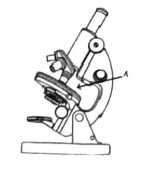
Label A denotes the lens used in microscope to see objects. Which type of lenses are used in the microscope which helps to see the microbes?
Image
Write one similarity and one difference between the nutrition in amoeba and human beings.
All the changes in the weather are caused by Sun. explain how?
Give the difference between weather and climate.
Explain the following:
  1. Galvanisation.
  2. Crystallisation.