MCQ
X-ray beam can be deflected:
- ABy an electric field.
- BBy a magnetic field.
- CBy an electric field as well aa by a magnetic field.
- DNeither by an electric field nor by a magnetic field.
Explanation:
Since X-rays do not have any charged particles, they are not deflected by an electric field or a magnetic field.
Generate a complete, print-ready paper with questions like this in minutes — across 16+ boards, with answer keys.
In an atomic bomb, the energy is released due to
|
(a) Chain reaction of neutrons and |
|
(b) Chain reaction of neutrons and |
|
(c) Chain reaction of neutrons and |
|
(d) Chain reaction of neutrons and |
We combined a convex lens of focal length f1 and concave lens of focal lengths f2 and their combined focal length was F. The combination of these lenses will behave like a concave lens, if
|
(a) f1 > f2 |
(b) f1 < f2 |
(c) f1 = f2 |
(d) f1 ≤ f2 |
The plate resistance of a triode is 2.5 × 10⁴ W and mutual conductance is 2 × 10⁻³ mho. What will be the value of amplification factor
|
(a) 50 |
(b) 1.25 × 10⁷ |
(c) 75 |
(d) 2.25 × 10⁷ |
If in a nuclear fusion process the masses of the fusing nuclei be  and
and  and the mass of the resultant nucleus be
  , then
(a) 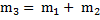
|
(b) 
|
(c) 
|
(d) 
|
4 eV is the energy of the incident photon and the work function in 2eV. What is the stopping potential
|
(a) 2V |
(b) 4V |
(c) 6V |
(d) 2 |


