MCQ
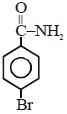
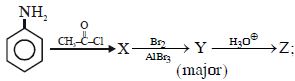
$Z$ is

  • B

  • C

  • D

Answer

Correct option: A.

a

Need a full question paper?

Generate a complete, print-ready paper with questions like this in minutes — across 16+ boards, with answer keys.

Start Generating Free

Similar questions

Butanal is an example of
In a chemical reaction $A$ is converted into $B$ . The rates of reaction, starting with initial concentrations of $A$ as $2 \times {10^{ - 3}}\,M$ and $1 \times {10^{ - 3}}\,M$ , are equal to $2.40 \times {10^{ - 4}}\,M{s^{ - 1}}$ and $0.60 \times {10^{ - 4}}\,M{s^{ - 1}}$ respectively. The order of reaction with respect to reactant $A$ will be
Hoffmann bromomide degradation of benzamide gives product $A$, which upon heating with $CHCl _{3}$ and $NaOH$ gives product $B$. The structures of $A$ and $B$ are
Assertion $A:$ Hydrolysis of an alkyl chloride is a slow reaction but in the presence of $NaI$, the rate of the hydrolysis increases.

Reason $R : I^{-1}$ is a good nucleophile as well as a good leaving group.

In the light of the above statements, choose the correct answer from the options given below.

What should be the freezing point of aqueous solution containing $17\,gm$ of ${C_2}{H_5}OH$ in $1000\,gm$ of water .......... $^oC$. (water ${K_f}$ $= 1.86$ $\deg - kg\,mo{l^{ - 1}}$)
Which of the following is not true about helium?
The correct order of basicity of amines in water is:
The total number of unpaired electrons present in the complex $K _{3}\left[ Cr \right.$ (oxalate) $\left._{3}\right]$ is ..........
$C _{6} H _{12} O _{6} \stackrel{\text { Zymase }}{\longrightarrow} A \underset{\Delta}{\stackrel{ Na O I }{\longrightarrow}} B + CHI _{3}$

The number of carbon atoms present in the product $B$ is $.....$

The correct decreasing order of $SN^2$ reactivity of following alkyl halide is

$\mathop {C{H_2} = CH - Br}\limits_{(I)} $     $\mathop {{\text{C}}{{\text{H}}_3} - Br}\limits_{\left( {II} \right)} $     $\mathop {\begin{array}{*{20}{c}}
  {C{H_3} - CH - Br} \\ 
  {|\,\,} \\ 
  {\,\,\,C{H_3}} 
\end{array}}\limits_{\left( {III} \right)} $    $\mathop {C{H_3}C{H_2}Br}\limits_{\left( {IV} \right)} $