Questions

questions in details [4 marks ]

🎯

Test yourself on this topic

11 questions · timed · auto-graded

Question 14 Marks
Give any four sources of sound in a market place.
Answer
The four sources of sound in a market place are:
$a.$ Vendors selling eatables or other things.
$b.$ Shopkeepers selling their things.
$c.$ Vehicles in the market area, example, autorickshaw, car, etc.
$d.$ Machines or generators noise.
View full question & answer
Question 24 Marks
Give two examples of each of the following:
$a.$ Stringed musical instruments.
$b.$ Wind musical instruments.
$c.$ Membrane musical instruments.
$d.$ Plate type musical instruments.
Answer
$a.$ Guitar, Veena.
$b.$ Flute, Trumpet.
$c.$ Tabla, Dholak.
$d.$ Cymbals, Matka.
View full question & answer
Question 34 Marks
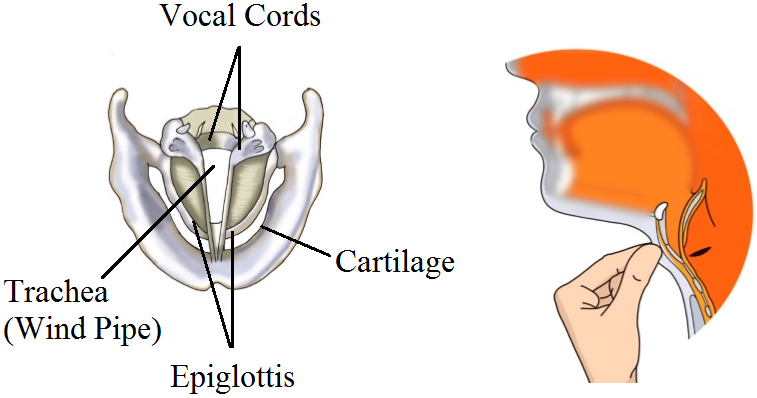
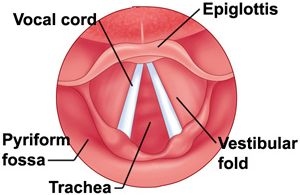
Draw a labelled diagram of larynx and explain its functions.
Answer
In humans, the sound is produced by the box, which is called voice box or the larynx. Larynx is a part of the throat. It is responsible for production of sound. It has two vocal cord which are stretched across the voice box or larynx in such a way that it leaves a narrow slit between them for the air. When the lungs force the air through the slit, the vocal cords vibrate, producing sound.
View full question & answer
Question 44 Marks
Describe how sound is produced by the human voice box (or larynx).
Answer
In humans, the sound is produced by the box, which is called voice box or the larynx. Larynx is a part of the throat. It is responsible for production of sound. It has two vocal cord which are stretched across the voice box or larynx in such a way that it leaves a narrow slit between them for the air. When the lungs force the air through the slit, the vocal cords vibrate, producing sound.

View full question & answer
Question 54 Marks
What is meant by noise pollution? Mention some of the sources of noise pollution in your surroundings.
Answer
The harmful and annoying noise to the ears is called noise pollution. The sources of noise pollution are as follows:
$a.$ Televisions running at high volumes.
$b.$ Use of Loudspeakers in religious or other functions.
$c.$ Use of crackers.
$d.$ Horns of buses, cars and trucks.
View full question & answer
Question 64 Marks
There are three small bones in the middle ear.
$a.$ Name the three bones.
$b.$ Which of these bones is in touch with oval window?
$c.$ Which of these bones is in touch with the ear drum?
$d.$ Which bone is in touch with the other two bones?
Answer
$a.$ Hammer, Anvil, Stirrup are the three ear bones.
$b.$ Strirrup is in touch with oval window.
$c.$ Hammer is in touch with the ear drum.
$d.$ Anvil is in touch with the other two bones.
View full question & answer
Question 74 Marks
Name one musical instrument each in which the sound is produced:
$a.$ By vibrating a stretched string.
$b.$ By vibrating air enclosed in a tube.
$c.$ By vibrating a stretched membrane.
$d.$ By vibrating metal plates.
Answer
$a.$ Veena.
$b.$ Flute.
$c.$ Table.
$d.$ Cymbals.
View full question & answer
Question 84 Marks
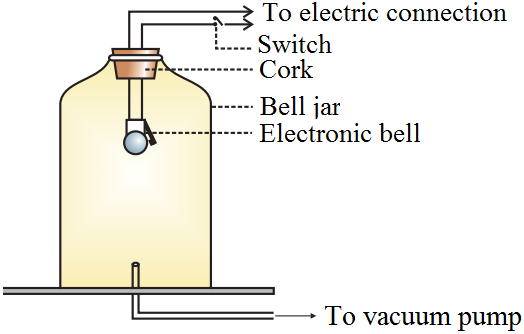
How can you show that sound cannot travel through a vacuum? Draw a labelled diagram of the apparatus used.
Answer
The bell jar experiment is a common experiment to show that sound cannot travel through a vacuum. A bell jar’s shape is similar to that of a bell. A bell jar is placed on a base and connected to a vacuum pump as shown in the picture below. The air in the jar is varied by pumping the air out of it.
Now, we put an electrical bell in the bell jar. As the air is pumped, vacuum is being created inside the jar slowly and steadily and the sound from the bell jar fades. At a point when complete vacuum is maintained, no more sound is heard from the bell. Thus, the sound is not audible to our ears because of the vacuum inside the jar.
View full question & answer
Question 94 Marks
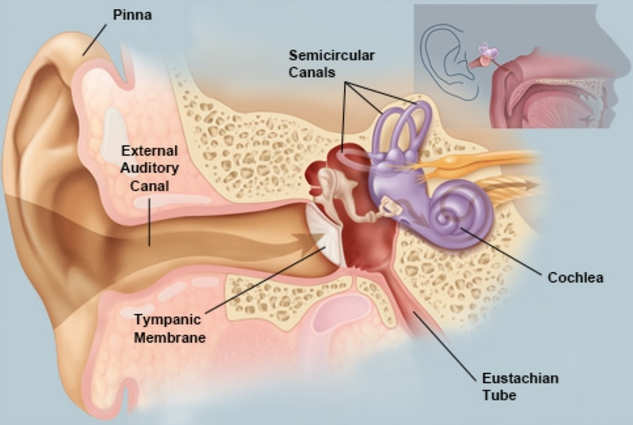
Draw a neat and labelled diagram of the human ear. Explain its working.
Answer
The ear has three main parts:
$a.$ External part $-$ It is called the pinna and is made of ridged cartilage covered by skin.
$b.$ Middle $-$ This is the part through which sound travels inside the ear to the eardrum, through auditory canal. Sound causes the eardrum and its tiny attached bones in the middle portion of the ear to vibrate, and the vibrations are conducted to the nearby cochlea.
$c.$ Inner part $-$ The cochlea is part of the inner ear. Its main function is to transform sound into nerve impulses.
View full question & answer
Question 104 Marks
Which of the sounds having the following frequencies can be heard by the human beings and which cannot?
$a. 6$ hertz.
$b. 5000$ hertz.
$c. 10000$ hertz.
$d. 35000$ hertz.
$e. 18\ kHz.$
Answer
$a.$ Cannot be heard because human being can hear within the range $20Hz$ to $20,000Hz$.
$b.$ Can be heard because human being can hear within the range $20Hz$ to $20,000Hz$.
$c.$ Can be heard because human being can hear within the range $20Hz$ to $20,000Hz$.
$d.$ Cannot be heard because human being can hear within the range $20Hz$ to $20,000Hz$.
$e.$ Can be heard because human being can hear within the range $20Hz$ to $20,000Hz$.
View full question & answer
Question 114 Marks
Name the object $($or part$)$ which vibrates to produce sound in the following musical instruments:
$a.$ Sitar.
$b.$ Dholak.
$c.$ Flute.
$d.$ Cymbals.
$e.$ Veena.
$f.$ Tabla.
Answer
$a.$ Strings.
$b.$ Diaphragm – Membrane.
$c .$ Air column.
$d.$ The metal plates.
$e.$ Strings.
$f.$ Diaphragm – Membrane.
View full question & answer
questions in details [4 marks ] - Science STD 8 Questions - Vidyadip