Questions · Page 1 of 4

M.C.Q-[Che-1M]

🎯

Test yourself on this topic

50 questions · timed · auto-graded

MCQ 11 Mark
While cooking, if the bottom of the vessel is getting blackened on the outside, it means that:
  • A
    The food is not cooked completely.
  • B
    The fuel is not burning completely.
  • C
    The fuel is wet.
  • D
    The fuel is burning completely.
Answer
  1. The fuel is not burning completely.
View full question & answer
MCQ 21 Mark
Butanone is a four-carbon compound with the functional group:
  • A
    Carboxylic acid.
  • B
    Aldehyde.
  • C
    Ketone.
  • D
    Alcohol.
Answer
  1. Ketone.
View full question & answer
MCQ 31 Mark
Ethane, with the molecular formula C2H6 has:
  • A
    6 covalent bonds.
  • B
    7 covalent bonds.
  • C
    8 covalent bonds.
  • D
    9 covalent bonds.
Answer
  1. 7 covalent bonds.
View full question & answer
MCQ 51 Mark
In the neighbourhood of your school, hard water required for an experiment is not available. Select from the following groups of salts available in your school, a group each member of which, if dissolved in distilled water, will make it hard:
  • A
    Sodium chloride, calcium chloride.
  • B
    Potassium chloride, sodium chloride.
  • C
    Sodium chloride, magnesium chloride.
  • D
    Calcium chloride, magnesium chloride.
Answer
  1. Calcium chloride, magnesium chloride.

​​​​​​​Explanation:

Hardness of water is due to the calcium and magnesium ions. So to make water hard salt of calcium chloride and magnesium chloride is added to distilled water.

View full question & answer
MCQ 61 Mark
In a locality, hard water, required for an experiment, is not available. However, the following salts are available in the school laboratory:

  1. Sodium sulphate.
  2. Calcium sulphate.
  3. Magnesium chloride.
  4. Sodium chlorid.
  5. Calcium chloride.
  6. Potassium sulphate.

Which of the above salts may be dissolved in water to obtain hard water for the experiment?

  • A
    2, 3 and 5
  • B
    1, 2 and 5
  • C
    1, 2, 4 and 6
  • D
    3 and 5 only
Answer
  1. 2, 3 and 5.

​​​​​​​​​​​​​​​​​​​​​​​​​​​​Explanation:

Hard water contains Ca2+ and Mg2+ ions. So, the salts that can be added to water to make it hard are calcium sulphate, calcium chloride and magnesium chloride.

View full question & answer
MCQ 71 Mark
In an experiment to study the properties of ethanoic acid, a student takes about 3 mL of ethanoic acid in a dry test tube. He adds an equal amount of distilled water to it and shakes the test tube well. After some time he is likely to observe that.
  • A
    A colloid is formed in the test tube.
  • B
    The ethanoic acid dissolves readily in water.
  • C
    The solution becomes light orange.
  • D
    Water floats over the surface of ethanoic acid.
Answer
  1. The ethanoic acid dissolves readily in water.

​​​​​​​​​​​​​​​​​​​​​​​​​​​​Explanation:

On addition of 3ml of ethanoic acid to a test tube containing 3ml of distilled water, a clear solution will be formed having no color due to high Solubility of ethanoic acid in water.

View full question & answer
MCQ 81 Mark
While studying the saponification reaction, what do you observe when you mix an equal amount of colourless vegetable oil and 20% aqueous solution of NaOH in a beaker?
  • A
    The colour of the mixture has become dark brown.
  • B
    A brisk effervescence is taking place in the beaker.
  • C
    The outer surface of the beaker has become hot.
  • D
    The outer surface of the beaker has become cold.
Answer
  1. The outer surface of the beaker has become hot.

Explanation:

While studying saponification reaction when equal amount of colorless vegetable oil and 20% aqueous solution of NaOH in mixed in a beaker, the beaker becomes hot from outside. This is because, NaOH reacts with the aqueous solution to release heat and an exothermic reaction takes place.

Hence option c is correct.

View full question & answer
MCQ 91 Mark
For preparing soap in the laboratory we require an oil and a base. Which of the following combinations of an oil and a base would be best suited for the preparation of soap?
  • A
    Castor oil and calcium hydroxide.
  • B
    Turpentine oil and sodium hydroxide.
  • C
    Castor oil and sodium hydroxide.
  • D
    Mustard oil and calcium hydroxide.
Answer
  1. Castor oil and sodium hydroxide.

​​​​​​​​​​​​​​Explanation:

Castor in soaps contributes to fluffy, stable lather, conditioning, moisturizing, quicker trace, softer soap. Turpentine is for medicinal and mustard oil is used for cooking.

Sodium hydroxide is a strong base soluble in water. However, calcium is not preferred as it forms scum. Hence, castor oil and sodium hydroxide are best suited for soap.

View full question & answer
MCQ 101 Mark
While preparing soap a small quantity of common salt is generally added to the reaction mixture of vegetable oil and sodium hydroxide. Which one of the following may be the purpose of adding common salt?
  • A
    To reduce the basic nature of the soap.
  • B
    To make the soap neutral.
  • C
    To enhance the cleansing power of the soap.
  • D
    To favour the precipitation of the soap.
Answer
  1. To favour the precipitation of the soap.

​​​​​​​Explanation:

Soap is sodium or potassium salt of fatty acids, and these salts are less soluble than a strong electrolyte sodium chloride.

So, sodium chloride is added to precipitate the soap by common-ion effect.

View full question & answer
MCQ 111 Mark
What do we observe on pouring acetic acid on red and blue litmus papers?
  • A
    Red litmus remains red and blue litmus turns red.
  • B
    Red litmus turns blue and blue litmus remains blue.
  • C
    Red litmus turns blue and blue litmus turns red.
  • D
    Red litmus becomes colourless and blue litmus remains blue.
Answer
  1. Red litmus remains red and blue litmus turns red.

​​​​​​​Explanation:

That is red litmus remains red and blue litmus turns red. This is because acetic acid is an acid that is mainly used in vinegar and acids always turn blue litmus red.

View full question & answer
MCQ 121 Mark
While studying saponification reaction, a student measures the temperature of the reaction mixture and also finds its nature using blue/red litmus paper. On the basis of his observations the correct conclusion would be:
  • A
    The reaction is exothermic and the reaction mixture is acidic.
  • B
    The reaction is endothermic and the reaction mixture is acidic.
  • C
    The reaction is endothermic and the reaction mixture is basic.
  • D
    The reaction is exothermic and the reaction mixture is basic.
Answer
  1. The reaction is exothermic and the reaction mixture is basic.

​​​​​​​Explanation:

It’s an endothermic reaction meaning it absorbs surrounding heat.​​​​​​​ Formation of soap that is saponification involves base (usually sodium hydroxide, NaOH) hydrolysis of triglycerides, which are esters of fatty acids, to form the sodium salt of a carboxylate. Hence reaction mixture is basic.

View full question & answer
MCQ 131 Mark
We need 20% aqueous solution of sodium hydroxide for the study of saponification reaction. When we open the lid of the bottle containing solid sodium hydroxide we observe it in which form?
  • A
    Colourless transparent beads.
  • B
    Small white beads.
  • C
    White pellets/ flakes.
  • D
    Fine white powder.
Answer
  1. White pellets/ flakes.
View full question & answer
MCQ 141 Mark
A student puts a drop of reaction mixture of a personification reaction first on a blue litmus paper and then on a red litmus paper. He may observe that:
  • A
    There is no change in the blue litmus paper and the red litmus paper turns white.
  • B
    There is no change in the red litmus paper and the blue litmus paper turns red.
  • C
    There is no change in the blue litmus paper and the red litmus paper turns blue.
  • D
    No change in colour is observed in both the litmus papers.
Answer
  1. There is no change in the blue litmus paper and the red litmus paper turns blue.

​​​​​​​Explanation:

Saponification reaction mixture is basic in nature. Formation of soap that is saponification involves base (usually sodium hydroxide, NaOH) hydrolysis of triglycerides, which are esters of fatty acids, to form the sodium salt of a carboxylate. Hence reaction mixture is basic.

So, the student will observe that there is no change in the blue litmus paper but red litmus will turn blue.

View full question & answer
MCQ 151 Mark
A student takes about 4 mL of distilled water in four test tubes marked P, Q, R and S. He then dissolves in each test tube an equal amount of one salt in one test tube, namely sodium sulphate in P, potassium sulphate in Q, calcium sulphate in R and magnesium sulphate in S. After that he adds an equal amount of soap solution in each test tube. On shaking each of these test tubes well, he observes a good amount of lather (foam) in the test tubes marked.
  • A
    P and Q.
  • B
    Q and R.
  • C
    P, Q and S.
  • D
    P, R and S.
Answer
  1. P and Q.

​​​​​​​Explanation:

Soap molecules are sodium or potassium salts of long-chain carboxylic acids. On reaction with calcium or magnesium ions, the soap solution forms insoluble precipitates. However, the formation of foam by the soap solution is hardly influenced by the presence of sodium sulphate and magnesium sulphate. Thus, on shaking each of the test tubes well, the student observes a good amount of lather in the test tubes marked P and Q. Hence, the correct option is A.

View full question & answer
MCQ 161 Mark
A student takes about 2 mL ethanoic acid in a dry test tube and adds a pinch of sodium hydrogen carbonate to it. He reports the following observations:

  1. Immediately a colourless and odourless gas evolves with a brisk effervescence.
  2. The gas turns lime water milky when passed through it.
  3. The gas burns with an explosion when a burning splinter is brought near it.
  4. The gas extinguishes the burning splinter that is brought near it.

The correct observations are:

  • A
    I, II and III
  • B
    II, III and IV
  • C
    III, IV and I
  • D
    I, II and IV
Answer
  1. I, II and IV.

​​​​​​​​​​​​​​​​​​​​​​​​​​​​​​​​​​​Explanation:

The correct answer is: option (d) when acetic acid is added to NaHCO3 solution, and when a burning splinter is brought near the mouth of each test tube, the splinter would be extinguished due to the evolution of carbon dioxide gas with brisk effervescence from the test tube.

CH3COOH + NaHCO3 → CH3COONa+ H2O + CO2

View full question & answer
MCQ 171 Mark
Select the correct observation about dilute solution of acetic acid:
  • A
    It smells like rotten egg and turns blue litmus red.
  • B
    It smells like vinegar and turns red litmus blue.
  • C
    It smells like rotten egg and turns red litmus blue.
  • D
    It smells like vinegar and turns blue litmus red.
Answer
  1. It smells like vinegar and turns blue litmus red.
View full question & answer
MCQ 181 Mark
Which one of the following sets of materials can be used to prepare soap?
  • A
    Neem oil and calcium hydroxide.
  • B
    Castor oil and sodium hydroxide.
  • C
    Mineral oil and sodium hydroxide.
  • D
    Neem oil and magnesium hydroxide.
Answer
  1. Castor oil and sodium hydroxide.

Explanation:

Castor oil adds lather and moisturizing properties to the soap, whereas turpentine oil is more used for medicinal purposes. Calcium salts are not used for soaps as they form insoluble scum.

View full question & answer
MCQ 191 Mark
A student took four test tubes P, Q, R and S and filled about 8 mL of distilled water in each. After that he dissolved an equal amount of Na2SO4 in P, K2SO4 in Q, CaSO4 in R and MgSO4 in S. On adding an equal amount of soap solution and shaking each test tube well, a good amount of lather will be obtained in the test tubes:
  • A
    P and Q
  • B
    P and R
  • C
    P, Q and S
  • D
    Q, R and S
Answer
  1. P and Q

​​​​​​​Explanation:

Soaps do not form lather with hard water (water containing calcium and magnesium ions). Among the given test tubes, test tubes R and S contain calcium and magnesium ions, respectively. So the addition of soap solution in these will not produce lather.

On the other hand, water present in test tubes P and Q are soft water (containing sodium and potassium ions), so the addition of soap solution in these will produce a good amount of lather.

Hence, the correct answer is P and Q

Hence, the correct answer is the option (d).

View full question & answer
MCQ 201 Mark
Which of the following sets of materials can be used for conducting a saponification reaction for the preparation of soap?
  • A
    Ca(OH)2 and neem oil.
  • B
    NaOH and neem oil.
  • C
    NaOH and mineral oil.
  • D
    Ca(OH)2 and mineral oil.
Answer
  1. NaOH and neem oil.

Explanation:

Saponification is the chemical reaction that occurs between sodium hydroxide or potassium hydroxide with any kind of fat. In the preparation of soap, saponification occurs when a strong alkali reacts with vegetable oil (or animal fat). As far as your question is concerned, the choice is pretty simple. You can always use NaOH and neem oil for the saponification process in the preparation of soap. Mineral oil cannot be used for the reaction as the resulting soap will become oily or greasy. So, the correct answer is B) NaOH and neem oil.

View full question & answer
MCQ 211 Mark
Hard water is not available for an experiment. Some salts are given below:

  1. Sodium chloride.
  2. Sodium sulphate.
  3. Calcium chloride.
  4. Calcium sulphate.
  5. Potassium chloride.
  6. Magnesium sulphate.

Select from the following a group of these salts, each member of which may be dissolved in water to make it hard.

  • A
    I, II, V.
  • B
    I, III, V.
  • C
    III, IV, VI.
  • D
    II, IV, VI.
Answer
  1. III, IV, VI.

​​​​​​​Explanation:

Hard water contains Ca2+ and Mg2+ ions. So, the salts that can be added to water to make it hard are calcium sulphate, calcium chloride and magnesium chloride.

View full question & answer
MCQ 221 Mark
A student prepared 20% sodium hydroxide solution in a beaker to study saponification reaction. Some observations related to this are given below:

  1. Sodium hydroxide solution turns red litmus blue.
  2. Sodium hydroxide readily dissolves in water.
  3. The beaker containing solution appears cold when touched from outside.
  4. The blue litmus paper turns red when dipped into the solution.

The correct observations are:

  • A
    I, II and IV.
  • B
    I, II and III.
  • C
    only III and IV.
  • D
    only I and II.
Answer
  1. Only I and II.

​​​​​​​Explanation:

NaOH is a base and it turns red litmus blue & it dissolves in water. it is exothermic reaction so the beaker become hot when touch.

View full question & answer
MCQ 231 Mark
While studying saponification reaction for the preparation of soap, the teacher suggested to a student to add a small quantity of common salt to the reaction mixture. The function of common salt in this reaction is to:
  • A
    Reduce the alkalinity of the soap.
  • B
    Reduce the acidity of the soap.
  • C
    Enhance the cleansing capacity of soap.
  • D
    Favour precipitation of soap.
Answer
  1. Favour precipitation of soap.

​​​​​​​​​​​​​​​​​​​​​​​​​​​​Explanation:

The correct option is D.

Common salt is added in saponification reaction because it helps in the precipitation of soap by decreasing its solubility.

View full question & answer
MCQ 241 Mark
When you add about 2 ml of acetic acid to a test tube containing an equal amount of distilled water and leave the test tube to settle after shaking its contents, then after about 5 minutes what will you observe in the test tube:
  • A
    A white precipitate settling at its bottom.
  • B
    A clear colourless solution.
  • C
    A layer of water over the layer of acetic acid.
  • D
    A layer of acetic acid over the layer of water.
Answer
  1. A clear colourless solution.

​​​​​​​​​​​​​​​​​​​​​​​​​​​​Explanation:

Acetic or ethanoic acid is soluble in water in any proportion or ratio. So no precipitation occurs it dissolves in it, leaving a colorless liquid.

View full question & answer
MCQ 251 Mark
A student adds a few drops of ethanoic acid to test tubes X, Y and Z containing aqueous solutions of sodium chloride, sodium hydroxide and sodium carbonate respectively. If he now brings a burning splinter near the mouth of the test tubes immediately after adding the ethanoic acid in each one of them, in which of the test tube or test tubes the flame gets extinguished?
  • A
    X and Y
  • B
    Y and Z
  • C
    X and Z
  • D
    Only Z
Answer
  1. Only Z.

​​​​​​​​​​​​​​​​​​​​​​​​​​​​Explanation:

The chemical reactions in test tubes X, Y and Z can be written as:

Test tube X:

CH3COOH + NaCl → No reaction

Test tube Y:

CH3COOH + NaOH →CH3COONa + H2O

Test tube Z:

2CH3COOH + Na2CO3 → 2CH3COONa + CO2 + H2O

Thus, the flame will be extinguished when test tube Z is brought near a burning splinter due to evolution of carbon dioxide gas, which does not support combustion.

Hence, the correct option is D

View full question & answer
MCQ 261 Mark
Consider the following comments about saponification reactions:

  1. Heat is evolved in these reactions.
  2. For quick precipitation of soap sodium chloride is added to the reaction mixture.
  3. Saponification reactions are special kind of neutralisation reactions.
  4. Soaps are basic salts of long chain fatty acids.

The correct comments are:

  • A
    I, II and III.
  • B
    II, III and IV.
  • C
    I, II and IV.
  • D
    Only I and IV.
Answer
  1. I, II and IV.

​​​​​​​​​​​​​​​​​​​​​Explanation:

Saponification is a hydrolysis reaction not a neutralization reaction since it does not lead to formation of any water molecule.

View full question & answer
MCQ 271 Mark
A student takes four test tubes marked P, Q, R and S of 25 mL capacity and fill 10 mL of distilled water in each. He dissolves one spoon full of four different salts in each as – KCl in P, NaCl in Q, CaCl2 in R and MgCl2 in S. He then adds about 2 mL of a sample of soap solution to each of the above test tubes. On shaking the contents of each of the test tubes, he is likely to observe a good amount of lather (foam) in the test tubes marked:
  • A
    P and Q.
  • B
    R and S.
  • C
    P, Q and R.
  • D
    P, Q and S.
Answer
  1. P and Q.

​​​​​​​​​​​​​​Explanation:

Soap molecules are sodium or potassium salts of long-chain carboxylic acids. On reaction with calcium or magnesium ions, the soap solution forms insoluble precipitates. However, the formation of foam by the soap solution is hardly influenced by the presence of sodium sulphate and magnesium sulphate. Thus, on shaking each of the test tubes well, the student observes a good amount of lather in the test tubes marked P and Q. Hence, the correct option is A.

View full question & answer
MCQ 281 Mark
A student adds 2 mL of acetic acid to a test tube containing 2 mL of distilled water. He then shakes the test tube well and leaves it to settle for some time. After about 5 minutes he observes that in the test tube there is:
  • A
    A clear transparent colourless solution.
  • B
    A clear transparent pink solution.
  • C
    A precipitate settling at the bottom of the test tube.
  • D
    A layer of water over the layer of acetic acid.
Answer
  1. clear transparent colourless solution.

​​​​​​​Explanation:

Acetic acid dissolves completely in distilled water and gives a clear, colorless and transparent solution. Hence, the correct option is A.

View full question & answer
MCQ 291 Mark
In order to study saponification reaction we first prepare 20% solution of sodium hydroxide. If we record the temperature of this solution just after adding sodium hydroxide flakes to water and also test its nature using litmus, it may be concluded that the process of making this solution is:
  • A
    Exothermic and the solution is alkaline.
  • B
    Endothermic and the solution is alkaline.
  • C
    Endothermic and the solution is acidic.
  • D
    Exothermic and the solution is acidic.
Answer
  1. Exothermic and the solution is alkaline.

​​​​​​​​​​​​​​​​​​​​​​​​​​​​​​​​​​​​​​​​​​Explanation:

The reaction of Sodium hydroxide with water is an exothermic reaction. As Sodium hydroxide is base, its aqueous solution is basic in nature. i.e. its alkaline solution. The alkaline nature of the solution is proved by litmus test. Turn red litmus paper blue.

NaOH + H2O → Na+ + OH- + H2O + Heat

NaOH + H2O → Na+ + OH- + H2O + Heat

Thus option (A) is correct statement.

View full question & answer
MCQ 301 Mark
A student takes about 6 ml of distilled water in each of the four test tubes P, Q, R and S, then dissolves an equal amount of four different salts namely sodium chloride in ‘P', potassium chloride in ‘Q', calcium chloride in ‘R' Cand magnesium chloride in ‘S'. He then adds 10 drops of soap solution to each test tube and shakes its contents. The test tubes in which scum (insoluble substance) is formed with soap are:
  • A
    P and Q
  • B
    Q and R
  • C
    R and S
  • D
    Q and S
Answer
  1. R and S.

​​​​​​​​​​​​​​​​​​​​​​​​​​​​​​​​​​​​​​​​​​Explanation:

Analogous organs are that which are different in origin but similar in function.

View full question & answer
MCQ 311 Mark
A student adds a few drops of ethanoic acid to test tubes X, Y and Z containing aqueous solutions of sodium chloride, sodium hydroxide and sodium carbonate respectively. If he now brings a burning splinter near the mouth of the test tubes immediately after adding the ethanoic acid in each one of them, in which of the test tube or test tubes the flame gets extinguished?
  • A
    X and Y
  • B
    Y and Z
  • C
    X and Z
  • D
    Only Z
Answer
  1. Only Z.

The chemical reactions in test tubes X, Y and Z can be written as:

Test tube X:

CH3COOH + NaCl → No reaction

Test tube Y:

CH3COOH + NaOH → CH3COONa + H2O

Test tube Z:

2CH3COOH + Na2CO3 → 2CH3COONa + CO2 + H2O

Thus, the flame will be extinguished when test tube Z is brought near a burning splinter due to evolution of carbon dioxide gas, which does not support combustion.

Hence, the correct option is D.

View full question & answer
MCQ 321 Mark
For demonstrating the preparation of soap in the laboratory which of the following combinations of an oil and a base would be most suitable?
  • A
    Mustard oil and calcium hydroxide.
  • B
    Castor oil and calcium hydroxide.
  • C
    Turpentine oil and sodium hydroxide.
  • D
    Mustard oil and sodium hydroxide.
Answer
  1. Mustard oil and sodium hydroxide.
View full question & answer
MCQ 331 Mark

A student adds 2mL of acetic acid to a test tube containing 2mL of distilled water. He then shakes the test tube well and leaves it to settle for some time. After about 5 minutes he observes that in the test tube there is:

    • A
      A clear transparent colourless solution
    • B
      A clear transparent pink solution
    • C
      A precipitate settling at the bottom of the test tube.
    • D
      Alayer of water over the layer of acetic acid.
    Answer
    1. A clear transparent colourless solution.

    Explanation:

    Acetic acid dissolves completely in distilled water and gives a clear, colourless and transparent solution. Hence, the correct option is A.

    View full question & answer
    MCQ 341 Mark
    In order to study personification reaction we first prepare 20% solution of sodium hydroxide. If we record the temperature of this solution just after adding sodium hydroxide flakes to water and also test its nature using litmus, it may be concluded that the process of making this solution is:
    • A
      Exothermic and the solution is alkaline.
    • B
      Endothermic and the solution is alkaline.
    • C
      Endothermic and the solution is acidic.
    • D
      Exothermic and the solution is acidic.
    Answer
    1. Exothermic and the solution is alkaline.

    ​​​​​​​​​​​​​​Explanation:

    The reaction of Sodium hydroxide with water is an exothermic reaction. As Sodium hydroxide is base, its aqueous solution is basic in nature. i.e. its alkaline solution. The alkaline nature of the solution is proved by litmus test. Turn red litmus paper blue.

    NaOH + H2O → Na+ + OH- + H2O + Heat

    Thus option (A) is correct statement.

    View full question & answer
    MCQ 351 Mark
    A student adds a few drops of ethanol acid to test tubes X, Y and Z containing aqueous solutions of sodium chloride, sodium hydroxide and sodium carbonate respectively. If he now brings a burning splinter near the mouth of the test tubes immediately after adding the ethanol acid in each one of them, in which of the test tube or test tubes the flame gets extinguished?
    • A
      X and Y
    • B
      Y and Z
    • C
      X and Z
    • D
      Only Z
    Answer
    1. Only Z.

    ​​​​​​​​​​​​​​​​​​​​​Explanation:

    The chemical reactions in test tubes X, Y and Z can be written as:

    Test tube X:

    CH3COOH + NaCl → No reaction

    Test tube Y:

    CH3COOH + NaOH → CH3COONa + H2O

    Test tube Z:

    2CH3COOH + Na2CO3 → 2CH3COONa + CO2 + H2O

    Thus, the flame will be extinguished when test tube Z is brought near a burning splinter due to evolution of carbon dioxide gas, which does not support combustion.

    Hence, the correct option is D.

    View full question & answer
    MCQ 361 Mark
    Answer
    1. (A), (B) and (D).

    Explanation:

    When sodium carbonate is reacted with ethanoic acid it forms sodium ethanoate, water, and carbon dioxide gas. Carbon dioxide can be identified by the brisk effervescence. It turns lime water milky and is also a byproduct of respiration.

    $\text{CH}_3\text{COOH}+\text{NaHCO}_3\rightarrow\text{CH}_3\text{COONa}+\text{H}_2\text{O}+\text{CO} _2.$

    View full question & answer
    MCQ 371 Mark
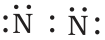
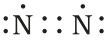
    Why does carbon form compounds mainly by covalent bonding?
    • A
      There are four electrons in the outermost shell of carbon.
    • B
      It requires large amount of energy to form C4+ or C4-
    • C
      It shares its valence electrons to complete its octet.
    • D
      All the above.
    Answer
    1. All the above.
    View full question & answer
    MCQ 381 Mark
    While cooking, if the bottom of the vessels is getting blackened on the outside, it means that:
    • A
      The fuel is not cooked completely.
    • B
      The fuel is not burning completely.
    • C
      The fuel is wet.
    • D
      The is burning completely.
    Answer
    1. The fuel is not burning completely.
    View full question & answer
    MCQ 391 Mark
    While cooking, if the bottom of the utensil is getting blackened on the outside, it means that:
    • A
      The food is not cooked completely.
    • B
      The fuel is not burning completely.
    • C
      The fuel is wet.
    • D
      The fuel is burning completely.
    Answer
    1. The fuel is not burning completely.

    Explanation:

    While cooking, if the bottom of the utensil is getting blackened on its outer side, it means that the fuel is not burning properly, thereby leading to soot formation.

    View full question & answer
    MCQ 401 Mark
    Which one of the following is not a fossil fuel?
    • A
      Petrol.
    • B
      Cock.
    • C
      Charcoal.
    • D
      Coal.
    Answer
    1. Charcoal.

    Explanation:

    Charcoal is not a fossil fuel. It is formed from wood and coal.

    View full question & answer
    MCQ 421 Mark
    Which of the following statements about graphite and diamond is true?
    • A
      They have the same crystal structure.
    • B
      They have the same degree of hardness.
    • C
      They have the same electrical conductivity.
    • D
      They can undergo the same chemical reactions.
    Answer
    1. They can undergo the same chemical reactions.
    View full question & answer
    MCQ 431 Mark
    Which of the following represents saponification reaction?
    • A
      $\text{CH}_3\text{COOHNa}+\text{NaOH}\xrightarrow{\text{CaO}}\text{CH}_4+\text{Na}_2\text{CO}_3$
    • B
      $2\text{CH}_3\text{COOH}+\text{C}_2\text{H}_5\text{OH}\xrightarrow{\text{H}_2\text{SO}_4}\text{CH}_3\text{COOC}_2\text{H}_5+\text{H}_2\text{O}$
    • C
      2CH3COOH + 2Na → 2CH3COONa + H2
    • D
      CH3COOC2H5 + NaOH → CH3COONa + C2H5OH
    Answer
    1. CH3COOC2H5 + NaOH → CH3COONa + C2H5OH

    Explanation: Saponification reaction is reaction of ester with base like NaOH to form the parent alcohol and sodium salt of carboxylic acid.

    View full question & answer
    MCQ 451 Mark
    Which of the following molecular formula corresponds to ethylbutanoate ester?
    • A
      C5H10O2
    • B
      C6H12O2
    • C
      C7H14O2
    • D
      C8H16O2
    Answer
    1. C6H12O2

    Explanation:

    Ethylbutanoate ester has the molecular formula C6H12O2 (C2H5COOC3H7).

    View full question & answer
    MCQ 471 Mark
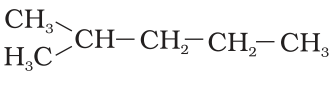
    Which of the following is not a straight chain hydrocarbon?
    • A
      $\text{H}_3\text{C}-\text{CH}_2-\text{CH}_2-\text{CH}_2-\text{CH}_2\\ \ \ \ \ \ \ \ \ \ \ \ \ \ \ \ \ \ \ \ \ \ \ \ \ \ \ \ \ \ \ \ \ \ \ \ \ \ \ \ \ \ \ \ \ \ \ \ \ \ \ \ |\ \\ \ \ \ \ \ \ \ \ \ \ \ \ \ \ \ \ \ \ \ \ \ \ \ \ \ \ \ \ \ \ \ \ \ \ \ \ \ \ \ \ \ \ \ \ \ \ \ \ \ \ \text{CH}_3$
    • B
      $\text{H}_3\text{C}-\text{CH}_2-\text{CH}_2-\text{CH}_2-\text{CH}_2-\text{CH}_3$
    • C
      $\ \ \ \ \ \text{CH}_3\\ \ \ \ \ \ \ |\\\text{H}_2\text{C}-\text{H}_2\text{C}-\text{H}_2\text{C}-\text{CH}_2\\ \ \ \ \ \ \ \ \ \ \ \ \ \ \ \ \ \ \ \ \ \ \ \ \ \ \ \ \ \ \ \ \ \ \ \ \ \ \ |\\ \ \ \ \ \ \ \ \ \ \ \ \ \ \ \ \ \ \ \ \ \ \ \ \ \ \ \ \ \ \ \ \ \ \ \ \ \ \text{CH}_3$
    • D


    View full question & answer
    MCQ 491 Mark
    Which of the following does not belong to the same homologous series?
    • A
      CH4
    • B
      C2H6
    • C
      C3H8
    • D
      C4H8
    Answer
    1. C4H8

    Explanation: Successive members of same homologous series are differ by - CH2 unit. CH4, C2H6, C3H8 belong to same series that is of alkane and differ by ─ CH2 unit but C4H8 does not belong to this.

    View full question & answer
    M.C.Q-[Che-1M] - Science STD 10 Questions - Vidyadip