Questions

[5 marks Questions]

🎯

Test yourself on this topic

6 questions · timed · auto-graded

Question 15 Marks
i. Compare soaps and detergents on the basis of their composition and cleansing action in hard water.
ii. What happens when ethanol is treated with sodium metal? State the behaviour of ethanol in this reaction.
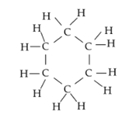
iii. Draw the structure of cyclohexane.
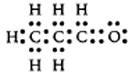
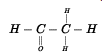
iv. Name the following compound.
Image
View full question & answer
Question 25 Marks
Differentiate between a concave mirror and a convex mirror.
View full question & answer
Question 35 Marks
What is lens formula? Give its sign conventions and assumptions.
Answer
If u is the distance of object and v, the distance of image from optical centre of the lens, then focal length fis related to u and v by $\frac{1}{f}=\frac{1}{v}-\frac{1}{u}$ which is called lens formula. The formula is equally applicable t to convex, concave or any other type of lens. (e.g. concavo-convex, plano-convex, convexo-concave, plano-concave etc.)
Sign Conventions:
(1) The object is always placed to the left of the lens.
(2) All distances parallel to principal axis are measured from optical centre of the lens.
(3) All distance measured to the right of optical centre (along x-axis) are taken as positive while those measured to the left of optical centre (along x-axis) are taken as negative.
(4) Distance measured perpendicular to and above the principal axis (along y axis) are taken as positive.
(5) Distance measure perpendicular to and below the principal axis (y'-axis) are taken as negative.
Assumptions (1) Object is taken on principal axis. (2) The lens is thin.
View full question & answer
Question 45 Marks
Image
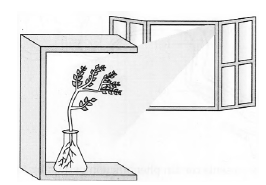
Observe the above figure carefully and answer the following:
i. Which phenomenon does the figure represent?
ii. Which plant hormone is involved?
iii. How this plant hormone brings this movement?
Answer
i. The figure represents the phenomenon of phototropism i.e., response of plants to light.
ii. The plant hormone auxin is invoved in the phenomenon of phototropism.
iii. Plants show their growth towards light and this movement is caused by the action of auxin hormone. Auxin is synthesised by the meristematic tissue which is present at the tip of shoot, roots etc. In the above figure the plant bends towards the light. Auxin hormone is synthesised in the tip of the stem and moves towards the side of the plant not receiving light. Due to more auxin hormone in the region of the plant that does not receive light they grew faster than the part that receives light. So the stem bents towards the direction of light.
View full question & answer
Question 55 Marks
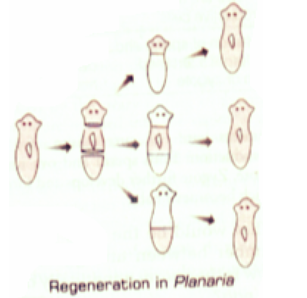
Why are budding, fragmentation and regeneration all considered as asexual types of reproduction? With neat diagrams explain the process of regeneration in Planaria.
Answer
Budding, fragmentation and regeneration are all example of asexual reproduction because all of them involve only one parent. Male and female gametes are not involved in the reproduction. Thus in all of the three process no variation is produced. Planaria can be cut into any number of pieces and each piece grows into a complete organism. This process is known as regeneration (see fig.) Regeneration is carried out by specialised cells known as neoblast (adult stem cells). These cells proliferate and produce large numbers of cells. From this mass of cells, different cells undergo changes to become various cell types and tissues, giving rise to whole new organism with same DNA content as its parent. These changes take place in an organised manner referred to as development.
Image
View full question & answer
Question 65 Marks
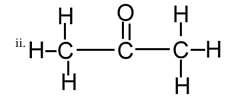
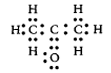
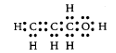
Draw the possible isomers of the compound with molecular formula $C_3H_6O$ and also give their electron dot structures.
Answer
There are four isomers possible for the molecular formula $C_3H_6O.$ These are as follows:
$\text { i. } CH_3 CH_2 CH CH$
Propanal
electron dot structure:
Image
Image

Prop $- 2 -$ one
electron dot structure:
Image

$iii. CH _3-\underset{\text { Prop-1-enol }}{ CH }=\underset{ CH }{ CH }- OH$
electron dot structure:
Image
View full question & answer
[5 marks Questions] - Science STD 10 Questions - Vidyadip