Questions

4 Marks Question

🎯

Test yourself on this topic

8 questions · timed · auto-graded

Question 14 Marks
Creditors on 1st April, 2017 were ₹ 15,000, Purchases on credit were ₹ 30,000, Cash paid to Creditors during 2017-18 was ₹ 20,000, Returns Outward (regarding credit purchases) were ₹ 1,000 and Bills Payable accepted during the year ₹ 10,000. Find the balance of Creditors on 31st March, 2018.
View full question & answer
Question 24 Marks
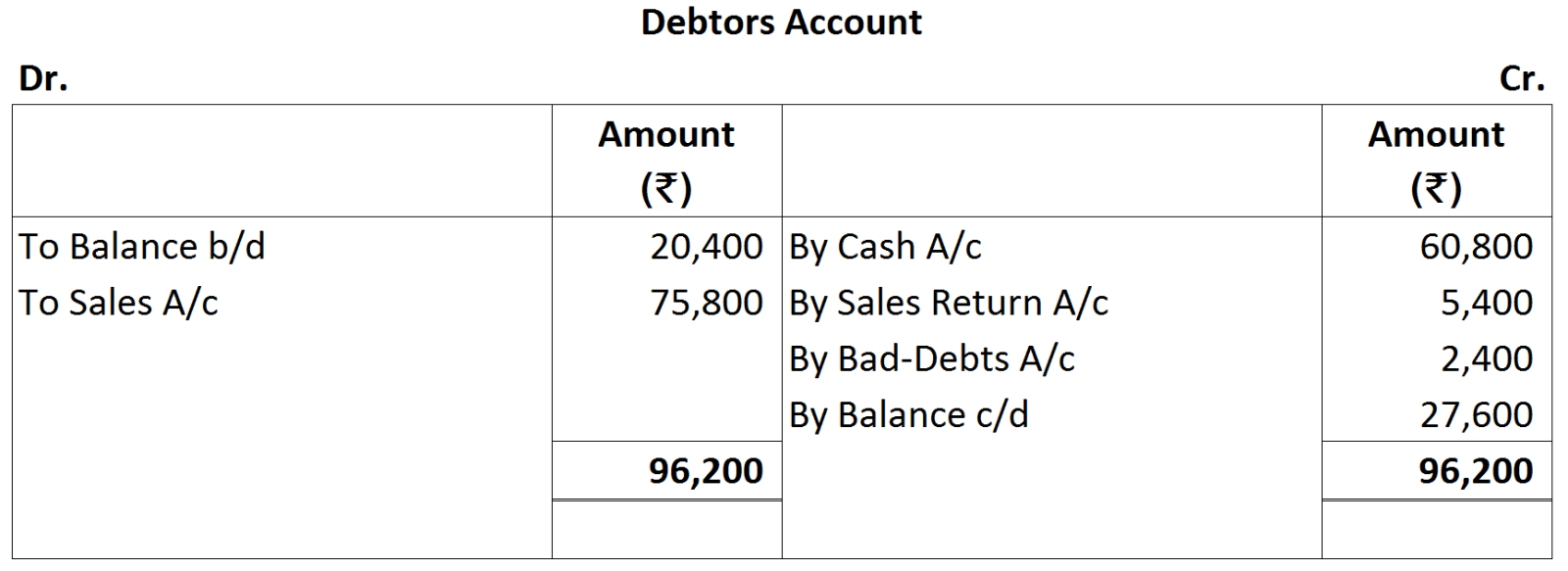
From the following information, calculate Total Sales made during the period:
 
Debtors as on 1st April, 2017 20,400
Cash received from debtors during the year (as per Cash Book) 60,800
Returns Inward 5,400
Bad Debts 2,400
Debtors as on 31st March, 2018 27,600
Cash Sales (as per Cash Book) 56,800
Answer

Total Sales = Cash Sales + Credit Sales
Total Sales = 56,800 + 75,800 = ₹ 1,32,600
View full question & answer
Question 34 Marks
Give any three advantages of Single Entry System of Accounting.
Answer
Advantages of Single Entry System:
  1. Simple Method: Single Entry System is a simple method of recording business transactions.
  2. Less Expensive: It is less expensive when it is compared to Double Entry System of book keeping.
  3. Suitable for Small Businesses: It is mainly suited to small businesses with limited number of transactions and very few assets and liabilities.
  4. No Need of Expert Knowledge of Principles of Book Keeping: Under Single Entry System, accounting records can be easily maintained as their maintenance does not require expert knowledge of the principles of book keeping.
  5. Easy to Ascertain Profit or Loss: Ascertainment of profit or loss is much easier. To ascertain the profit or loss, the proprietor has to compare the financial condition of business at the close of the accounting period with that in the beginning.
View full question & answer
Question 44 Marks
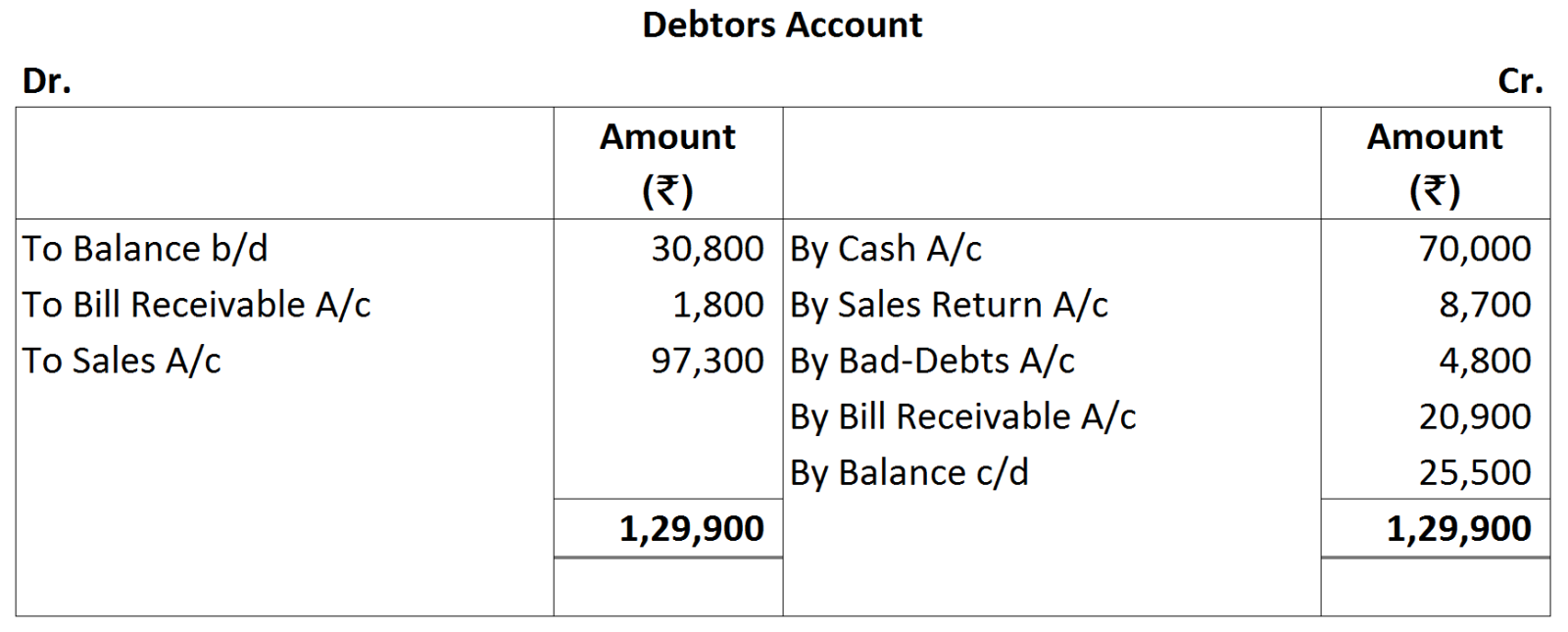
Calculate Total Sales from the following information:
 
Bills Receivables as on 1st April, 2017 7,800
Debtors as on 1st April, 2017 30,800
Cash received on maturity of Bills Receivable during the year 20,900
Cash received from Debtors 70,000
Bad Debts written off 4,800
Returns Inward 8,700
Bills Receivable dishonoured 1,800
Bills Receivable on 31st March, 2018 6,000
Debtors as on 31st March, 2018 25,500
Cash Sales during the year 15,900
Answer

Total Sales = Cash Sales + Credit Sales
Total Sales = 15,900 + 97,300 = ₹ 1,13,200
View full question & answer
Question 54 Marks
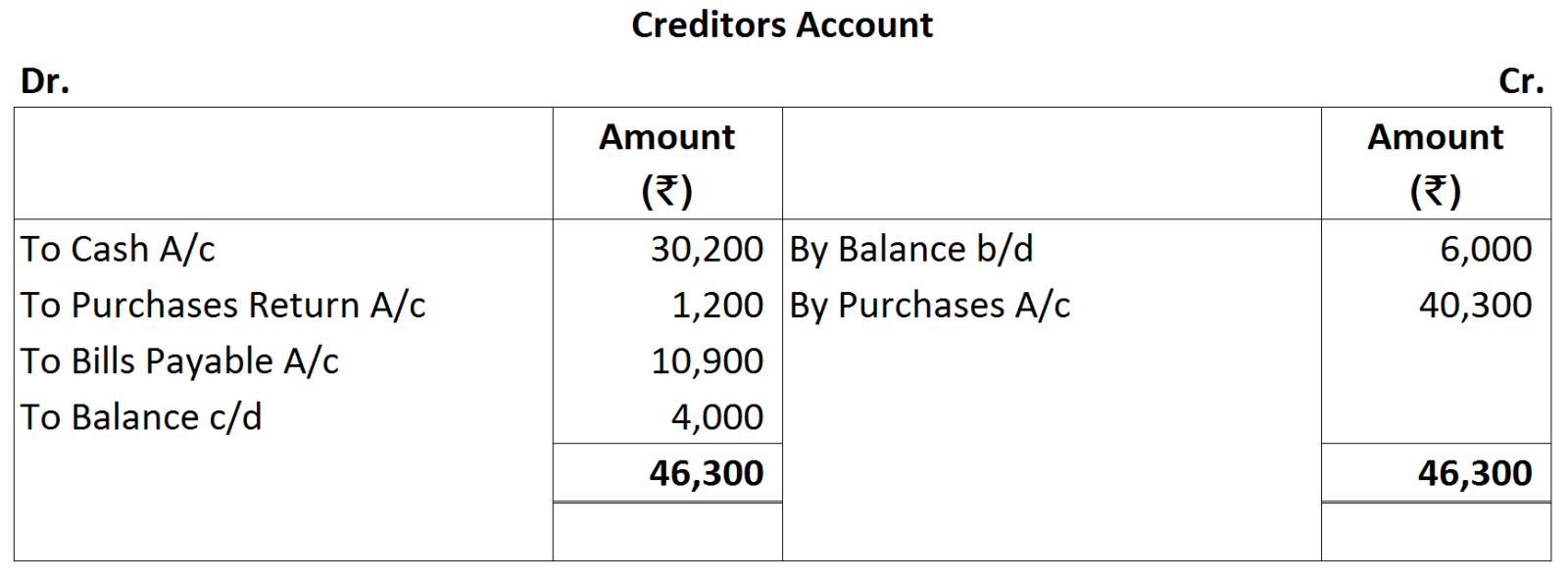
From the following information supplied by X, who keeps his books on Single Entry System, you are required to calculate Total Purchases:
 
Opening balance of Bills Payable 5,000
Opening balance of Creditors 6,000
Closing balance of Bills Payable 7,000
Closing balance of Creditors 4,000
Cash paid to Creditors during the year 30,200
Bills Payable discharged during the year 8,900
Returns Outward 1,200
Cash Purchases 25,800
Answer

Total Purchases = Cash Purchases + Credit Purchases
Total Purchases = 25,800 + 40,300 = ₹ 66,100
View full question & answer
Question 64 Marks
Debtors in the beginning of the year were ​₹ 30,000, Sales on credit during the year were ₹ 75,000, Cash received from the Debtors during the year was ₹ 35,000, Returns Inward (regarding credit sales) were ₹ 5,000 and Bills Receivable drawn during the year were ₹ 25,000. Find the balance of Debtors at th end of the year, assuming that there were Bad Debts during the year of ₹ 2,000.
View full question & answer
Question 74 Marks
Following information is given of an accounting year:
Opening Creditors ₹ 15,000; Cash paid to creditors ₹ 15,000; Returns Outward ₹ 1,000 and Closing creditors ₹ 12,000.
Calculate Credit Purchases during the year.
View full question & answer
Question 84 Marks
Mention three characteristics of Single Entry System.
Answer
Features of Single Entry System:
  1. Suitability: This system is suitable for small-size businesses where the number of transactions is less.
  2. No Uniformity: This system may differ from firm to firm as it is a mere adjustment of Double Entry System according to requirements and convenience.
  3. Maintenance of Personal Accounts: Usually under this system, only personal accounts are maintained and real and nominal accounts are avoided. Therefore sometimes, it is defined as a system where only personal accounts are kept.
  4. Maintenance of Cash Book: Generally, a Cash Book is maintained in this system which mixes up business as well as personal transactions.
  5. Dependence on Original Vouchers: Usually under this system, original vouchers are scrutinised for collection of information. For example, in case of credit sale, the owner may keep the invoice without recording it in accounting books and at the end of a particular period the total of the invoices gives credit sales of the business. Similarly, the amount of credit purchases may be determined on the basis of original invoices received from the suppliers.
View full question & answer
4 Marks Question - Account STD 11 Commerce Questions - Vidyadip