Questions

3 Marks Question

🎯

Test yourself on this topic

26 questions · timed · auto-graded

Question 13 Marks
Write notes on the following:
  1. Accrued Income.
  2. Unearned Income.
  3. Provision for Doubtful Debts.
Answer
  1. Accrued Income: It is quite common that certain items of income such as interest on securities, commission, rent etc., are earned during the current year but have not been actually received by the end of the current year.
  2. Unearned Income: It may also happen that a certain income is received in the current year but the whole amount of it does not belong to the current year. Such portion of this income which belongs to the next year is known as 'Unearned Income' or 'Income received but not earned'.
  3. Provision for Doubtful Debts: Even after deducting the amount of actual bad-debts from the debtors, the list of debtors at the end of the year may include some debts which are either bad or doubtful. As the amount of actual loss on account of current year bad-debts would be known only in the next year when the amount is realised from debtors, a provision is created to cover any possible loss on account of bad-debts likely to occur in future. Such a provision is created at a fixed percentage on debtors every year and is called “Provision for Bad and Doubtful Debts'.
View full question & answer
Question 23 Marks
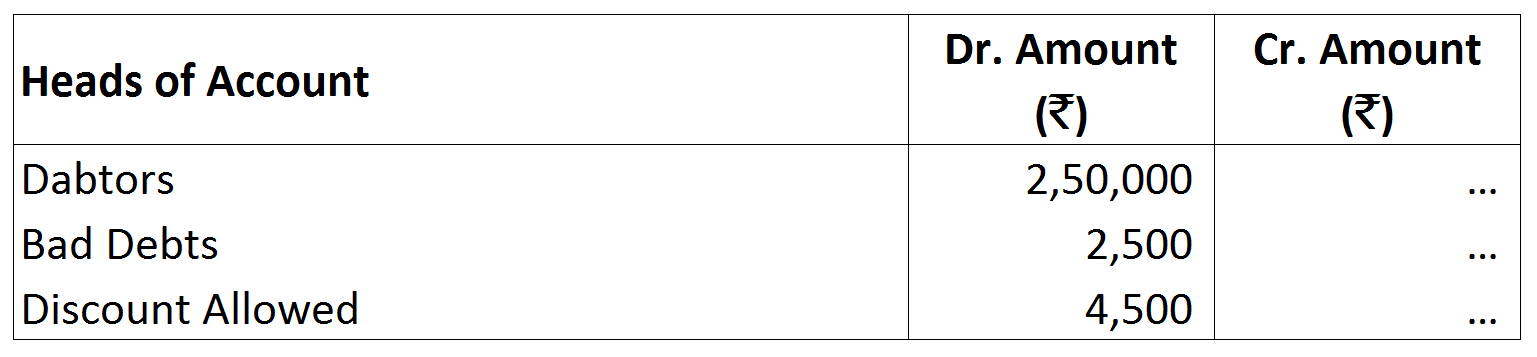
The Trial Balance of Manish gives the following information:
It is decided to create a Provision for Doubtful Debts @ 10% on debtors and a Provision for Discount @ 2% on debtors. Show how the adjustment will appear in the Final Accounts.
Answer
Coming Soon
View full question & answer
Question 33 Marks
Why is it necessary to create a provision for doubtful debts at the time of preparation of final accounts?
Answer
The provision for doubtful-debts is created with the motive of minimising the effect of actual loss caused by the bad-debts. The actual figure of the current year’s bad-debts will be known in the next year with the realisation of debtors. At that point of time, it will be known as to how many of the debtors have become bad. Thus, instead of waiting for the realisation of debtors, we create a provision for doubtful-debts in order to cover the expected future loss associated with the debtors becoming bad.
View full question & answer
Question 43 Marks
What is meant by Adjusting Entries?
Answer
In an enterprise there are number of transactions relating to incomes and expenses, which need to be adjusted so that, final accounts give true and fair view of the results. All such items which need to be adjusted when Final Accounts are prepared are called adjustments. Journal entries are passed giving effect to the adjustments. These entries are known as Adjusting Entries.
View full question & answer
Question 53 Marks
State the meaning of:
Prepaid expenses.
Answer
Prepaid Expenses: These refer to those expenses for which the benefits have not been realised but the payments have already been made in advance. These are basically the advance payments for the next year, which are made in the current accounting period.
Example: Prepaid insurance premium of 1,000 means that the payment of 1,000 is made in advance for the next accounting period.
View full question & answer
Question 63 Marks
State the meaning of:
Income received in advance.
Answer
Income Received in Advance: This refers to the income received whose actual realisation of benefits will occur in the next accounting period. These are also called unearned incomes.
Example: Commission of ₹ 1,200 for the year 2011-12 is received in 2010-11. This commission does not belong to the current year as it is related with the work to be done in the next accounting year i.e., 2011-12.
View full question & answer
Question 73 Marks
On 1st April, 2017, Shiv had a Provision for Doubtful Debts of ₹ 650. On 31st March, 2018, total debtors amounted to ₹ 18,400 out of which ₹ 400 were bad and had to be written off. It was decided to maintain a Provision for Doubtful Debts at 5% of the debtors.
On 31st March, 2019, debtors were ₹ 10,320 out of which ₹ 320 had to be written off as bad debts. Provision for Doubtful Debts is to be maintained at 5% of the Debtors.
Show the Bad Debts Account and Provision for Doubtful Debts Account for the years ended on 31st March, 2018 and 2019.
Answer
Coming Soon
View full question & answer
Question 83 Marks
What is meant by Prepaid Expenses? How are they adjusted in the Final Accounts?
Answer
In some cases, the benefit of expenses incurred and also paid relates to next accounting year. Such part of the expense is known as prepaid expense or unexpired expense. Common examples of such expenses are prepaid rent, prepaid insurance and interest paid in advance, etc. In such cases, unexpired part of expenses in the amount of expenses under that head is adjusted and prepaid expenses are shown as an asset in the Balance Sheet.
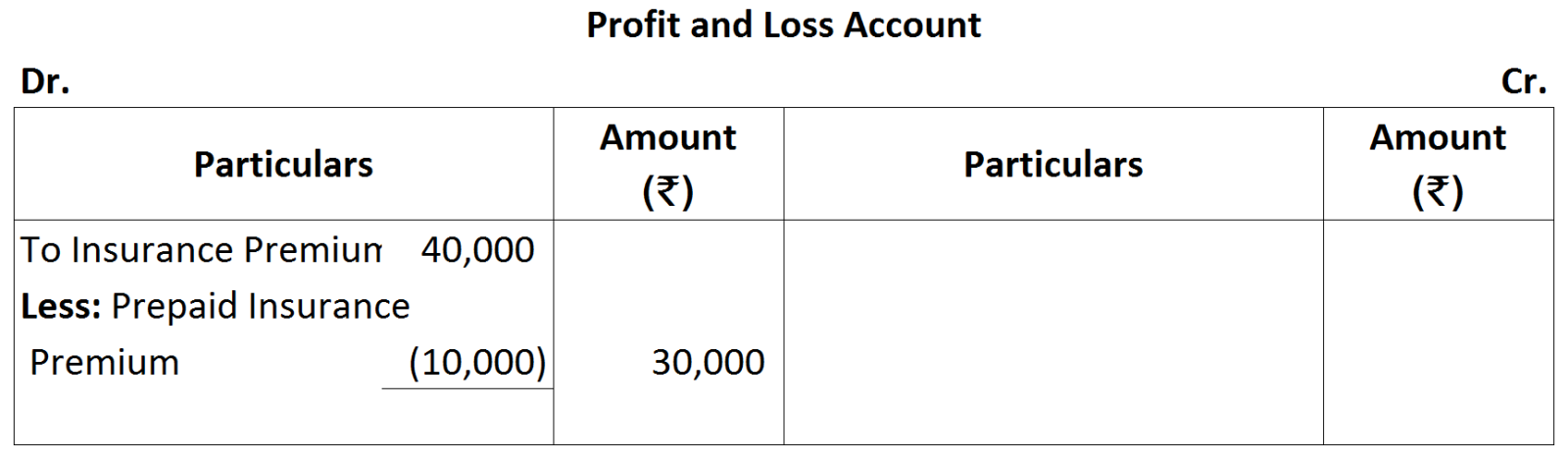
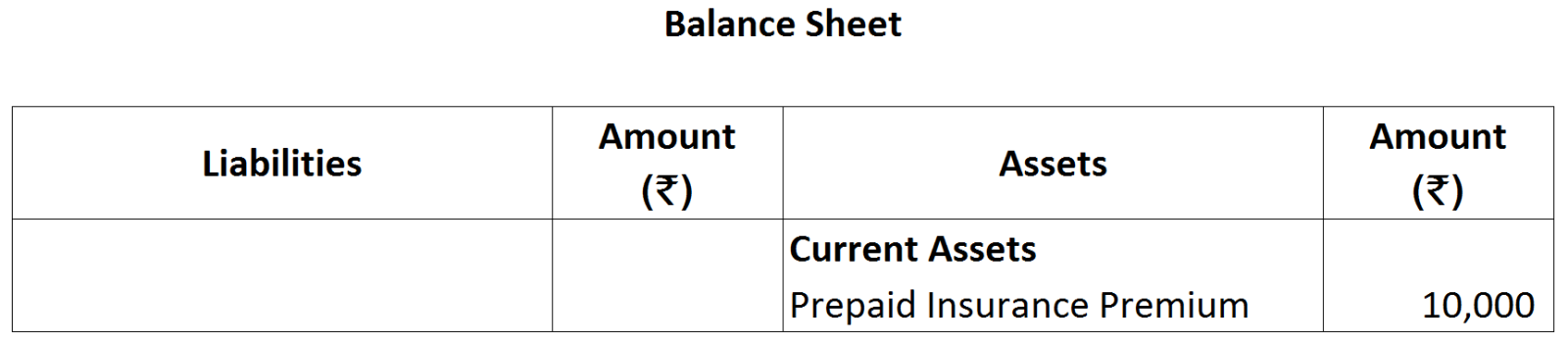
Prepaid or Unexpired Insurance Premium is shown in the Final Accounts as follows:
  1. Unexpired part of the insurance premium (Prepaid Insurance), i.e., ₹ 10,000 is deducted from the insurance premium in the Profit and Loss Account.
  2. Prepaid Insurance Premium is shown on the assets side of Balance Sheet as a separate item under Current Assets.

View full question & answer
Question 93 Marks
Why is it necessary to pass the Adjustment Entries?
Answer
Accrual Concept is the fundamental accounting concept and required that all expenses, whether paid or not and all incomes and gains whether recevied or not, should be accounted to ascertain correct profit or loss, assets and liabilities. They are recorded through the adjustment entries.
View full question & answer
Question 103 Marks
What is meant by Adjustment Entry?
Answer
Adjustment Entry is the entry passed to record expenses and incomes that relate to the accounting period but are yet to be paid or received.
View full question & answer
Question 113 Marks
What is meant by Provision for Discount on Debtors?
Answer
The discount is allowed to those debtors who are ready to pay a huge amount in one shot. It is given in order to encourage them to repay the debt. The provision for discount on debtors is created on good debtors. The amount of good debtors is calculated by deducting the amount of Bad Debts, further Bad Debts and new provision for Doubtful Debts. The required percentage of the good debtors is calculated and the provision for discount on debtors is deducted from the Debtors’ amount in the Assets side of a Balance Sheet. As it is a loss for the business, it is shown in the Debit side of the Profit and Loss Account.
View full question & answer
Question 133 Marks
Show the treatment of the following in final accounts when given inside the Trial Balance:
  1. Provision for discount on debtors.
  2. Closing stock.
  3. Commission Received in Advance.
Answer
Particulars Treatment In Profit and loss A/c Treatment in Balance Sheet
Provision For Discount on Debtors Debit in Profit and loss account Shown as deduction from Debtors
Closing Stock Crediting in Trading A/c Shown in Current Assets
Commission received in Advance No Treatment Shown in Current Liability.
View full question & answer
Question 143 Marks
What is meant by closing stock? Show its treatment in final accounts?
Answer
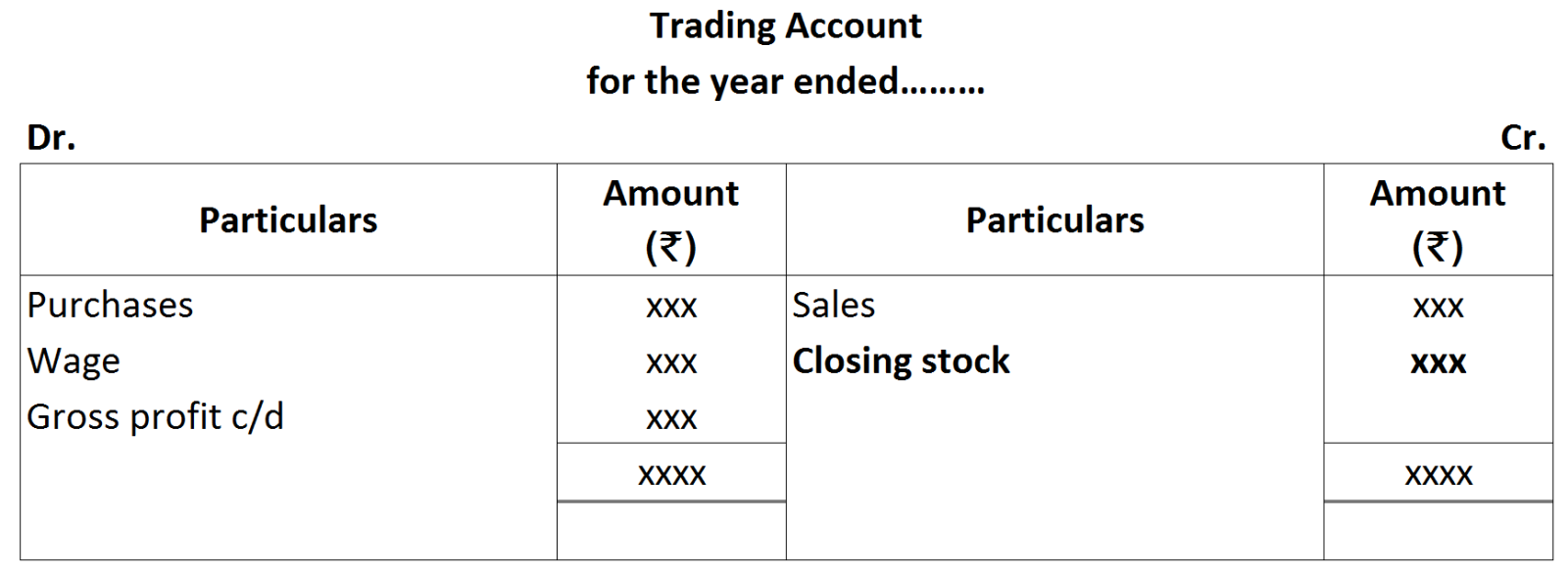
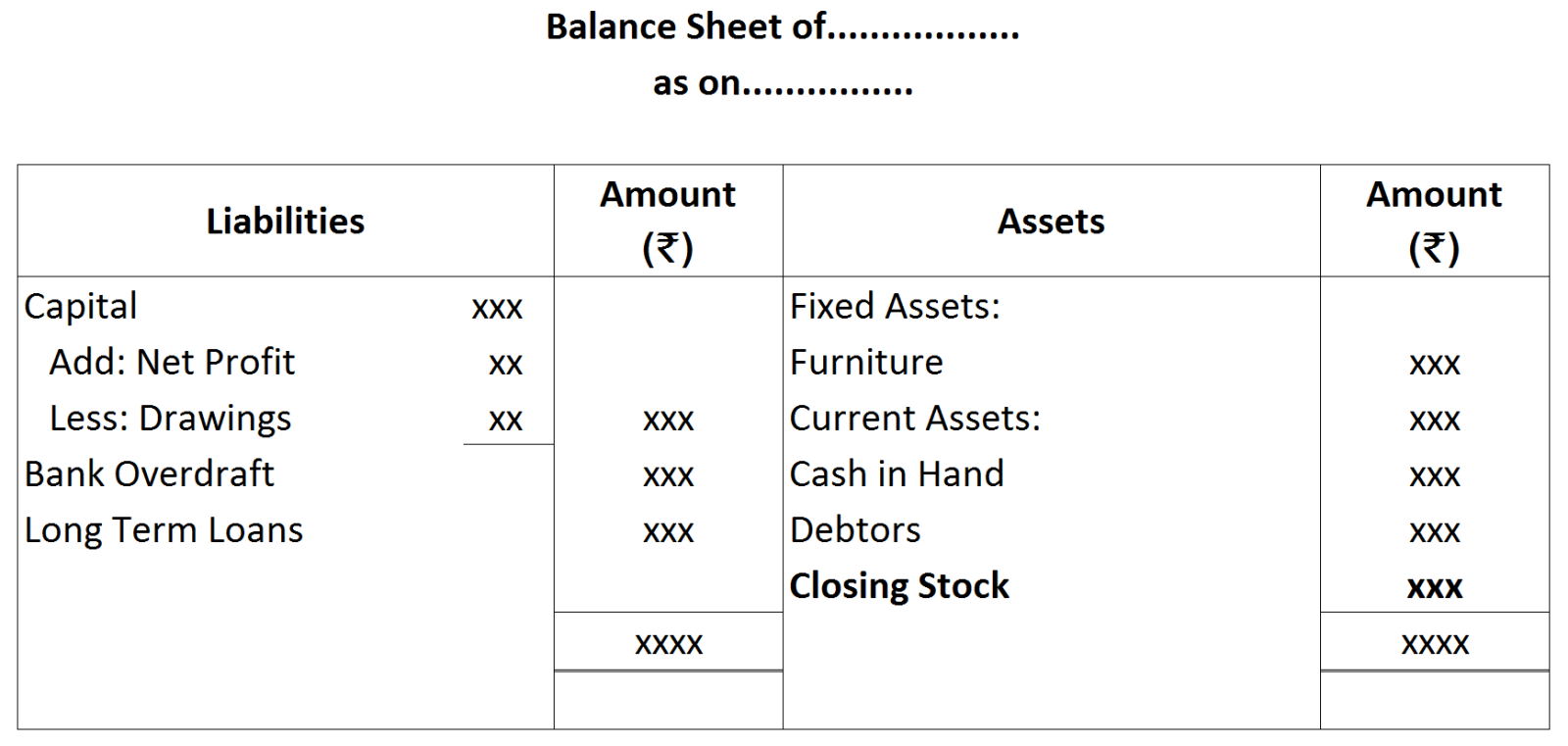
Closing stock implies the value of unsold goods at the end of an accounting period. The valuation of closing stock is done on the basis of its cost price or the realisable value, whichever of the two is lesser. Example: If a good with the cost price of 20,000 is purchased at the end of an accounting period and its realisable value is 30,000, then the closing stock will be valued at 20,000 not at 30,000.Treatment of closing stock
If closing stock is given in the adjustment, then there will be two postings.

If closing stock is given in the trial balance, then it needs to be shown only in the assets side of the Balance Sheet.
View full question & answer
Question 153 Marks
Define Accrued Income. What is its adjusting entry?
Answer
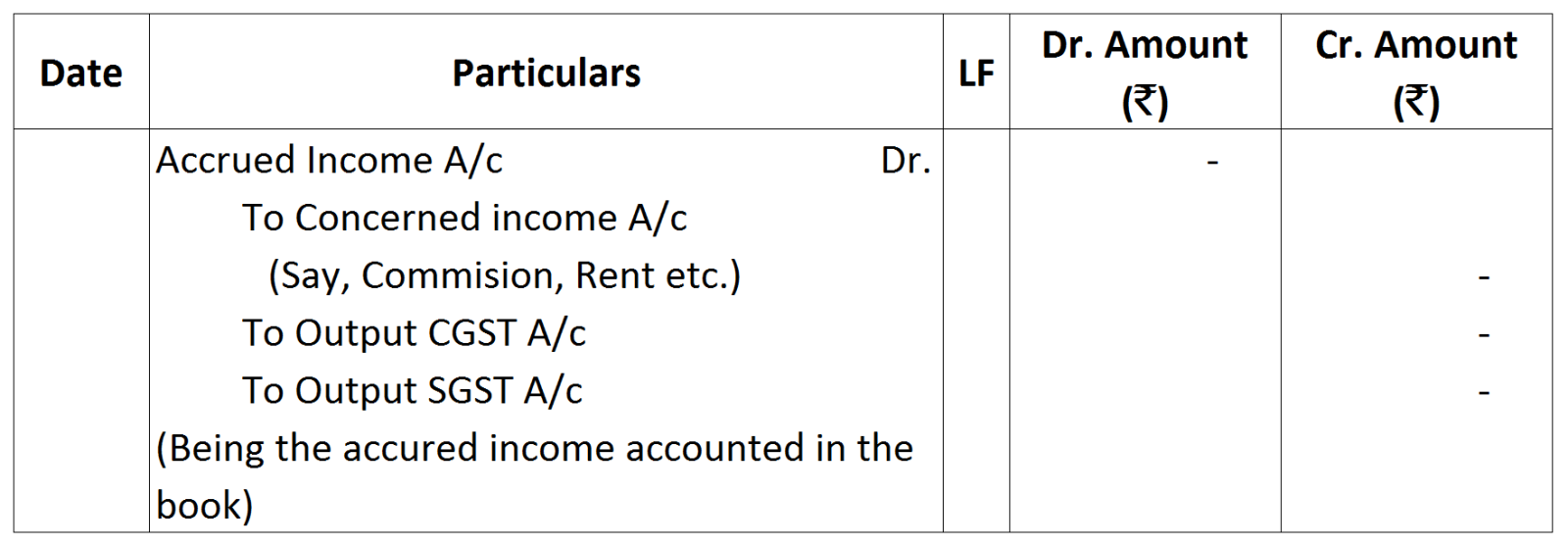
Accrued incomes are those incomes which have been earned during the accounting period but have not been received till the end of accounting period. Such incomes are known as Outstanding incomes or Incomes earned but not yet received. Common examples of such incomes are commission receivable, rent due but not yet received, etc. As per the Accrual Concept of Accounting, total income of the period, both received and yet to be received, are shown in the Final Accounts otherwise the profit and assets will remain understated. The adjusting entry passed is:
View full question & answer
Question 163 Marks
A Company purchased a Machine on 1-4-2008 at a cost of ₹ 3,10,000, estimated residual value ₹ 10,000 with a useful life of 15 years. Depreciation is charged under straight line method till 31-3-2018. After 10 years, an expert recommended that the asset to be used for 10 more years. What is the depreciation for the year 2018-19 under straight line method assuming residual value to remain same?
Answer
Annual Depreciation upto 31-3-2018,
$\frac{3,10,000-10,000}{15}=₹\ 20,000\text{ per year}$
Book Value of Machinery on 31-3-2018
$3,10,000-(20,000\times10)=1,10,000$
Depreciation for the year 2018-19
$\frac{1,10,000-10,000}{10}=₹\ 10,000$
View full question & answer
Question 173 Marks
Why is it necessary to pass adjusting entries when final accounts are prepared?
Answer
It is extremely important to record the adjusting entries in the preparation of final accounts.
  1. This is done in order to assess the true net profit or net loss of the business organisation.
  2. It helps us record those adjustments which were left or omitted and were not recorded in the accounts.
  3. It assists us to separate all the financial transactions into a year-wise category. The financial statements include only those entries which belong to the current year. It rules out the previous and forthcoming years’ entries which are the basis for accrual basis of accounting.
  4. Further, it provides us the room for making various provisions which are made at the end of the year, after assessing the entire year’s performance.
View full question & answer
Question 193 Marks
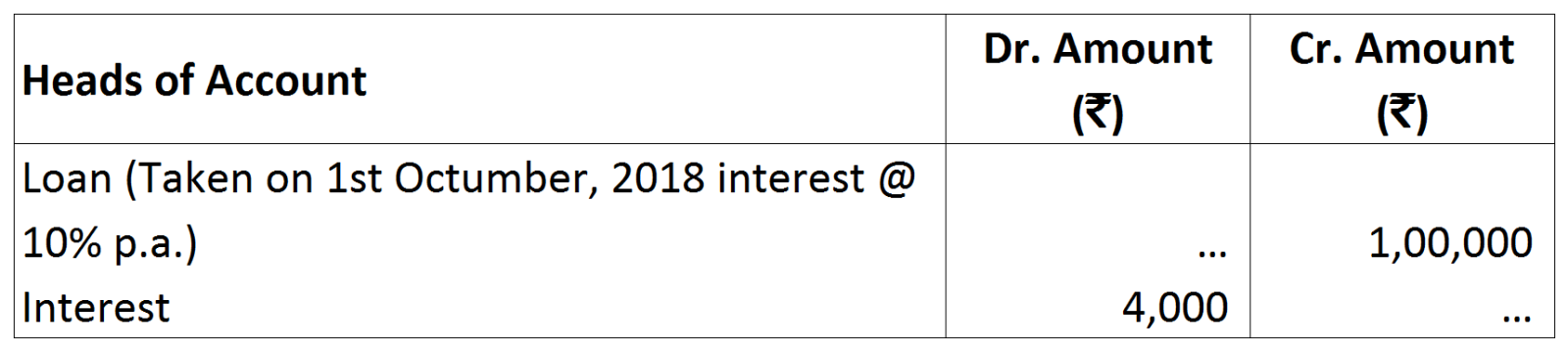
Ravi's Trial Balance as on 31st March, 2019 has the following information:
What is the amount of outstanding interest to be provided?
Answer
amount of interest for 6 months $=\frac{1,00,000\times6\times10}{100\times12}=₹\ 5,000$
But Interest paid is ₹ 4,000
So, there is on outstanding amount of interest will be ₹ 1,000
View full question & answer
Question 203 Marks
What are Outstanding Expenses? What is its adjusting entry?
Answer
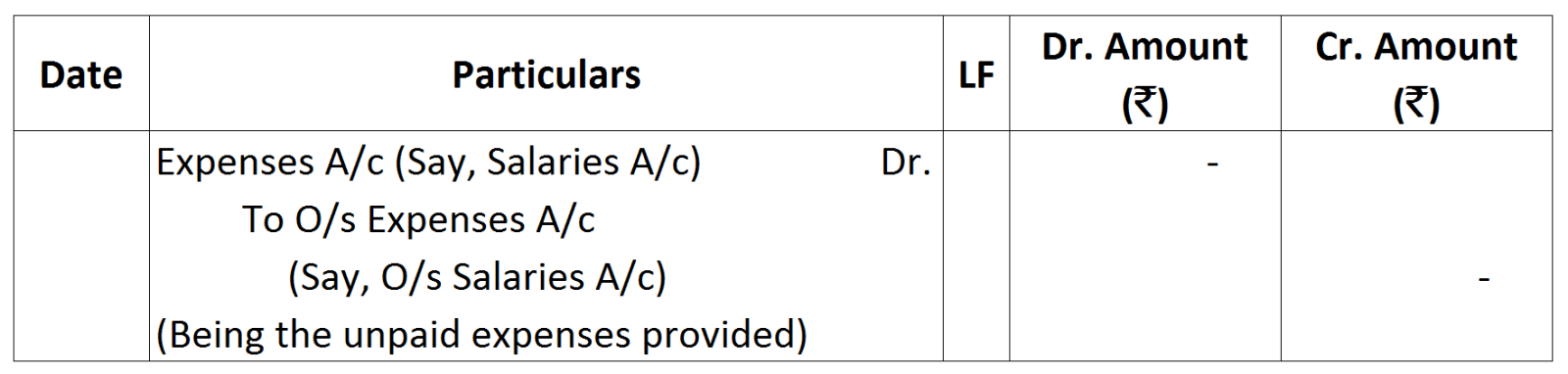
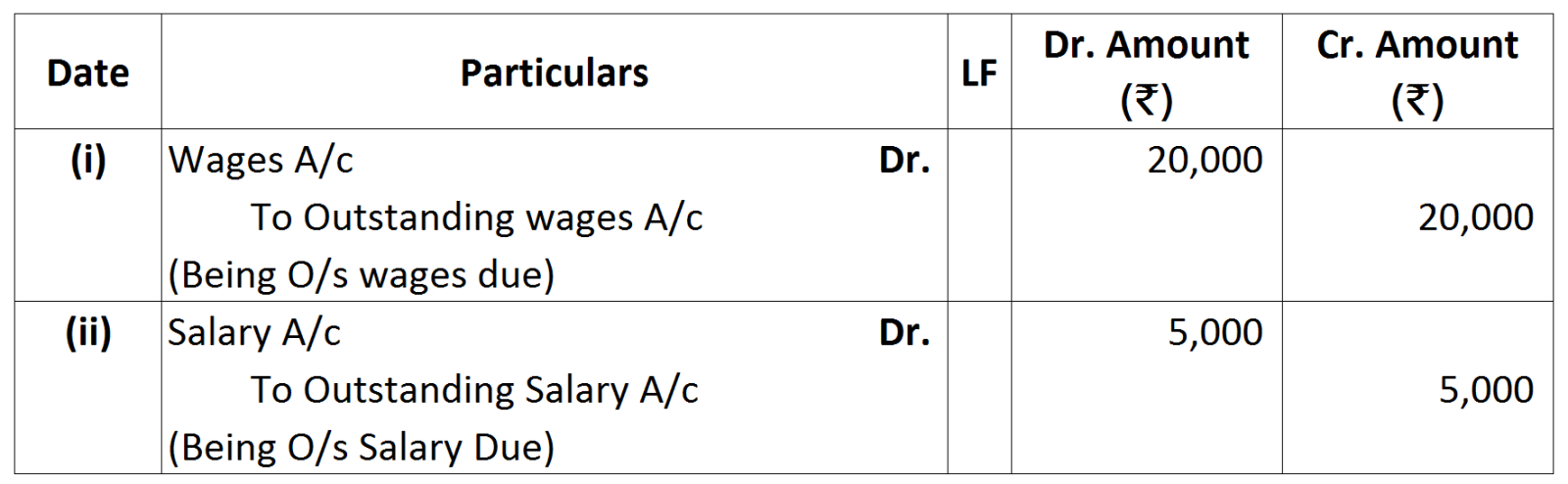
Expenses which have been incurred during the year, but have not been paid yet are called Outstanding Expenses. At the end of the accounting year such expenses are accounted in the books, otherwise profit will be overstated and liabilities will be understated. These expenses may be for wages, salaries, rent, interest, etc. Outstanding Expenses are shown on the debit side of the Trading and Profit and Loss Account by adding to existing amount of expense under that head and as liabilities in the Balance Sheet under current liabilities. The adjusting entry is:
View full question & answer
Question 213 Marks
What is meant by Outstanding Expenses? Give its adjusting entry.
Answer
Outstanding Expenses: These are the expenses which have been incurred during the year but have been left unpaid on the date of preparation of final accounts. In other words, the benefit of such expenses has been derived during the year but the payment of which has not yet been made.
Adjustment:
View full question & answer
Question 223 Marks
Goods costing ₹ 26,000 were sent to a customer at 20% profit on sale on sale or return basis. Customer returned goods of the selling price of ₹ 7,000. At what amount the remaining goods with the costomer will be shown in the Balance Sheet?
View full question & answer
Question 233 Marks
Why is Input GST (CGST and SGST or IGST) Account credited when goods are given as charity and goods are damaged or lost in fire or theft?
Answer
It is credited because goods given as charity and goods being damaged or lost in fire or theft is not sale, i.e., GST is not collected. Therefore, Input GST will not be set-off against Output GST.
View full question & answer
Question 243 Marks
What adjusting entries would you pass for the following:
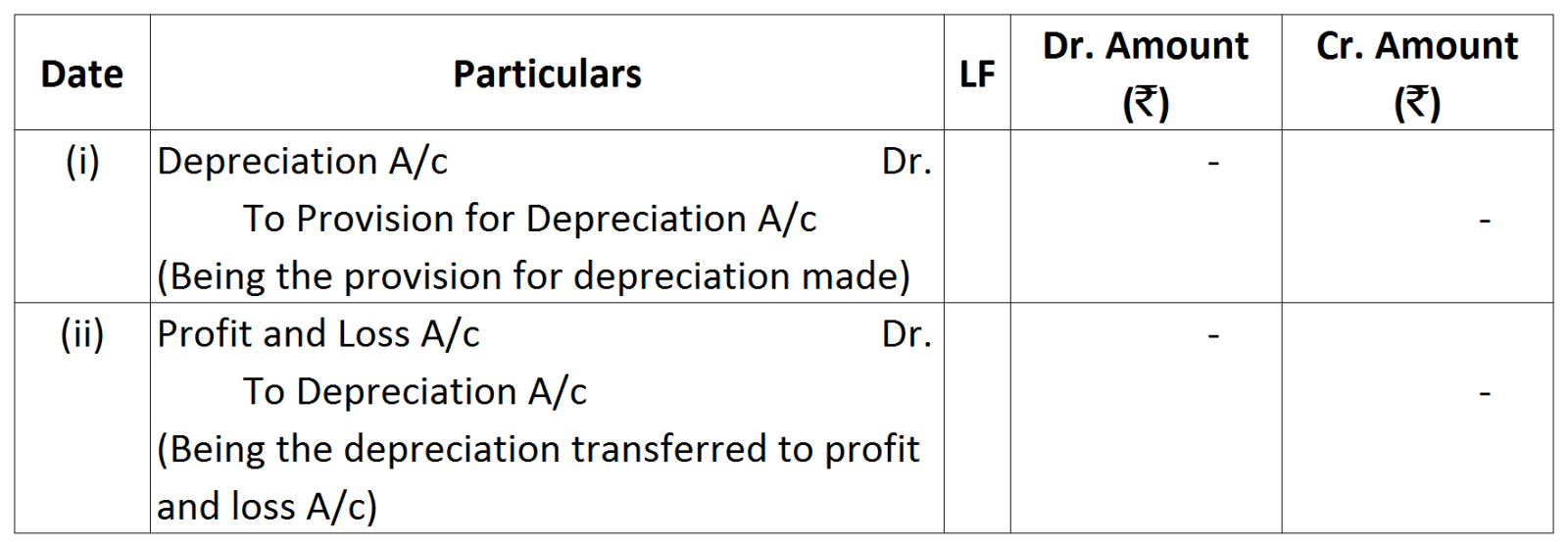
  1. Depreciation,
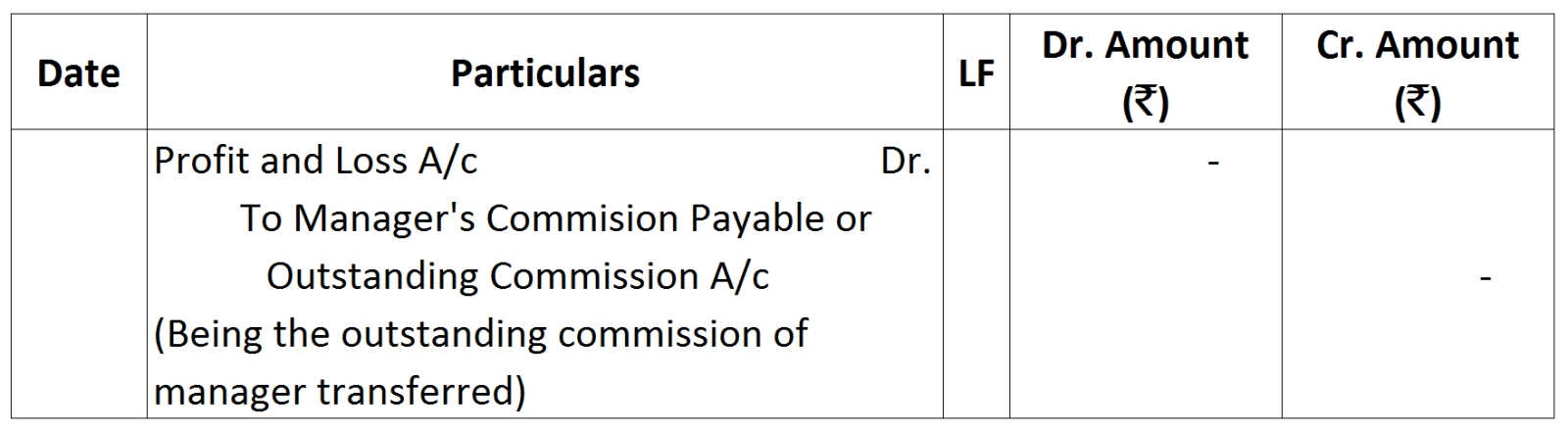
  2. Manager's Commission.
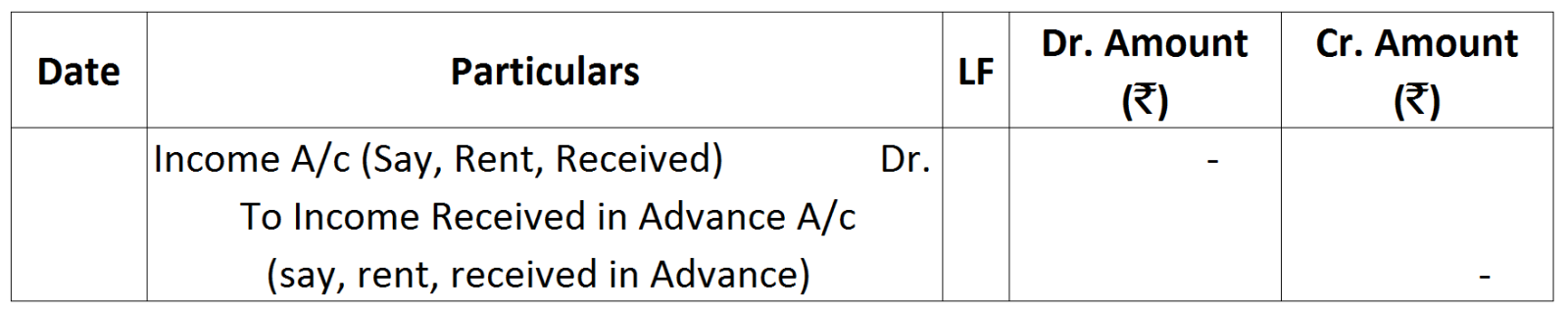
  3. Income Received in Advance?
Answer
  1. Depreciation:
When Provision for Depreciation Account is not maintained:


When Provision for Depreciation Account is maintained:
  1. Manager's Commission:
  1. Income Received in Advance:
​​​​​​​Adjusting entry for the income received in advance is as follows:

​​​​​​​
View full question & answer
Question 253 Marks
Explain the following with examples:
  1. Capital Expenditure
  2. Revenue Expenditure
  3. Deferred Revenue Expenditure.
Answer
  1. Capital Expenditure: Any expenditure which is incurred in acquiring or increasing the value of a fixed asset is termed as capital expenditure. As such, the amount spent on the purchase of Land and Building, Plant and Machinery, Furniture etc. is capital expenditure. Such expenditure yields benefit over a long period and hence is written in Assets.
  2. Revenue Expenditure: Any expenditure, the benefit of which is received during the current year itself is termed as revenue expenditure. As such, all the revenue expenditures are debited to Trading and Profit & Loss Account.
  3. Deferred Revenue Expenditure: There are certain expenditures which are revenue in nature but the benefit of which is likely to be derived over a number of years. Such expenditures are termed as 'Deferred Revenue Expenditures'.
View full question & answer
Question 263 Marks
State the meaning of:
Outstanding expenses.
Answer
Outstanding Expenses: These refer to those expenses which belong to and are incurred in the current accounting period but are left unpaid. In other words, we can say that the services in exchange of these payments have been realised but the payments are not made. For example, if 1000 wages are outstanding, then this means that labour worth 1,000 has been used but has not been paid for till the end of the year.
View full question & answer
3 Marks Question - Account STD 11 Commerce Questions - Vidyadip