Questions · Page 2 of 3

3 Marks Question

Question 513 Marks
How does capital market satisfy firstly savers and at the same time investors ?
Answer
Capital market is a place where savers as well as investors get maximum satisfaction. The capital market satisfies the tastes of savers and the needs of investors through its various financial instruments and institutions. As per entrepreneurs requirement they enter either of the following markets available under capital market.
View full question & answer
Question 523 Marks
"For what type of ventures SIDBI provide Venture Capital assistance to the entrepreneurs.”
Answer
SIDBI provide venture capital assistance to the entrepreneurs for their innovative ventures ifthey have a sound management team, long term competitive advantage.
View full question & answer
Question 533 Marks
State some mushrooming sources of raising finance in the business.
Answer
Some mushrooming sources available to an entrepreneur for raising finance are as follows:
  1. Capital markets
  2. Angel investors
  3. Venture capital
  4. Specialised financial institutions
View full question & answer
Question 543 Marks
What is the alternate name of stock used by different people?
Answer
The alternate name of stock used by different people are shares, securities, equity or bonds.
View full question & answer
Question 553 Marks
Entrepreneur can use the capital raised for a variety of purposes. What are they?
Answer
The capital raised may be used for:
  1. Setting new enterprises
  2. Expanding
  3. Diversifying
View full question & answer
Question 563 Marks
What does the Securities Contracts (Regulation) Act, 1956 permit?
Answer
This Act permits only recognized stock exchanges to function under the rules, regulations and by-laws approved by the Central Government. The organisation, management, membership and functioning of stock exchanges in India are governed by the provisions of The Securities Contracts (Regulation) Act, 1956.
View full question & answer
Question 573 Marks
“Stock market imparts liquidity to investment." Comment.
Answer
  1. “Stock market imparts liquidity to investment.”The important function of stock market is to provide a ready and continuous market for the sale and purchase of securities.
  2. It also gives an investor to reinvest and disinvest.
  3. This market imparts liquidity to the long-term securities held by them by providing an auction market for these securities.
  4. It enhances the marketability of securities and thereby provides liquidity to investments.
View full question & answer
Question 583 Marks
Name the sources of demand for capital.
Answer
The demand for capital arises due to the undermentioned reasons:
  1. Meeting fixed capital requirements.
  2. Meeting working capital requirements.
  3. For growth and expansion.
  4. For diversification.
  5. For technology upgradation.
View full question & answer
Question 593 Marks
“Stock exchanges control the activities of brokers and protect the investors from being deceived. But, if any broker is found indulging in malpractices as overcharging or giving wrong information, then what action will be taken against him?
Answer
If any broker is found indulging in malpractices as overcharging or giving wrong information, then his/her licence may be cancelled.
View full question & answer
Question 603 Marks
Write down the objectives of IDBI.
Answer
The various objectives of Industrial Development Bank of India (IDBI) are as follows:
  1. It coordinates, regulates and supervises the working of other financial institutions and commercial banks.
  2. It supplements the resources of other financial institutions
  3. It plans, promotes and develops key industries and also helps in their diversification.
  4. It devises and enorces such a method of industrial growth that conforms to national priorities.
View full question & answer
Question 613 Marks
“Stock Exchange provides safety and security in dealings”. How?
Answer
Activities of the stock exchange are controlled by the provisions of the Securities Control (Regulation) Act and all this creates confidence in the minds of investors. As transactions are conducted as per well defined rules and regulations, fraudulent practices stands checked effectively ensuring safety, security and justice in dealings.
View full question & answer
Question 623 Marks
What is meant by ‘Capital Structure'?
Answer
It is the composition or mix of different types of long-term capital whether owned or borrowed. It includes all the long term funds consisting of share capital, debentures, bonds, loans and reserves.
View full question & answer
Question 633 Marks
Who manages SEBI?.
Answer
SEBI is managed by its members, which consists of the following:
  1. Chairman, who is nominated by Union Government of India.
  2. Two members, i.e. officers from Union Finance Ministry.
  3. One member from the Reserve Bank of India.
  4. The remaining 5 members are nominated by Union Government of India, out of which atleast 3 are whole-time members.
View full question & answer
Question 643 Marks
Answer each of these questions in about fifteen words:
What is the role of Specialized Financial Institutions in India?
Answer
  1. The role of Specialized Financial Institutions (SFIs) also called development banks make an important source of medium and long-term financing amongst all the financial institutions in India.
  2. They generally provide finances to the business and they help in promotion of new industries/ new entrepreneur.
View full question & answer
Question 653 Marks
How stock options method enables employees to become shareholders and share the profits?
Answer
Venture capital finance has the following features:
  1. It is basically equity finance in relatively new companies.
  2. It is long-term investment in growthber oriented small or medium firms.
  3. Venture capitalists not only provide capital but also business skills to investee firms.
  4. It involves high risk-return spectrum.
  5. It is a subset of private equity.
  6. The venture capital institutions have a continuous involvement in the business after making the investment.
  7. Such institutions disinvest the holdings either to the promoters or in the market.
View full question & answer
Question 663 Marks
An entrepreneur is a person who bears the risks, unites various factors of production and carries out a creative innovation and for all these, what is the basic requirement to be reached to this extent?
Answer
Finance is the basic requirement. Whether running a home based business or a mid-sized venture, the first and foremost requirement is that of finance. Finance is the elixir that assits in the formation of new businesses and allows businesses to take advantage of opportunities to grow and expand.
View full question & answer
Question 673 Marks
Which sources provide the supply for long-term funds?
Answer
Long-term funds are those funds which will be kept in business for a period exceeding five years. These funds can be raised both from internal as well as external sources. Internal sources of long-term funds are:
  1. Equity shares
  2. Preference shares
  3. Retained earnings
  4. External sources of long-term funds are:
  5. Debentures
  6. Long-term loans from banks and financial institutions
View full question & answer
Question 683 Marks
“Stock Exchange provides safety and security in dealings”. How?
Answer
Activities of the stock exchange are controlled by the provisions of the Securities Control (Regulation) Act and all this creates confidence in the minds of investors. As transactions are conducted as per well defined rules and regulations, fraudulent practices stands checked effectively ensuring safety, security and justice in dealings.
View full question & answer
Question 693 Marks
Give any two differences between angel investors and venture capitalists.
Answer
Two points of distinction between angel investors and venture capitalists are as follows:
  1. Angel investors invest their own money, whereas venture capitalists invest other people money.
  2. The investment made by angel investors is as small as compared to venture capitalists.
View full question & answer
Question 703 Marks
What do you understand by venture capital?
Answer
Venture capital is an equity based investment in small and medium enterprises in return for minority shareholding in the business or an irrevocable right to acquire. It is a professionally managed pool of equity capital.
View full question & answer
Question 713 Marks
A stock exchange performs many functions. State any four.
Answer
Four functions performed by stock exchange are as follows:
  1. Provide a ready market for securities.
  2. Facilitates evaluation of securities.
  3. Check brokers. TVOTO
  4. Regulates company management.
View full question & answer
Question 723 Marks
Enlist several categories of financing possibilities in which smaller ventures sometimes rely on.
Answer
The categories of financing possibilities are as follows:
  1. Early stage financing, which comprises of:
  2. Seed capital.
  3. Start-up capital.
  4. Expansion or development financing, which comprises of:
  5. Working capital requirements.
  6. funding for expansion plans.
  7. Bridge financing.
  8. Acquisitions and leveraged buyout financing.
View full question & answer
Question 733 Marks
Why are venture capitalists typically very selective in deciding while doing the investment?
Answer
Venture capitalists are typically very selective in deciding while doing the investment due to the following reasons:
  1. High-risk associated with ventures.
  2. No asset backing for investment made.
  3. Highly illiquid investments.
  4. Long gestation period.
View full question & answer
Question 743 Marks
Answer each of these questions in about fifteen words:
What is the need of secondary market?
Answer
The secondary capital market, which is also known as old securities market or stock exchange deals with buying and selling of old securities i.e. the market securities issued earlier are sold by existing investors in this market, thus paving way for the entrepreneurs that if they offer high returns to market, investors will remain inclined to invest therein. The secondary market enhances the marketability of securities and thereby provides liquidity to investments.
View full question & answer
Question 753 Marks
Give the year of establishment and type of organisation for the following stock exchanges in India.
Delhi Stock Exchange.
Pune Stock Exchange.
Answer
S. No
Stock exchange
Years of establishment
Types of organisation
1.
Delhi Stock Exchange
1947
Public limited company.
2.
Pune Stock Exchange
1982
Company limited by guarantee.
View full question & answer
Question 763 Marks
Why primary market is also known as new issue market? Give one reason.
Answer
When an entrepreneur decides to issues securities like shares, debentures to the public for the first time for the purpose of obtaining capital funds such issues of securities are even referred as “new money issues”. Primary market is known as new issue market.
View full question & answer
Question 773 Marks
Mohit Pipes and Tube Co. Ltd. goes for public issue of 10,000 shares @ 10 each. Applications were received for 15,000 shares. How did the company proceed with the process of issuing shares?
Answer
In the case of Mohit Pipes and Tube Co. Ltd:
Issued shares to public - 10,000 Shares @ 10 each.
Applied share public by - 55,000 Shares @ 10 each.
Company receives only 150% of the subscription: Within 120 days from the date of the issue, it is called as oversubscription.
Company will proceed with the issued shares i.e. 10,000 shares and excess shares will be refunded according to SEBI guidelines.
The over-subscribed amount after the finalisation of allotment, should be refunded to the applicants within 10 weeks of the closure of subscription list. If the money is not so refunded, the company is liable to refund the money with interest as specified from the expiry of the 8 days after 10 weeks of the closure of subscription list.
View full question & answer
Question 783 Marks
How venture capital can best be characterized as a long-term investment discipline?
Answer
Venture capital can best be characterized as a long-term investment discipline, usually occurring over a five-year period that helps in the creation of
  1. Early-stage companies.
  2. The expansion and revitalization of existing businesses, and.
  3. The financing of leveraged buyouts of existing divisions of major or privately owned enterprises.
View full question & answer
Question 793 Marks
Why stock exchange is also known as secondary market?
Answer
Stock exchange or Secondary market is an institution or place which provide a platform for buying and selling of existing securities only and prices are decided by demand and supply of securities. It is located at a specified place. It indirectly promotes capital formation or easy way of encashability of securities through buying and selling.
View full question & answer
Question 803 Marks
Name the specialised institutions which provides leasing and factoring to small scale units.
Answer
Leasing and factoring to small-scale units are provided for by SIDBI.
View full question & answer
Question 813 Marks
Answer each of these questions in about one hundred and fifty words:
Write down the sectors of organized and un–organized market?
Answer
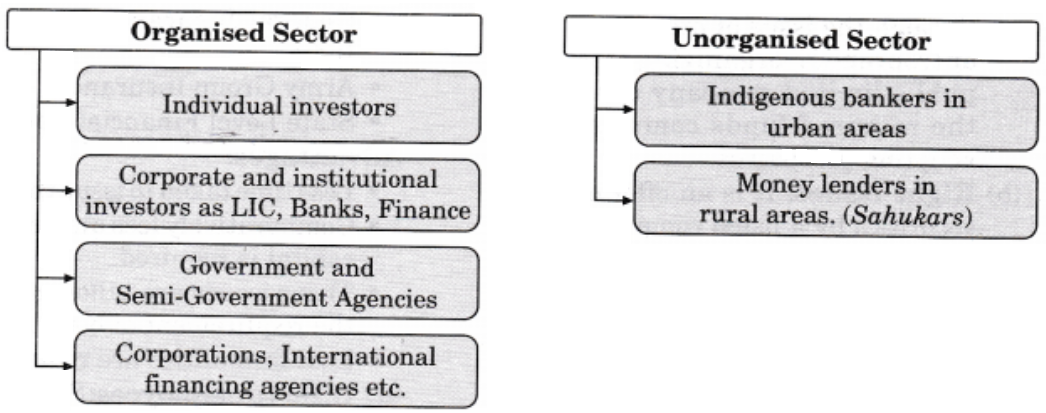
The capital market in India may be broadly classified into:
A. Organized Markets:
This segment comprises of
  1. Corporate enterprises.
  2. Government and semi-government institutions requiring funds for various development activities.
  3. Individual investors.
  4. Corporate and institutional investors, as LIC, Banks, Finance Corporations, International financing agencies, etc.
B. Unorganized Sector:
The unorganized sector consists of
  1. The indigenous bankers in urban areas.
  2. The money lenders in rural areas.
View full question & answer
Question 823 Marks
Ram was very thrilled with his new job. He was placed in a small factory manufacturing door knobs as a stock keeper. After a few days, while taking stock he understood that nuts and various small parts constituted majority of the cost of production. After some time, the firm went into a loss and the owner decided to look into the various factors that could have constituted the loss. Ram expressed his concern that inventory was not properly maintained and that there are various techniques which are involved and if followed properly the company will not be in a loss. The owner agreed to the suggestion. He also decided to take help from some specialized government institution initiate steps for technological up gradation, and modernization of existing units.
  1. What technique was suggested by Ram? Explain it.
  2. Which specialized financial institution is the owner thinking of approaching and state any one of its objectives?
Answer
ABC Analysis:
  1. The inventory controltechnique known as ABC analysis builds on Pareto's Principle. In ABC analysis, a company reviews its inventory and sorts all SKUs into three categories, called 'A', 'B'and 'C' items. The typical breakdown might look like this ‘A’inventory: 20 per cent of SKUs, 80 per cent of value. 'B' inventory: 30 per cent of SKUs, 15 per cent of value.
'C'inventory: 50 per cent of SKUs, 5 per cent of value. A particular company's numbers may be different, but the pattern would be similar we should be able to discern a similar kind of pattern.
  1. SIDBI (Small Industries Development Bank of India)
Objectives of SIDBI are: Initiate steps for technological up gradation, and/ or modernization of existing units.
View full question & answer
Question 833 Marks
Answer each of these questions in about fifty words:
How stock options lead to enable employees to become shareholders and share the profits of the company?
Answer
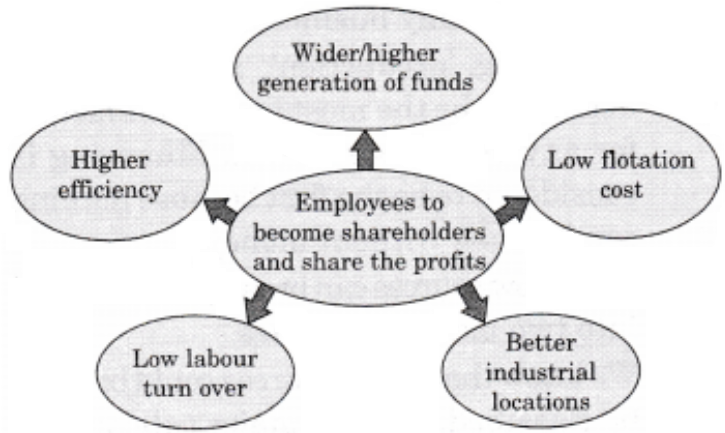
Stock options or offering shares to the employees has gained much popularity in many countries of the world. This method enables employees to become shareholders and share the profits of the company leading to:
View full question & answer
Question 843 Marks
Answer each of these questions in about fifty words:
Name the sources of demand for capital comes from.
Answer
Capital doesn’t just come in one flavor. Capital comes from various sources and systems and where it comes from helps to shape the nature of the economy it goes into.
  1. Loans: Loans are a source of capital in which, if the business owner can pay off the loan, the owner then owns the business investment. Fractional reserve banking increases the availability of loans.
  2. Venture capital: Venture capital is a source of capital in which the venture capitalist owns the business investment (or, more frequently, owns a high percentage of it), but grants control of the capital to the individual operating the business.
  3. Public ownership: The company is considered an asset and private individuals or organizations own parts, or hold stock, in the company – an initial release of stock (called an “IPO”) generates capital for the company directly from investors.
View full question & answer
Question 853 Marks
“Stock exchanges are the financial barometers of an economy". How?
Answer
  1. Stock exchanges are the financial barometers and development indicators of national economy of the country.
  2. It help businesses to raise capital and give investors opportunities to back new and established enterprises.
  3. It also help business and entrepreneurs to come together to buy and sell trade shares for the purpose to raise more capital.
  4. Continuous growth of industries is reflected in the index of stock exchange.
  5. Rising stock market, through rising prices, more investors can create a sense of confidence and gives positive direction in the growth of an economy.
View full question & answer
Question 863 Marks
Explain the functions of Industrial Investment Bank of India Ltd (IIBI).
Answer
  1. The Industrial Investment Bank of India Ltd. (IIBI) was formed by transforming the Industrial Reconstruction Bank of India (IRBI).
  2. It was set up by IDBI at the instance of the Government of India in April 1971 for rehabilitation of sick industrial companies.
  3. IRBI was incorporated under the Companies Act, 1956 and renamed as the Industrial Investment Bank of India Ltd. in March 1997.
Functions: IIBI offers a wide range of products and services such as:
  1. Term-loan assistance for project finance.
  2. Short duration non-project asset – backed financing working capital/ other short term loans to companies.
  3. Equity Subscription Asset Credit.
  4. Equipment finance.
  5. Investments in Capital Market and Money market instruments.
View full question & answer
Question 873 Marks
Answer each of these questions in about one hundred and fifty words:
What do you understand by capital market? How can the capital market in India be broadly classified into different categories?
Answer
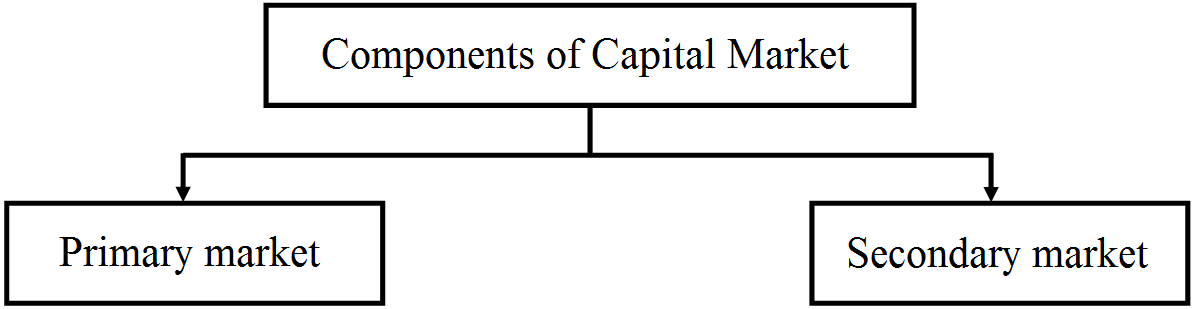
A capital market may be defined as an organized mechanism meant for effective and smooth transfer of money capital or financial resources from the investors to the entrepreneurs. The capital market in India may be broadly classified into:
View full question & answer
Question 883 Marks
Source of Finance
Money is Always a Problem
'Air India has defaulted on working capital loan interest payment of 200 crores due to the financial crisis that the airlines is facing' confirms Air India sources on 21st May, 2011. Air India has high-cost loans worth about 40000 crores.
Air India is facing a tight financial situation and is in talks with lenders to restructure its debt of ₹ 40,000 crores. The lenders have agreed to reduce interest rates on part of the debt that is linked to overseas borrowings. The future of the remaining debt is still uncertain, especially because lenders are seeking a conversion of their debt into equity or equity like instruments. This is perhaps the first time that the national carrier has defaulted on its payments to banks. Sources said the airline had approached banks for more loans but they have declined to help because of the airlines' poor financial health.
And they say 'finance is difficult for new entrepreneurs.......... Its always a major concern.
  1. Air India' has high cost loans worth about ₹ 40,000 crores. From the above statement, identify the source of finance Air India.
  2. Give one advantage and one disadvantage of raising finance through this source.
  3. What will be the effect of conversion of debt into equity on the financial health of the company?
Answer
  1. Air India has sourced its funds from external sources.
  2. Advantage is that control is not diluted.
Disadvantage is that fixed expenses in the form of interest, prove to be a burden.
  1. The conversin would reduce interest payments for the airline, thereby reducing its burden.
View full question & answer
Question 893 Marks
Answer each of these questions in about fifty words:
Explain briefly the three functions of SEBI rolled into one body.
Answer
  • SEBI has quasi-legislative capacity as it makes rules and regulations. It has rule-making authority related to the matters of securities in India.
  • SEBI is a quasi-judicial body as it has an entity such as an arbitrator or tribunal board, and has powers and procedures resembling those of a court.
  • SEBI is quasi-executive as it functions like an executive but that is not really an executive.
View full question & answer
Question 903 Marks
What is meant by primary market? Briefly explain the concept of 'Right Issue for existing companies'?
Answer
Primary market is basically to facilitate transfer of resources from the savers to the entrepreneurs seeking funds for:
  1. Setting new enterprises.
  2. Expanding.
  3. Diversifying.
An entrepreneur can raise the required capital in the primary market by the following methods:
  1. Public issue.
  2. Rights issue.
  3. Private placement.
  4. Offer to employees.
Rights issue for existing companies: Rights issue is a method of raising additional finance from existing shareholders by offering securities to them on pro-rata basis, i.e. giving them a right, to a certain number of shares in proportion to the shares, they are already holding.
View full question & answer
Question 913 Marks
Companies can raise finance by a number of methods. What are the methods to raise long-term and medium-term capital finance?
Answer
Issue of Shares: It is the most important method. The liability of shareholders is limited to the face value of shares, and they are also easily transferable. A private company cannot invite the general public to subscribe for its share capital and its shares are also not freely transferable. But for public limited companies there are no such restrictions.There are two types of shares:
  1. Equity shares: The rate of dividend on these shares depends on the profits available and the discretion of directors. Hence, there is no fixed burden on the company. Each share carries one vote.
  2. Preference shares: Dividend is payable on these shares at a fixed rate and is payable only if there are profits. Hence, there is no compulsory burden on the company's finances. Such shares do not give voting rights.
Issue of Debentures: Companies generally have powers to borrow and raise loans by issuing debentures. The rate of interest payable on debentures is fixed at the time of issue and are recovered by a charge on the property or assets of the company, which provide the necessary security for payment. The company is liable to pay interest even if there are no profits. Debentures are mostly issued to finance the long-term requirements of business and do not carry any voting rights.
Loans from Financial Institutions: Long-term and medium-term loans can be secured by companies from financial institutions like the Industrial Finance Corporation of India, Industrial Credit and Investment Corporation of India (ICICI), State level Industrial Development Corporations, etc. These financial institutions grant loans for a maximum period of 25 years against approved schemes or projects. Loans agreed to be sanctioned must be covered by securities by way of mortgage of the company's property or assignment of stocks, shares, gold, etc.
Loans from Commercial Banks: Medium-term loans can be raised by companies from commercial banks against the security of properties and assets. Funds required for modernisation and renovation of assets can be borrowed from banks. This method of financing does not require any legal formality except that of creating a mortgage on the assets.
Public Deposits: Companies often raise funds by inviting their shareholders, employees and the general public to deposit their savings with the company. The Companies Act permits such deposits to be received for a period up to 3 years at a time. Public deposits can be raised by companies to meet their medium-term as well as short-term financial needs. The increasing popularity of public deposits is due to:
  1. The rate of interest the companies have to pay on them is lower than the interest on bank loans.
  2. These are easier methods of mobilizing funds than banks, especially during periods of credit squeeze.
  3. They are unsecured.
  4. Unlike commercial banks, the company does not need to satisfy credit worthiness for securing loans.
Reinvestment of Profits: Profitable companies do not generally distribute the whole amount of profits as dividend but, transfer certain proportion to reserves. This may be regarded as reinvestment of profits or ploughing back of profits. As these retained profits actually belong to the shareholders of the company, these are treated as a part of ownership capital. Retention of profits is a sort of self financing of business. The reserves built up over the years by ploughing back of profits may be utilised by the company for the following purposes:
  1. Expansion of the undertaking
  2. Replacement of obsolete assets and modernisation.
  3. Meeting permanent or special working capital requirement.
  4. Redemption of old debts.
  5. It enables the company to adopt a stable dividend policy.
View full question & answer
Question 933 Marks
What do you understand by 'short selling' and 'squaring' off?
Answer
Short selling: It means first selling and then buying. It happens only in day trading or future trading.
Squaring off: This term is used to complete one transaction. It means that, if you buy, then you have to sell, and if you sell then you have to buy.
View full question & answer
Question 943 Marks
Mr. B the financial Manager of ABC Company purchases 100 shares of the Company just before the rights issue was announced. Is the behaviour of the manager ethical? What would you do as a legal advisor of the company?
Answer
  1. Yes, the behaviour of the manager is unethical because rights issue is a method of raising additional finance from existing shareholders by offering securities to them on prorate basis i.e. giving them a right to a certain number of shares in proportion to the shares they are holding.
  2. As a legal advisor of the company, I advice that he should not be given that right of extra shares.
  3. As a manager his responsibility is to develop and analyse information.
View full question & answer
Question 953 Marks
How many venture capital institutions are there in India?
Answer
On present, many Venture Capital Companies/ funds have been set up in India, in both the public and the private sectors, for example,
  1. Industrial Development Bank of India's Venture Capital Fund.
  2. Technology Development and Information Company of India Ltd. (TDICI).
  3. Risk Capital and Technology Finance Corporation Ltd.
  4. Gujarat Venture Finance Ltd. (GVFL).
  5. Andhra Pradesh Industrial Development Corporation (APIDC) Venture Capital Fund.
  6. National Venture Fund for Software and IT Industry.
  7. The Canbank Venture Capital Fund.
  8. The Credit Capital Venture Fund Ltd. etc.
View full question & answer
Question 963 Marks
Answer each of these questions in about fifty words:
What is SEBI and what is its role?
Answer
The Securities and Exchange Board of India or SEBI is the regulator for the securities market in India.Role of SEBI:
  1. It is a supervising and regulatory body to check certain malpractices and works for promoting the securities markets in India.
  2. It has three functions rolled into one body: quasi-legislative, quasi-judicial and quasi-executive.
  3. It drafts regulations in its legislative capacity, it conducts investigation and enforcement action in its executive function and it passes rulings and orders.
View full question & answer
Question 973 Marks
Answer each of these questions in about fifty words:
How can an entrepreneur, raises funds by selling the issue mainly to the institutional investors?
Answer
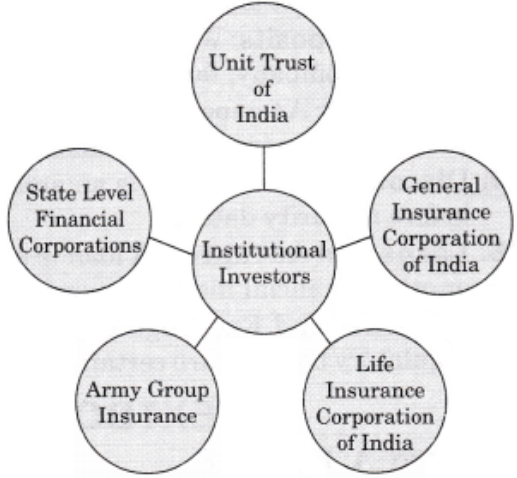
Private Placement: Any entrepreneur can directly sale of its securities of a company to a limited number of sophisticated investors. Entrepreneurs can raise funds by selling the securities mainly to the institutional investors like:
Entrepreneurs both from public limited and private limited sectors, banks heavily upon raising funds through the issues of varied financial instruments under this segment as at times they do not wish to disclose information to the open market.
View full question & answer
Question 983 Marks
Explain how capital markets are the most important source of raising finance for an entrepreneur?
Answer
Capital market refers to whole network of all organisations, institutions and instruments that fulfil the medium-term and long-term financial needs of the government and the industrial sector. They are an important source of raising finance for an entrepreneur because of the below mentioned reasons:
  1. Investment outlay: Capital market instruments require less investment as the securities are generally low priced. So, investors from all income group can invest in capital market instruments. The broad investor base makes it easier for an entrepreneur to raise finance.
  2. Participants: Both individual as well as institutional investors can participate in the capital market. This also facilitates in easy raising of finance.
  3. Duration: Capital market deals in medium and long-term funds. So, it provides an entrepreneur with capital requiring no immediate repayment. This helps him to make plans for growth and diversification.
View full question & answer
Question 993 Marks
What do you understand by capital market? How can the capital market in India be broadly classified into different categories?
Answer
A capital market may be defined as an organised mechanism meant for effective and smooth transfer of money capital or financial resources from the investors to the entrepreneurs. Capital market deals in medium-term and long-term funds. The capital market can be divided into two parts:
  1. Primary market: It refers to the market where securities are sold for the first time. Therefore, it is also known as 'new issues' market. The common instruments of this market are equity shares, preference shares, debentures, etc. Primary market accelerates the rate of capital formation in the economy, as it facilitates the transfer of surplus funds from investors to the entrepreneurs. The major participants of this market are banks, financial institutions, insurance companies, mutual funds and individuals.
  2. Secondary market: It refers to market for sale and purchase of previously issued securities. It is also known as stock market or stock exchange. Trading can be done nationwide through terminals, but the transactions have to be carried out within the regulatory framework prescribed by SEBI.
View full question & answer
Question 1003 Marks
ICICI was established as a joint stock company in the private sector in 1955. Who are the major contributors towards its share capital?
Answer
The major contributors towards the share capital of Industrial Credit and Investment Corporation of India (ICICI) are as follows:
  1. Nationalised Banks.
  2. Insurance Companies (UTI, LIC and GIC and their subsidiaries together hold 50 % of the paid-up share capital).
  3. Foreign Institutional Investors.
  4. World Bank.
View full question & answer
3 Marks Question - Page 2 - Entrepreneurship STD 12 Commerce Questions - Vidyadip