Questions

Case study (4 Marks)

🎯

Test yourself on this topic

4 questions · timed · auto-graded

Question 14 Marks
Answer
(1) (A) D(q) > S(q)
Explanation: At the equilibrium point, supply and demand curves meet.
So, D(q) = S(q)

(2) (B) 3
Explanation: To find the equilibrium quantity, we let D(q) = S(q) to obtain
$\frac{20}{q+1}=q+2$
Clearing the denominator gives 20 = (q + 1)(q + 2) which simplifies to $q^2+3 q-18=0$
The positive solution gives the equilibrium quantity $q_e=3$

(3) (A) 5
Explanation: Put q = 3 in D(q) or S(q) to get equilibrium price $\left(p_e\right)$
S(3) = 3 + 2 = 5

(4) (C) 12.73
Explanation ;
$\begin{aligned} C S & =\int_0^{q_e} D(q) d q-p_e q_e \\ & =\int_0^3 \frac{20}{q+1} d q-(5)(3) \\ & =\left.20 \ln (q+1)\right|_0 ^3-15 \\ & =20 \ln 4-15\end{aligned}$
=20 2log(2) - 15
$=202(0.3010)-15$
$\approx 12.73$.
View full question & answer
Question 24 Marks
Read the following text and answer the following questions on the basis of the same:
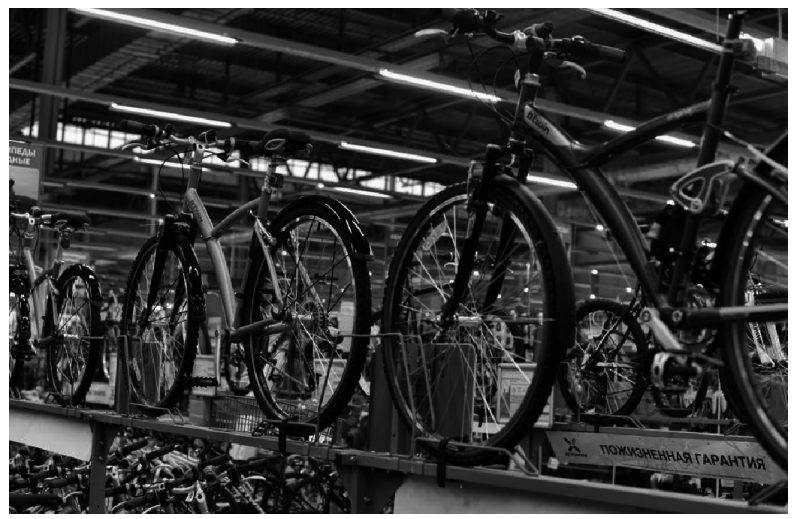
The demand function for a popular make of 12- speed bicycle is given by $p= D (x)=-0.001 x^2$= 250, where p is the unit price in Rupees and x is the quantity demanded in units of a thousands. The supply function for the same product is given by p $= S (x)=0.0006 x^2+0.02 x+100$,where p is the unit price in Rupees and x is the quantity supplied in units of a thousands.

Image

Q.1. If at equilibrium, curves of demand function and supply function intersect at (x, y), then what does the point of intersection represents?
(A) x = equilibrium quantity, y = equilibrium price
(B) x = equilibrium price, y = equilibrium quantity
(C) x = equilibrium demand, equilibrium price
(D) x = equilibrium supply, y = equilibrium demand

Q.2. Find point of intersection.
(A) (300, 160)
(B) (160,300)
(C) (300,300)
(D) (160, 160)

Q.3. Formula for Consumer's Surplus is:
(A) $C S=\int_0^{Q_e} D(x) d x+Q_e \cdot P_e$
(B) CS $=\int_0^{Q_e} D(x) d x-Q_e \cdot P_e$
(C) $C S=-\int_0^{Q_e} D(x) d x-Q_e \cdot P_e$
(D) $CS =-\int_0^{Q_e} D(x) d x+Q_e \cdot P_e$

Q.4. Formula for Producer's Surplus is:
(A) $P S=Q_e \cdot P_e-\int_0^{Q_e} D(x) d x$
(B) $P S=Q_e \cdot P_e-\int_0^{Q_e} S(x) d x$
(C) $P S=Q_c \cdot P_e+\int_0^{Q_e} S(x) d x$
(D) $P S=-Q_e \cdot P_e+\int_0^{Q_e} D(x) d x$
Answer
(1) (A) x = equilibrium quantity, y = equilibrium price
Explanation: At equilibrium, the intersection point (x, y) of demand curve and supply curve represents equilibrium quantity $\left( Q _e\right)$ and equilibrium price $\left( P _e\right)$ respectively

(2) (A) (300, 160)
Explanation: At equilibrium, D(x) = S(x)
$\begin{array}{l}\Rightarrow \quad-0.001 x^2+250=0.0006 x^2+0.02 x+100 \\ \Rightarrow \quad(0.0006+0.001) x^2+0.02 x+(100-250)=0 \\ \Rightarrow \quad 2 x^2+25 x-187500=0 \\ \Rightarrow \quad 2 x^2+625 x-600 x-187500=0 \\ \Rightarrow(2 x+625)(x-300)=0 \\ \Rightarrow x=\frac{-625}{2} \text { or } x=300\end{array}$
The value of x cannot be negative, So x = 300
Now, substituting x = 300 in D(x) or S(x) we get p = 160
Thus, point of intersection is (300, 160).

(3) (B) $C S=\int_0^{Q_e} D(x) d x-Q_e \cdot P_e$
Explanation: Formula for Consumer's Surplus is
$C S=\int_0^{Q_e} D(x) d x-Q_e \cdot P_e$
Where, D(x) = Demand Function
$\begin{array}{l}P_e=\text { Equilibrium Price } \\ Q_e=\text { Equilibrium Quantity }\end{array}$

(4) (B) $P S=Q_e \cdot P_e-\int_0^{Q_e} S(x) d x$
Explanation: Formula for Producer's Surplus is $P S=Q_e \cdot P_e-\int_0^{Q_e} S(x) d x$
Where,
$\begin{aligned} S(x) & =\text { Supply Function } \\ P_e & =\text { Equilibrium Price } \\ Q_e & =\text { Equilibrium Quantity }\end{aligned}$
View full question & answer
Question 34 Marks
Answer
(1) (D) $\frac{2}{27}\left\{(3 x+4)^{3 / 2}+(3 x+1)^{3 / 2}\right\}+C$
Explanation: Rationalising denominator we get:
$\begin{array}{l}=\int \frac{\sqrt{3 x+4}+\sqrt{3 x+1}}{3} d x \\ =\frac{1}{3} \int[\sqrt{3 x+4}+\sqrt{3 x+1}] d x \\ =\frac{1}{3}\left[\frac{(3 x+4)^{3 / 2}}{3 \times 3 / 2}+\frac{(3 x+1)^{3 / 2}}{3 \times 3 / 2}+C\right] \\ =\frac{2}{27}\left\{(3 x+4)^{3 / 2}+(3 x+1)^{3 / 2}\right\}+C\end{array}$

(2) (A) $e^x \log x+C$
Explanation: Let $I=\int e^x\left[\log x+\frac{1}{x}\right] d x$
Here $f(x)=\log x$ and $f^{\prime}(x)=\frac{1}{x}$
$\therefore$ By using the rule
$\int e^x\left[f(x)+f^{\prime}(x)\right] d x=e^x(f x)+C$
We get, $I=e^x \log x+C$

(3) (C) $\frac{1}{6}(1-2 x)^{3 / 2}-\frac{1}{6}(3-2 x)^{3 / 2}+C$
Explanation: Rationalising the denominator, we get:
$\int \frac{\sqrt{1-2 x}-\sqrt{3-2 x}}{-2} d x$
$\begin{array}{l}=-\frac{1}{2} \int \sqrt{1-2 x} d x+\frac{1}{2} \int \sqrt{3-2 x} d x \\ =\frac{1}{6}(1-2 x)^{3 / 2}-\frac{1}{6}(3-2 x)^{3 / 2}+C\end{array}$

(4) (C) $\frac{x}{\log x}+C$
Explanation: Let $I=\int\left[\frac{1}{\log x}-\frac{1}{(\log x)^2}\right] d x$
Let log(x) = t
$\Rightarrow \quad x=e^{\prime}$
$\Rightarrow \quad d x=e^{\prime} d t$
Thus, $I=\int e^t\left[\frac{1}{t}-\frac{1}{t^2}\right] d t$
Here $f(t)=\frac{1}{t}$ and $f(t)=-\frac{1}{t^2}$
$\begin{aligned} I & =e^t f(x) \\ & =e^{\log x} \times \frac{1}{\log x}+C \\ & =\frac{x}{\log x}+C\end{aligned}$
View full question & answer
Question 44 Marks
Answer
(1) (C) $p=-15+\frac{x}{20}$
Explanation: From the given table of price and supply we have the following price and supply coordinates i.e., (25, 800), (20, 700), (15, 600), (10, 500), (5, 400)
All these coordinates, satisfy the equation $p=-15+\frac{x}{20}$

(2) (A) $p=30-\frac{x}{40}$
Explanation: From the given table of price and demand, we have the following price and demand coordinates, i.e., (25, 200), (20, 400), (15, 600), (10, 800), (5, 1000)
All of these coordinates, lie on the equation $p=30-\frac{x}{40}$

(3) (B) 600
Explanation: At equilibrium Demand = Supply
Therefore, $30-\frac{x}{40}=-15+\frac{x}{20}$
$\Rightarrow \quad 30+15=\frac{x}{20}+\frac{x}{40}$
$\Rightarrow \quad 45=\frac{2 x+x}{40}$
$\Rightarrow \quad 3 x=45 \times 40$
$\Rightarrow \quad x=600$

(4) (D) 15
Explanation: At x = 600
$p=30-\frac{600}{40}$
=30-15
= 15
View full question & answer
Case study (4 Marks) - Applied Maths STD 12 Science Questions - Vidyadip