Questions

M.C.Q (1 Marks)

Take a timed test

12 questions · 11 auto-graded MCQ + 1 self-marked written.

MCQ 11 Mark
Out of the following, the strongest base in aqueous solution is
  • Trimethylamine
  • B
    Dimethylamine
  • C
    Methylamine
  • D
    Aniline
Answer
Correct option: A.
Trimethylamine
$\ce{NH_3} <$ primary amine $<$ tertiary amine $<$ secondary amine
This is because:
$i.$ Steric hindrance
The size of an alkyl group is more than that of a hydrogen atom. So, an alkyl group would hinder the attack of a hydrogen atom, thus decreasing the basicity of the molecule. So, the more the number of alkyl groups attached, lesser will be its basicity.
$ii.$ Solvation of ions
When amines are dissolved in water, they form protonated amines. Also, the number of possibilities for hydrogen bonding also increases. More the number of hydrogen bonding more is the hydration that is released in the process of the formation of hydrogen bonds.
View full question & answer
MCQ 21 Mark
An organic compound containing oxygen, upon oxidation forms a carboxylic acid as the only organic product with its molecular mass higher by $14$ units. The organic compound is $.........$ 
  • A
    a ketone
  • a primary alcohol
  • C
    an aldehyde
  • D
    a secondary alcohol
Answer
Correct option: B.
a primary alcohol
When $-\ce{CH_2OH}$ group is replaced by $-\ce{COOH}$ group then only molecular weight will increase by $14$ units. .
View full question & answer
MCQ 31 Mark
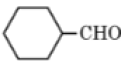
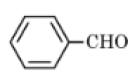
Which of the following does not give aldol condensation reaction?
  • A
    $CH_3COCH_3$​​​​​​​
  • B
    Image
  • C
    $CH_3 - CHO$
  • D
    Image
View full question & answer
MCQ 41 Mark
The unit of rate constant for a first order reaction is
  • A
    $Mol/L$
  • B
    $Mol/L/s$
  • C
    $Mol^2/L^2/s^2$
  • $s^{-1}$
Answer
Correct option: D.
$s^{-1}$
unit of rate constant for nth order reaction $(k) = (mol \ L^{-1})^{1-n} 8^{-1}$
put, $n=1;$
unit of rate constant for 1st order reaction $(k) = s^{-1}$
View full question & answer
MCQ 51 Mark
Which property of transition metals enables them to behave as catalysts?
  • A
    Alloy formation
  • B
    High melting point
  • Variable oxidation states
  • D
    High ionisation enthalpy
Answer
Correct option: C.
Variable oxidation states
(c) Variable oxidation states
Explanation: Variable oxidation states
View full question & answer
MCQ 61 Mark
Which of the following alkyl halides will undergo $S_N1$ reaction most readily?
  • $(CH_3)_3C-I$
  • B
    $(CH3)3C-F$
  • C
    $(CH_3)_3C-Br$
  • D
    $(CH_3)_3C-Cl$
Answer
Correct option: A.
$(CH_3)_3C-I$
$S_N1$ reactions are generally carried out mainly in polar protic solvents $($like $H_2O)$ and they follow first$-$order kinetics. This means that the rate of reaction depends only on one reactant. This reaction favours tertiary alkyl halides because of the high stability of the formed carbocation. The carbocation forms when the molecule is polarized in water to form a carbocation and halide ion attacked by the nucleophile. The reactivity of the halides are $R-I> R-Br>R-CI>>R-F.$ Hence, $(CH_3)_3C-I$ will undergo the reaction most readily.
View full question & answer
MCQ 71 Mark
  • (a) (iv), (b) - (i), (c) - (ii), (d) - (iii)
  • B
    (a) - (iv), (b) - (iii), (c) - (ii), (d) - (i)
  • C
    (a) (i), (b) - (ii), (c) - (iii), (d) - (iv)
  • D
    (a) - (ii), (b) - (iii), (c) - (i), (d) - (iv)
Answer
Correct option: A.
(a) (iv), (b) - (i), (c) - (ii), (d) - (iii)
(a) (a)-(iv), (b) - (i), (c) - (ii), (d) - (iii)
Explanation: (a)-(iv), (b) - (i), (c) - (ii), (d) - (iii)
View full question & answer
MCQ 81 Mark
The rate of reaction A + B → Products, is given by the equation r = k[A] [B]. If B is taken in large excess, the order of reaction would be:
  • A
    Cannot be predicted
  • B
    $0$
  • C
    2
  • 1
Answer
Correct option: D.
1
(d) 1
Explanation: r=k[A][B]
Since [B] is in large excess, so its concentration does not change. So the order of the reaction would be 1.
View full question & answer
MCQ 91 Mark
A mixture of benzaldehyde and formaldehyde on heating with aqueous NaOH solution gives:
  • A
    Benzyl alcohol and methyl alcohol
  • Benzyl alcohol and sodium formate
  • C
    Sodium benzoate and methyl alcohol
  • D
    Sodium benzoate and sodium formate
Answer
Correct option: B.
Benzyl alcohol and sodium formate
(b) Benzyl alcohol and sodium formate
Explanation: They will undergo Cannizzaro reaction as neither benzaldehyde nor formaldehyde has alpha hydrogen. HCHO will be more reactive towards Cannizzaro compared to benzaldehyde because of less steric hindrance. So, OH nucleophile will attack HCHO first, and then the hydride shift from HCHO to benzaldehyde will occur and thus HCHO will oxidize to HCOO ion and benzaldehyde will reduce to benzyl alcohol.
View full question & answer
MCQ 101 Mark
Williamson synthesis is used to obtain:
  • Ether
  • B
    Primary alcohol
  • C
    Aldehyde
  • D
    Ketone
Answer
Correct option: A.
Ether
(a) Ether
Explanation: Williamson synthesis is used to obtain ether. For example,
Image
View full question & answer
MCQ 111 Mark
Fat soluble vitamins are stored in
  • A
    Eyes
  • B
    Stomach
  • Adipose and liver
  • D
    Pancreas
Answer
Correct option: C.
Adipose and liver
(c) Adipose and liver
Explanation: Vitamins which are soluble in fat and oils but insoluble in water are fat soluble vitamins. These are vitamins A, D, E and K. They are stored in liver and adipose (fat storing) tissues.
View full question & answer
MCQ 121 Mark
The best method for the conversion of an alcohol into an alkyl chloride is by treating the alcohol with:
  • $SOCl_2$ in presence of pyridine
  • B
    $PCl_3$
  • C
    Dry $HCl$ in the presence of anhydrous $ZnCl_2$
  • D
    $PCl_5$
Answer
Correct option: A.
$SOCl_2$ in presence of pyridine
The hydroxyl group of an alcohol is replaced by halogen on reaction with concentrated halogen acids, phosphorus halides, or thionyl chloride. Thionyl chloride $(SOCl_2)$ is preferred because the other two products $SO_2$ and $HCl$ are escapable gases. Hence, the reaction gives pure alkyl halides. $ROH + SOCI_2 \rightarrow RCI + SO_2 (g) + HCl (g)$
View full question & answer