- AHave teeth to grind their food.
- ✓Do not have teeth to grind their food.
- CNeed not grind their food.
- DSwallow their food.
They do not have teeth to grind their food.
160 questions · auto-graded multiple-choice test.
They do not have teeth to grind their food.
Biodegradable wastes or organic wastes cannot be recycled.
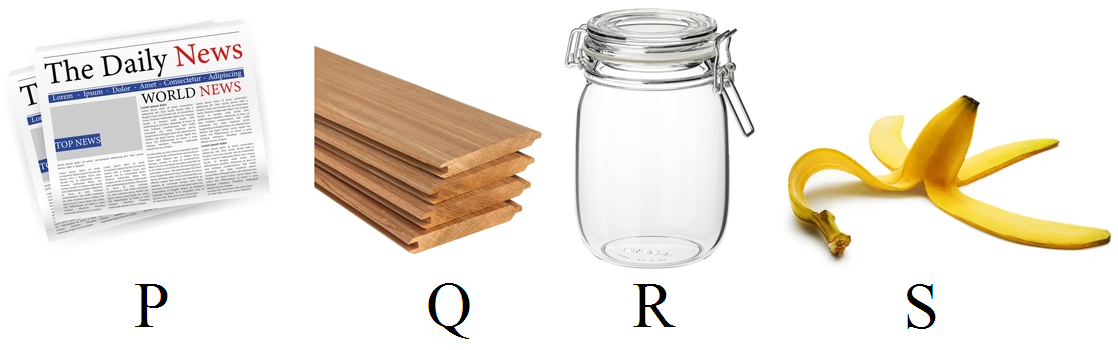
The product $'X'$ is paper. Paper is biodegradable, useful and can be recycled into paper once again. On the contrary, glass, metals and plastics are man-made products and cannot be decomposed easily.
Waste collected in polythene bags for disposal does not reflect responsible behaviour.
This is because polythene bags are non-biodegradable. They do not decompose in nature on their own and are eaten up along with garbage food by cattle, thus causing harm to them.

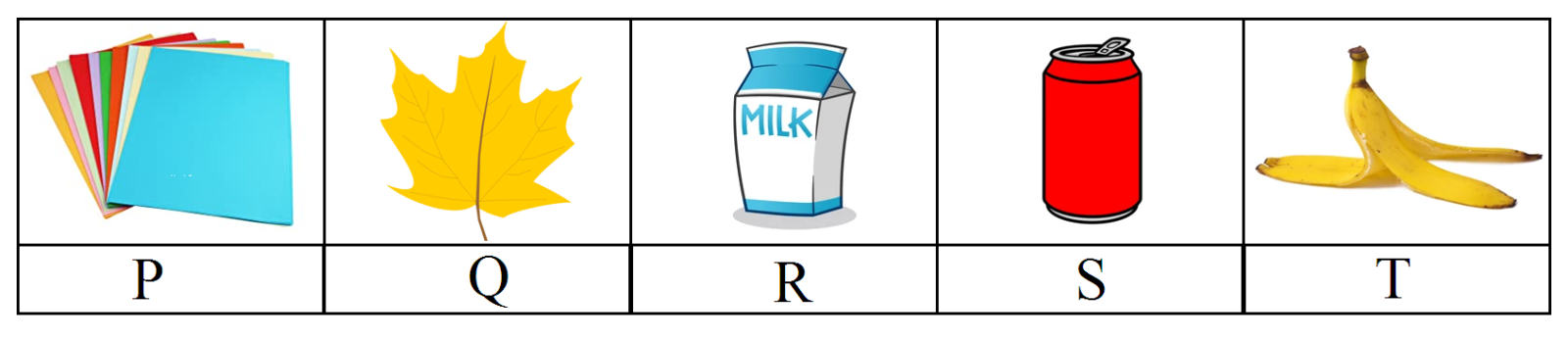
In the given figures $P, Q$ and $T$ are biodegradable substances.
Plastic bottles and metal cans can be reused by storing water at home.
Red color bin.
The vermicompost is prepared by using red-worms.
Making compost from kitchen garbage using redworm is called vermicomposting.
|
S.No.
|
Column$-I$
|
S.No.
|
Column$-II$
|
|
$A.$
|
Food for red worms.
|
$(p)$
|
Tea, coffee
|
|
$B$.
|
Gizzard
|
$(q)$
|
Structure used by red worm for grinding their food
|
|
$C.$
|
Paper mache
|
$(r)$
|
Paste made of paper and clay
|
|
$D.$
|
Plastics
|
$(s)$
|
When heated give out harmful gases.
|
Biodegradable waste is used as manure.
When we add pickles, milk preparations, meat, oil, vinegar and tea remains to waste pits, it leads to the production of disease - causing microorganisms.
Dry leaves and rotten vegetables should be converted to compost. Compost is a natural fertilizer produced by the decomposition of organic waste from kitchen, farms, vegetable etc.
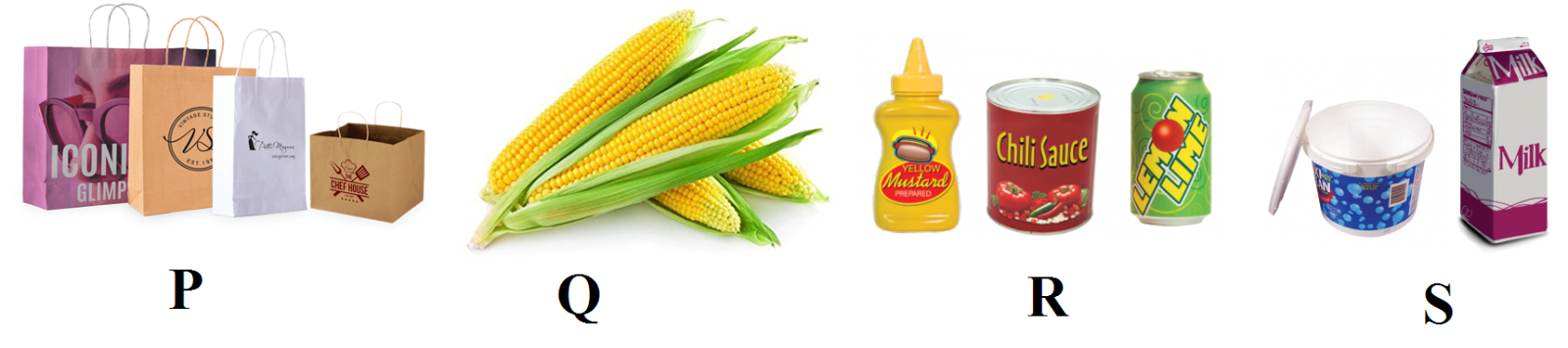
Plastic bags and news papers can be recycled.
$2 \times 10 = 20$ years.
Practicing $3R’s$ (Reduce, Reuse and Recycle) is a good method of waste management and important for healthy environment.
Garbage from cities is collected at landfill areas.
No, burning of dry leaves produces smoke and harmful gases which are injurious to our health.
|
A broken egg shell.
|
|
Pencil shavings.
|
|
Dry leaves.
|
|
Plastic carry bags.
|
|
Fruit vegetable peels.
|
Plastic carry bags are non-biodegradable wastes. Hence they should be reduced by regarding.
Vermicomposting is a method of preparing compost with the help of earthworms. It is an excellent method of getting the best out of waste and also save a lot of money that is spent on buying expensive chemical fertilisers and manure from the market.
Non-biodegradable wastes are those that cannot be broke and harmless products by microbes.
The wastes that are derived from the living matter are biodegradable wastes.
Vegetable wastes are plant products. Therefore, these are biodegradable and can be decomposed easily. On the contrary, man-made products such as plastic and metals take very long time to decompose. Hence they are non-biodegradable.
Organic wastes from kitchen and animal excreta are used for producing biogas.
Bread is a biodegradable material.

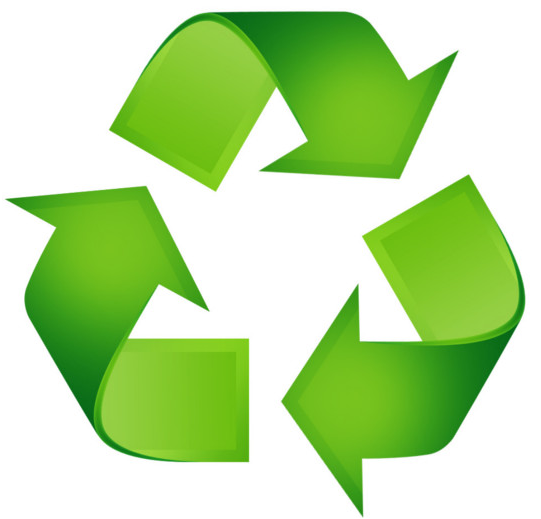
The given sign is labeled on some products to show that they can be recycled and reused.
Waste paper is renewable source which is recycled into 0ther uesful products.
Houseflies that sit on garbage carries germs to the food particles when it sits on it. When these food substances are consumed cause cholera.
|
$(i)$
|
Reduction of air, water and land pollution.
|
|
$(ii)$
|
Conservation of natural resources.
|
|
$(iii)$
|
Increase of air, water and land pollution.
|
Waste management reduces air, soil and water pollution and conserves natural resources.
Vermi-composting layer is kept moist and loose to allow worms to move.
| S.No. | Column$-I$ | S.No. | Column$-II$ |
| $A.$ | Landfill | $(p)$ | Completely rotten garbage used for plant nutrients. |
| $B.$ | Manure | $(q)$ | Low lying areas where garbage of a city is dumped. |
| $C.$ | Composting | $(r)$ | The process in which use of organisms is essential. |
| $D.$ | Vermi composting | $(s)$ | Converting plants and animal wastes into manure. |
Making compost from kitchen garbage using redworm is called vermicomposting.
|
$P-$ Recycling reduces pollution
|
|
$Q-$ Recycling makes the environment unfit of living things`
|
|
$R-$ Recycling helps to conserve energy
|
|
$S-$ Recycling results in wastage of natural resources
|
Recycling of materials reduces pollution and conserves energy.
| S.No. | Column$-I$ | S.No. | Column$-II$ |
| $A.$ | Blue dustbins | $(p)$ | Plastics, metal and glass. |
| $B.$ | Green dustbins | $(q)$ | Wastes that rot completely when buried in soil. |
| $C.$ | Vermi composting | $(r)$ | Method of making compost. |
| $D.$ | Red worms | $(s)$ | Useful in vermi composting. |
It is called composting. For vermin-composting we need some organisms.
Vegetable peels can be best used in making compost.
| Reduce the use of paper. |
| Recycle newspaper. |
| Reuse paper bags. |
Paper is made from the wood pulp of trees. Hence, by recycling, reducing and reusing the papers. We can save forests.
According to government scheme, materials that can be r in blue bins. This waste is sent directly for processing.
It can eat food equal to its weight in a day.
Leaves falling from trees should be disposed by making compost by vermicomposting.
Reducing, reusing and recycling are the $3 \ Rs.$ of waste conservation.
The rotting and conversion of some materials into manure by red worm is called vermicomposting.
Coke tin is a non-biodegradable substance.
Gizzard grinds the food in redworms.
Plant roots hold the soil and slow down soil erosion. Movement of the stray animals dig the soil and helps in soil erosion. If speed of water increases more erosion will occur. Embankments built across the slopes will help in reducing soil erosion.
The kitchen waste dumped in a pit may convert into compost after sometime. Kitchen waste is biodegradable and can be decomposed by microorganisms into compost, which is used as a manure. Compost is a natural fertiliser.
Jute bags are stronger and is made of natural product called Jute. Hence, it is desirable to use jute bags for shopping.
The practice of burning dried leaves and other plant parts leads to all the ill affects mentioned above.
The best way to deal with this waste is to convert it into useful compost.
It is called composting.
A plastic glass is a non-biodegradable substance.
Culturing of earthworms and redworms is called vermicomposting.
Left-over food is a biodegradable substances. Biodegradable substances get decomposed by the action of decomposers like bacteria.
|
$P$
|
|
Can be recycled
|
|
Bio-degradable
|
|
Non-toxic and useful
|
Composting is one of the methods of recycling the biodegradable wastes.
Recycling process is helpful in using non$-$biodegradable substances to be reused.
Organic wastes take least time to decompose.
If waste material is not properly disposed it leads to water and soil pollution and it becomes a breeding place for disease causing organisms.
Banana peel is a biodegradable food substance and it cannot be recycled.
Kitchen wastes are mostly organic wastes. Hence, should be converted to compost by dumping in a pit.
Burning of inorganic garbage is crime. It pollutes the environment and causes air pollution. Burning of solid waste is bad to health.
Depth of household waste pits should be $2 - 3\ cm$ below the ground.
Blue bins are used for wastes that can be recycled and reused.
Glass bottle can be reused.

In the given figures fruit is an organic waste, it takes least time to decompose.
Bio-degradable waste are dumped into pits to convert it into organic matter or manure.
Land fills are man-made pits that are filled with waste. They are usually far away from the city to ensure that rotting garbage does not pollute the land and water used by people.
Garbage containing organic wastes should be dumped into compost pit to make into useful maures.
The plastic bags thrown into the environment is causing the most harm to the environment today.
Garbage should be thrown into covered bins to keep our surroundings clean.
Meat, oil, milk preparations, vinegar cannot be food for redworms.
They produce disease - causing organisms in soil.
Non-biodegradable substances should be recycled.
Paper, metal tins and cans can be recycled.
Rotting and conversion of some biodegradable wastes by the action of decomposers is called composting.
Gizzard is a part of digestive system of red worms.
It is difficult or rather impossible to de- grade non-biodegradable wastes be-cause microorganisms cannot decompose them.
Biodegradable wastes are broken down by microorganism (microbes).
Earthworms are called farmer’s friends because they convert agricultural waste into manure.