Questions

[5 marks Questions]

🎯

Test yourself on this topic

15 questions · timed · auto-graded

Question 15 Marks
Examine the type of farming in Nagaland.
Answer
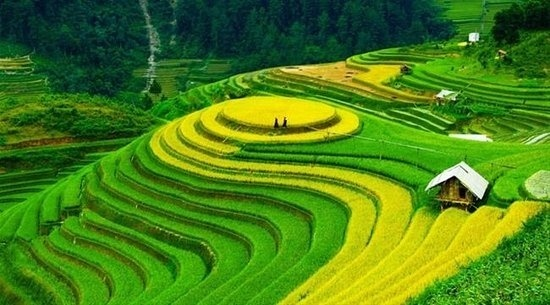
There is a village called ‘Chizami’ which is in ‘Phek’ district of Nagaland. They are experts in terrace cultivation. It is also the main occupation of the people. In this type of farming, the land on the hill slopes is made flat and steps are made on it. The sides of each plot or field are raised in order to retain water. This allows water to stand in the field, which is very good for rice cultivation. On many hill tops another type of cultivation called jhum, is also practised. In jhum, which means ‘shifting cultivation’, millets, maize and French beans are also raised.
View full question & answer
Question 25 Marks
Discuss the life of fishing communities during the period of 4 months of the monsoon.
Answer
  1. Four months of the monsoon are those months when fishermen do not go to sea for fishing as it is a breeding season for fish.
  2. During this period the fishermen survive by borrowing money from the traders.
  3. During fish catch period they have to sell their fish to the trader and can not auction the fish in open market.
  4. This lean period is very difficult period for the fishermen.
View full question & answer
Question 35 Marks
Write a note of Mangamma’s life as a casual labour. How does she lead a tough life?
Answer
Mangamma is a farm worker who works in a paddy field of Ramalingam. Mangamma used to work as a labourer even before marriage and after marriage also she had continued to work from 8:30 in the morning till 4:30 in the evening like all casual labourers. The tale of Mangamma is full of surrendering to circumstances. When they do not have work they go to town as construction labourers. In addition to working outside, Mangamma also does cooking, washing, and fetching water at home.
View full question & answer
Question 45 Marks
Describe the life of the fishing community in Pudupet.
Answer
People in Pudupet earn their living by fishing. Their houses are close to the sea and were surrounded with catamarans and nets. Early in the morning fishermen with their catamarans get into the sea for fishing and in the evening the catamarans return with their catch. Women gather to buy and sell fish and later they sell their fish in the local market.
View full question & answer
Question 55 Marks
Why had Thulasi and Raman to sell their cow?
Answer
  1. Thulasi and Raman had school-going daughters. They lived with them with joy-
  2. One of the daughters fell ill last year.
  3. She was taken to the hospital for treatment.
  4. They borrowed money from Ramalingam for her treatment.
  5. They had to sell their cow for payment of loan they had borrowed from Ramalingam.
View full question & answer
Question 65 Marks
Read the following account (terrace farming in Nagaland) and answer the questions that follow it:
Terrace Farming in Nagaland:
This is a village called Chizami which is in Phek district in Nagaland. The people of this village belong to the Chakhesang community. They do ‘terrace’ cultivation.

This means that the land on a hill slope is made into flat plots and carved out in steps. The sides of each plot are raised in order to retain water. This allows water to stand in the field, which is best for rice cultivation.
The people of Chizami have their own individual fields. But, they also work collectively in each other’s fields. They form groups of six or eight and take an entire mountainside to clean the weeds on it.
Each group eats together once their work for the day is over. This goes on for several days until the work is completed.
  1. Which village is referred to in the picture above? Where is it located?
  2. Which community do the villagers of this village belong to?
  3. What type of farming do they practise?
  4. For what is this practice the best?
  5. Why do the people of Chizami work collectively?
Answer
  1. Chizami in Phek district of Nagaland.
  2. Chakhesang.
  3. Terrace cultivation (farming).
  4. Rice cultivation.
  5. To carry out the farming activities.
To clean the mountain side of the weeds.
View full question & answer
Question 75 Marks
Why do you think that there is seasonal unemployment in villages?
Answer
In the villages of India, the main occupation of the people is agriculture or farming. Farmers do not get work throughout the year. Farming involves many activities like preparing land for sowing, transplanting saplings, weeding grass, applying fertilisers, harvesting crops and threshing grains. Whole work is done in periodic intervals. Due the break in the continuity of the farming work, there is seasonal unemployment in villages. When there is no work in the farm the farmers has to look for other work like making bricks, carrying bricks, building roads and houses.
View full question & answer
Question 85 Marks
What are the problems of small farmers in rural areas according to Sekar?
Answer
According to Sekar the problems of small farmers in rural areas are enumerated as under:
  1. The farmer’s family does the whole work from sowing to harvesting of crops.
  2. They have to take the produce to their house.
  3. They have to sell the produce first to the moneylender at lower prices than the market prices.
  4. The remaining produce is enough for only 2 months. They have to work as labourer for earning money for 4 months. They may work in rice mill or in other places.
  5. They also rear cattle for milk to be sold in the market to earn money.
View full question & answer
Question 95 Marks
Write some sentences on the? work of agriculture.
Answer
  1. Agriculture is the main work of the village people.
  2. Paddy is the main crop grown in the irrigated fields.
  3. Other crops are cotton, sugarcane and plaintain.
  4. Some coconut groves are there.
  5. There are several mango orchards.
View full question & answer
Question 105 Marks
Which other works/ services do the people of the village provide?
Answer
People engaged in services.
  1. Blacksmiths.
  2. Nurses.
  3. Teachers.
  4. Washermen.
  5. Weavers.
  6. Barbers.
  7. Cycle repairs.
  8. Mechanics.
  9. Some shopkeepers and traders.
View full question & answer
Question 115 Marks
Compare the situation of Sekar and Ramalingam by filling out the following table:
 
Sekar
Ramalingam
Land cultivated
 
 
Labour required
 
 
Loans required
 
 
Selling of harvest
 
 
Other work done by them
 
 
Answer
 
Sekar
Ramalingam
Land cultivated
Two acres.
Twenty acres.
Labour required
No labour required.
He hires labour.
Loans required
He requires loan for seeds, fertilizers, pesticides etc. He takes loan from the trader.
He takes loans from govt, bank for establishing a rice mill.
Selling of harvest
He sells a few bags of paddy to pay back the loan.
 
Other work done by them
He has a hybrid cow, whose milk he sells in the local milk cooperatives.
He owns a rice mill and a shop selling seeds, pesti­cides etc.
View full question & answer
Question 125 Marks
Give an account of the ways of earning livelihood in rural areas.
Answer
  1. Various ways of earning livelihood in rural areas:
  2. Farm and non-farm activities.
  3. Farm activities involve the following:
  4. Preparing the land.
  5. Sowing.
  6. Weeding.
  7. Harvesting.
  8. Farmers depend on nature for growth of crops. Hence life revolves round certain seasons.
  9. Different crops are raised in different regions.
  10. However there are similarities in their situation and problems they face.
  11. Some people work as labourers on the farmland and earn their living.
  12. Other ways of livelihood are fishing, crafts etc.
  13. Aruna and Paarivelan represent the fishing community.
View full question & answer
Question 135 Marks
Why do farming communities commit suicide in some areas?
Answer
In some areas farming communities commit suicide due to the following reasons:
  1. Farmers very often take loan from moneylenders for purchase of seeds, fertilisers and pesticides.
  2. Sometimes seeds are not good while on the other occasions pests damage crops resulting in crop failure.
  3. Bad monsoon also damages, crops.
  4. The farmers have to borrow more money for their daily needs.
  5. Loan goes on mounting and there is no way before the farmers to repay loan.
  6. They become helpless and sometimes they commit suicide.
View full question & answer
Question 145 Marks
Describe other shops of the village Kalpattu.
Answer
Other shops of the village Kalpattu:
  1. Blacksmith,
  2. He lives with his family.
  3. His house acts as workshop too.
  4. Next to the Blacksmith there is cycle hire and repair shop.
  5. Washerman’s shops; two families.
  6. Some people go to nearby town to work in construction work.
  7. Some work as lorry drivers.
View full question & answer
Question 155 Marks
Describe the life of fishing communities.
Answer
Life of Fishing Communities.
  1. Fishing communities live in their houses close to the sea.
  2. They have catamarans and nets lying around.
  3. The catamarans leave for sea at around 2 o’clock in the morning for fishing and return at 7 o’clock with fish catch.
  4. Women gather to buy and sell fish.
  5. The women keep some fish aside for their family.
  6. The rest they sell and auction.
  7. Money collected from auction is divided in shares equally among the fishermen who bring catch from the sea.
  8. One share more is given to the owner of the catamaran, engine and net.
  9. Women who buy the catch, keep the catch in baskets and go to the nearby villages for sale of the fish.
  10. Traders also buy fish from the acution point to sell fish in the market or for export.
  11. In the evening catamaran and nets are repaired by the menfolk.
View full question & answer
[5 marks Questions] - Social Studies STD 6 Questions - Vidyadip