Question types

How the Land Becomes Sacred question types

59 questions across 8 question groups — pick any mix to generate a Social Studies paper with step-by-step answer keys.

59
Questions
8
Question groups
5
Question types
Sample Questions

How the Land Becomes Sacred questions

One sample from each question group in this chapter. Select any group above to see the full set with answer keys.

Q 1MCQ (1 Mark)1 Mark
What idea can sacred geography teach us today?
  • A
    Technology
  • Sustainability and care for nature
  • C
    Modem development
  • D
    Industrial growth

Answer: B.

View full solution
Q 3MCQ (1 Mark)1 Mark
What is the main benefit of pilgrimage routes apart from religion?
  • A
    Free travel
  • Cultural and trade exchange
  • C
    Shopping
  • D
    Learning foreign languages

Answer: B.

View full solution
Assertion (A): Pilgrimage routes helped in spreading culture in ancient India.
Reason (R): They allowed people to exchange goods, ideas, and traditions while traveling.
  • Both A and R are true, and R is the correct explanation of A.
  • B
    Both A and R are true, but R is not the correct explanation of A.
  • C
    A is true, but R is false.
  • D
    A is false, but R is true.

Answer: A.

View full solution
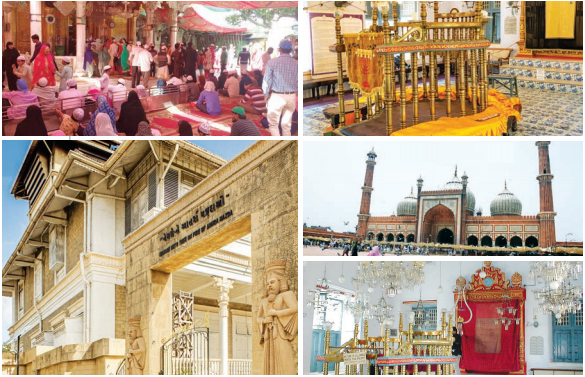
Assertion (A): The Dargah Sharif in Ajmer is visited by only Muslims.
Reason (R): Dargahs arc considered sacred exclusively in Islamic traditions.
  • A
    Both A and R are true, and R is the correct explanation of A.
  • B
    Both A and R are true, but R is not the correct explanation of A.
  • C
    A is true, but R is false.
  • A is false, but R is true.

Answer: D.

View full solution
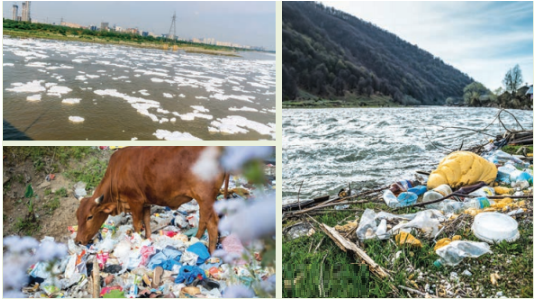
Assertion (A): Sacred places influence how people treat the natural environment.
Reason (R): People often protect rivers, trees, and forests they believe are sacred.
  • Both A and R are true, and R is the correct explanation of A.
  • B
    Both A and R are true, but R is not the correct explanation of A.
  • C
    A is true, but R is false.
  • D
    A is false, but R is true.

Answer: A.

View full solution
Assertion (A): Sacred geography only includes man-made structures like temples and mosques.
Reason (R): Natural features like rivers and mountains are not considered sacred.
  • A
    Both A and R are true, and R is the correct explanation of A.
  • B
    Both A and R are true, but R is not the correct explanation of A.
  • C
    A is true, but R is false.
  • A is false, but R is true.

Answer: D.

View full solution
Assertion (A): Sacred rivers in India are often worshipped as goddesses.
Reason (R): Rivers are considered as living beings and spiritual mothers in Indian traditions.
  • Both A and R are true, and R is the correct explanation of A.
  • B
    Both A and R are true, but R is not the correct explanation of A.
  • C
    A is true, but R is false.
  • D
    A is false, but R is true.

Answer: A.

View full solution
Read the following statement by a well-known environmental thinker, David Suzuki:
“The way we see the world shapes the way we treat it. If a mountain is a deity, not a pile of ore; if a river is one of the veins of the land, not potential irrigation water; if a forest is a sacred grove, not timber; if other species are biological kin, not resources; or if the planet is our mother, not an opportunity-then we will treat each other with greater respect. Thus is the challenge, to look at the world from a different perspective.” Discuss in small groups. What do you think this statement means? What implication does it have for our actions with respect to the air, water, land, trees and mountains around us?
View full solution

Generate a How the Land Becomes Sacred paper free

Pick question groups from the list above, set marks and difficulty, and export a branded PDF with step-by-step answer keys. First 3 chapters free — no signup.
Download App