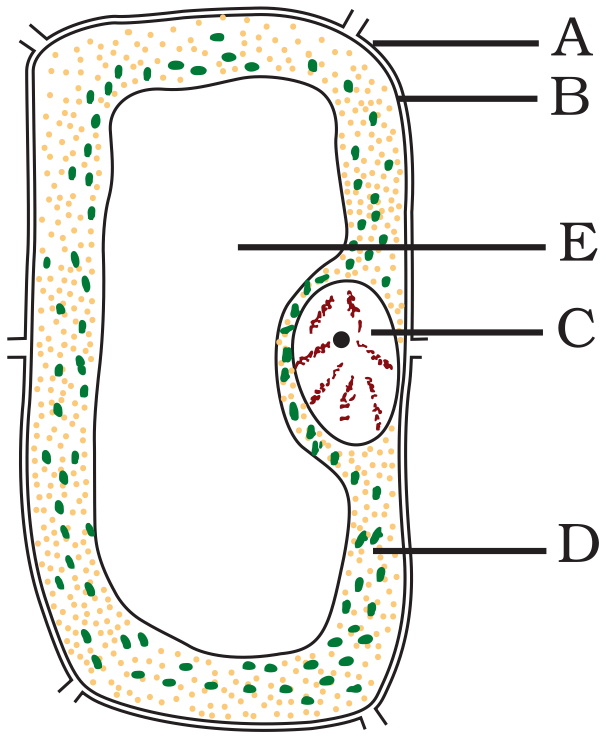
Which of the following feature will help you in distinguishing a plant cell from an animal cell?
- ✓Cell wall.
- BCell membrane.
- CMitochondria.
- DNucleus.
Answer: A.
View full solution →429 questions across 10 question groups — pick any mix to generate a Science paper with step-by-step answer keys.
M.C.Q. [I MARKS]
250 Q→02differences [2marks]
4 Q→03Fill in the blanks: [1 M]
10 Q→04questions in short. [2 marks ]
44 Q→05scientific reasons[2 marks ]
5 Q→06true or false. [1 M]
4 Q→07questions in short. [3 marks ]
28 Q→08questions in details [4 marks ]
21 Q→09questions in on sentence. [1 M]
60 Q→10case /data -based (4 Marks)
3 Q→One sample from each question group in this chapter. Select any group above to see the full set with answer keys.
Answer: A.
View full solution →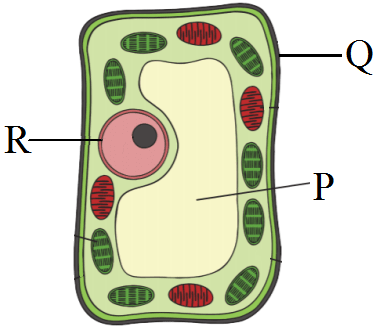
|
$(i)$
|
The part labelled $P$ is found in plant cell only.
|
|
$(ii)$
|
The part labelled $Q$ is cell wall, which provides rigidity to a plant cell.
|
|
$(iii)$
|
The part labelled $R$ is the controlling centre.
|
|
$(iv)$
|
The part labelled $R$ gets its shape from part labelled $P$.
|
Answer: B.
View full solution →Answer: C.
View full solution →Answer: B.
View full solution →Answer: C.
View full solution →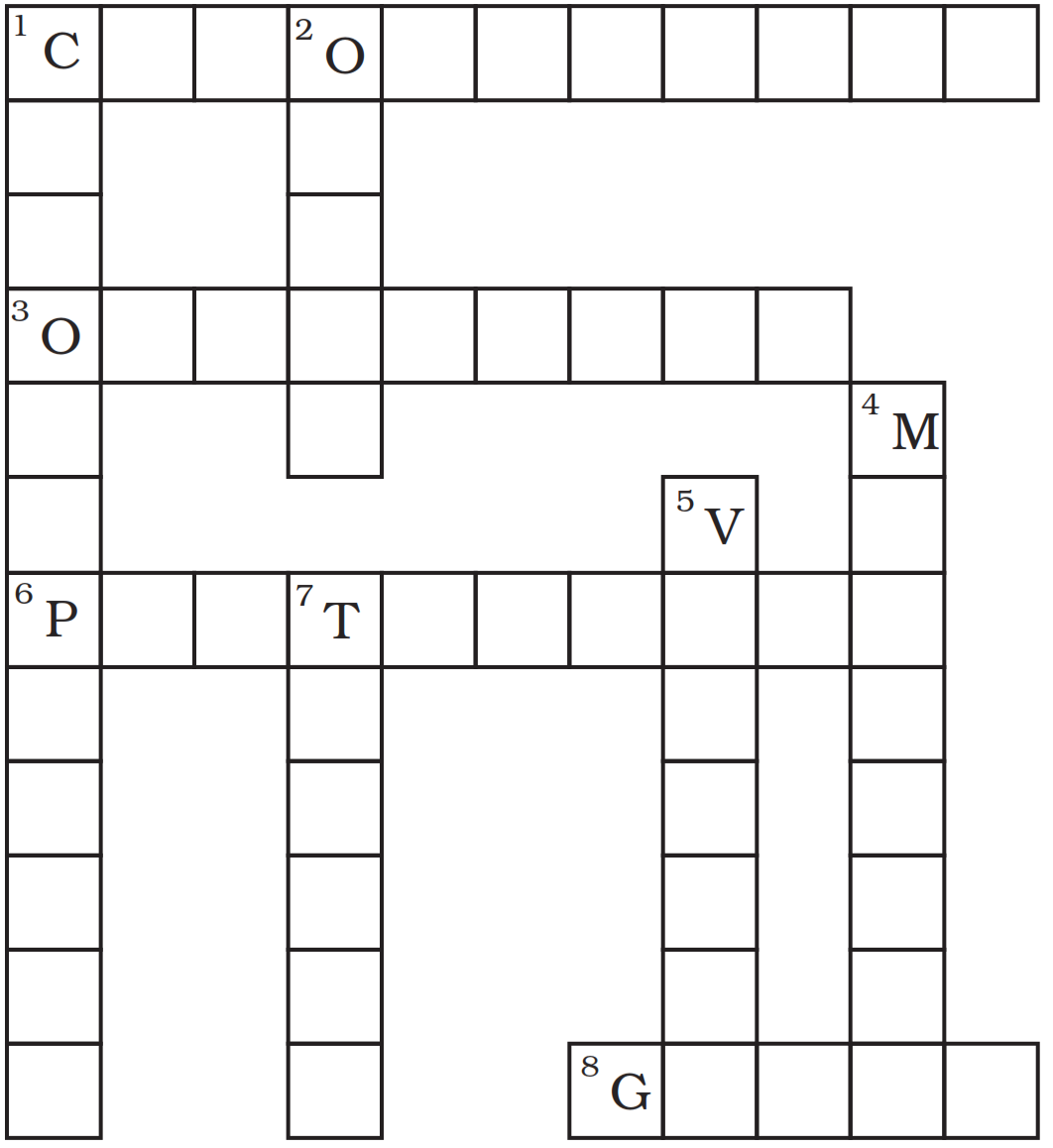
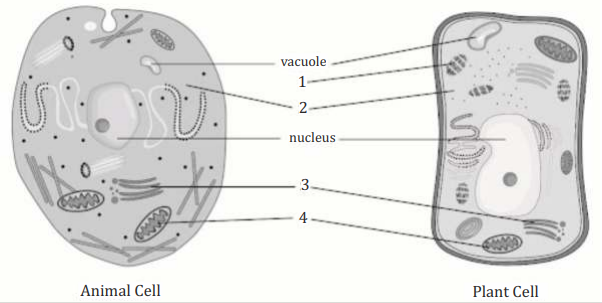
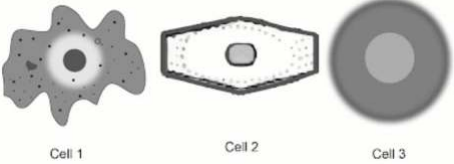
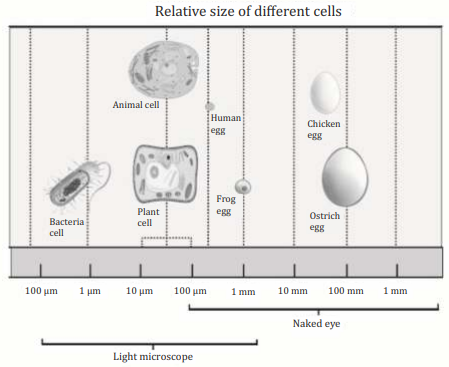
| Can this be concluded from the picture? | Yes or No |
| An egg is a type of cell. | Yes/No |
| Some cells are visible to the naked eyes. | Yes/No |
| Animal cells are much smaller than plant cells. | Yes/No |
Pick question groups from the list above, set marks and difficulty, and export a branded PDF with step-by-step answer keys. First 3 chapters free — no signup.