Question types

The Colonial Era in India question types

101 questions across 12 question groups — pick any mix to generate a Social Studies paper with step-by-step answer keys.

101
Questions
12
Question groups
5
Question types
Sample Questions

The Colonial Era in India questions

One sample from each question group in this chapter. Select any group above to see the full set with answer keys.

Q 1MCQ (1 Mark)1 Mark
The British followed the policy of “Divide and Rule” to:
  • A
    Promote equality
  • B
    Unify Indian rulers
  • Prevent Indian unity
  • D
    Develop Indian education

Answer: C.

View full solution
Q 2MCQ (1 Mark)1 Mark
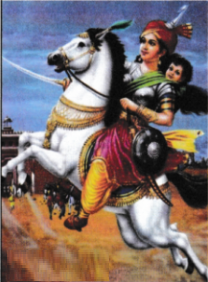
Rani Lakshmi Bai played a significant role in the:
  • Revolt of 1857
  • B
    Non-Cooperation Movement
  • C
    Civil Disobedience Movement
  • D
    Quit India Movement

Answer: A.

View full solution
Q 3MCQ (1 Mark)1 Mark
Which states were captured by the British under the Doctrine of Lapse?
  • A
    Free states
  • Princely states
  • C
    Republic states
  • D
    Non-fortified states

Answer: B.

View full solution
Q 5MCQ (1 Mark)1 Mark
Who was the first European explorer to reach India by sea?
  • A
    Christopher Columbus
  • Vasco da Gama
  • C
    Ferdinand Magellan
  • D
    James Cook

Answer: B.

View full solution
Assertion (A): The British imposed high land revenue policies on Indian farmers.
Reason (R): They wanted to increase the productivity of Indian agriculture.
Codes:
  • A
    Both (A) and (R) are true, and (R) is the correct explanation of (A).
  • B
    Both (A) and (R) are true, but (R) is not the correct explanation of (A).
  • (A) is true, but (R) is false.
  • D
    (A) is false, but (R) is true.

Answer: C.

View full solution
Assertion (A): The British introduced railways in India.
Reason (R): The railways were built mainly to serve the economic interests of IndiAnswer:
Codes:
  • Both (A) and (R) are true, and (R) is the correct explanation of (A).
  • B
    Both (A) and (R) are true, but (R) is not the correct explanation of (A).
  • C
    (A) is true, but (R) is false.
  • D
    (A) is false, but (R) is true.

Answer: A.

View full solution
Assertion (A): The Revolt of 1857 was successful in ending British rule in India.
Reason (R): Indian sepoys and rulers were united under a common leadership.
Codes:
  • A
    Both (A) and (R) are true, and (R) is the correct explanation of (A).
  • B
    Both (A) and (R) are true, but (R) is not the correct explanation of (A).
  • C
    (A) is true, but (R) is false.
  • (A) is false, but (R) is true.

Answer: D.

View full solution
Assertion (A): The Doctrine of Lapse was used by the British to annex Indian princely states.
Reason (R): It allowed annexation of states without a natural male heir.
Codes:
  • Both (A) and (R) are true, and (R) is the correct explanation of (A).
  • B
    Both (A) and (R) are true, but (R) is not the correct explanation of (A).
  • C
    (A) is true, but (R) is false.
  • D
    (A) is false, but (R) is true.

Answer: A.

View full solution
Assertion (A): Indian handloom industries declined under British rule.
Reason (R): The British encouraged Indian artisans by providing them modern machines.
Codes:
  • A
    Both (A) and (R) are true, and (R) is the correct explanation of (A).
  • B
    Both (A) and (R) are true, but (R) is not the correct explanation of (A).
  • (A) is true, but (R) is false.
  • D
    (A) is false, but (R) is true.

Answer: C.

View full solution
“The natives are rising in many provinces. Their anger is fueled not just by our rule, but by the fear that their land, faith, and culture are under threat. Even women, such as the Rani of Jhansi, have taken up arms ”
Q.1. What emotions and concerns of Indians does the officer acknowledge?
Q.2. What does the mention of “even women” suggest about the nature of the rebellion?
Q.3. How does this source reflect the scale and intensity of the 1857 Revolt?
View full solution
The British transformed India’s economy from a self-sufficient agricultural system supplemented by craft and manufacture production into a supplier of raw materials for British industry and a market forced to buy British goods. Without going into the technical details of this economic transformation, let us take the example of the construction of India’s vast railway network, often cited as a colonial blessing.
While the railways did bring people closer together and integrated India’s internal market, it was designed primarily to move raw materials from the interior to ports for export and to distribute British manufactured goods throughout India. Railway routes largely ignored existing trade patterns to serve colonial economic interests. Another purpose was to move armies quickly from their cantonments if they had to fight a distant rebellion or war.
Q.1. Why did the British introduce railways in India?
Q.2. How did modern education serve British interests?
Q.3. Mention one way in which Indian industries were affected by British policies.
View full solution
View full solution
View full solution

Generate a The Colonial Era in India paper free

Pick question groups from the list above, set marks and difficulty, and export a branded PDF with step-by-step answer keys. First 3 chapters free — no signup.
Download App