Question types

Is Matter Around Us Pure? question types

531 questions across 14 question groups — pick any mix to generate a Science paper with step-by-step answer keys.

531
Questions
14
Question groups
5
Question types
Sample Questions

Is Matter Around Us Pure? questions

One sample from each question group in this chapter. Select any group above to see the full set with answer keys.

Q 1M.C.Q. [1 M]1 Mark
Which of the following are homogeneous in nature$?$
  1. Ice
  2. Wood
  3. Soil
  4. Air
  • A
    $(i)$ and $(iii)$
     
  • B
    $(ii)$ and $(iii)$
     
  • $(i)$ and $(iv)$
     
  • D
    $(iii)$ and $(iv)$

Answer: C.

View full solution
Q 2M.C.Q. [1 M]1 Mark
The property/ properties which enable copper metal to be used for making electric wires is/ are:
  • A
    Copper metal is malleable and ductile.
  • B
    Copper metal is a good conductor of electricity.
  • Copper metal is ductile and has low electrical resistance.
  • D
    Copper metal is sonorous and an excellent conductor of electricity.

Answer: C.

View full solution
Q 3M.C.Q. [1 M]1 Mark
On the basis of composition of matter, milk is considered to be:
  • A
    A pure substance.
  • An impure substance.
  • C
    An element.
  • D
    A compound.

Answer: B.

View full solution
Q 5M.C.Q. [1 M]1 Mark
One of the following does not show Tyndall effect. This one is:
  • A
    Soap solution.
  • B
    Ink.
  • Sugar solution.
  • D
    Starch solution.

Answer: C.

View full solution
You are given a mixture of iodine in alcohol called tincture iodine. Which method will you use to recover both, iodine as well as alcohol, from this mixture?
  1. Evaporation.
  2. Simple distillation.
  3. Fractional distillation.
  4. Crystallization.
View full solution
Which one of the following is not a chemical change?
  1. Formation of curd.
  2. Ripening of banana..
  3. Sublimation of naphthalene.
  4. Corrosion of photo frame.
View full solution
Q 10M.C.Q-[Che-1M]1 Mark
Which one of the following is most likely to exhibit Tyndall effect?
  1. Sugar and water mixture.
  2. Potash alum and water mixture.
  3. Chalk powder and water mixture.
  4. Potassium permanganate and water mixture.
View full solution
Q 11true or false1 Mark
State whether the following statements are true or false:
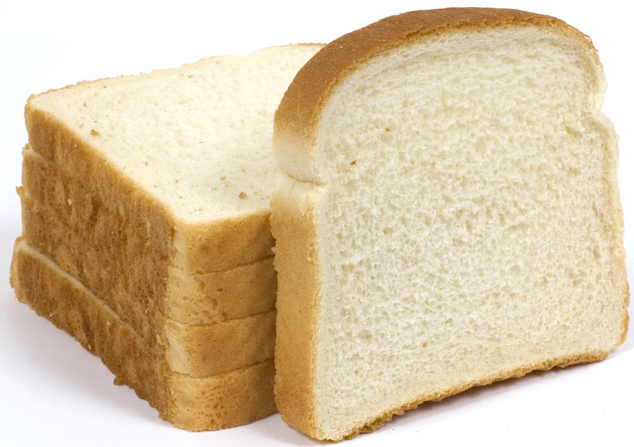
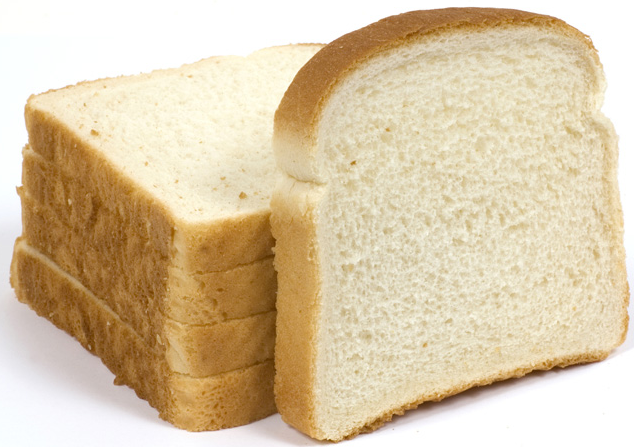
  1. Bread is an example of solid foam.
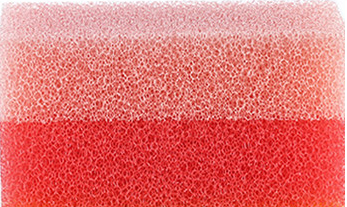
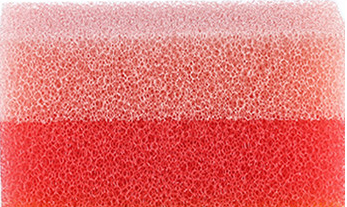
  1. Sponge is an example of solid sol.
What type of colloids are bread and sponge?
View full solution
Q 13true or false1 Mark
State whether the following statements are true or false: Alcohol can be separated from a mixture of alcohol and water by a separating funnel.
View full solution
Fill in the following blanks with suitable words: The separation of liquids by fractional distillation is based o the difference in their __________.
View full solution
Fill in the following blanks with suitable words:
The gases of air can be separated by fractional distillation of liquid air because they have different ___________.
View full solution
State whether the following statements are true or false:

  1. Bread is an example of solid foam.

  1. Sponge is an example of solid sol.

What type of colloids are bread and sponge?

View full solution
Which of the following can be separated by using a separating funnel and which cannot be separated by using a separating funnel?
  1. Water and kerosene mixture.
  2. Water and acetone mixture.
Give reasons for your answer.
View full solution
With the help of a labelled diagram, describe the method of separating ammonium chloride from a mixture of ammonium chloride and common salt. Mention the difference in the properties of ammonium chloride and sodium chloride which has made this separations possible.
View full solution
There is a large group of materials P which can be divided into three groups Q, R, and S on the basis of their properties. The substances belonging to group Q can be solids, liquids or gases. The solids belonging to group Q are usually electrical insulators. Most of the substances of group R are solids which are good conductors of electricity. The substances belonging to group S are neither insulators like Q nor good conductors like R. The properties of S are intermediate between those of Q and R.
  1. What could the group of materials P be?
  2. Name the substances Q. Give two examples of such substances.
  3. Name the substances R. Write two examples of such substances.
  4. Name the substances S. Give two examples of such substances.
  5. Out of Q, R and S, which substances are malleable and ductile?
View full solution
There are three substances X, Y and Z. The substance X does not have a fixed melting point or boiling point and it still shows the individual properties of its constituents. The substance Y is a pure substance which occurs in nature as such. The substance Y has a fixed melting point and boiling point but it cannot be broken down into simpler substances by any chemical means. The substance Z is also a pure substance whose properties are entirely different from those of its constituents. The substance Z can, however, be divided by electrolysis into two substances which belong to the same class of substances as Y.
  1. What type of substance could X be? Name one substance like X.
  2. What type of substance could Y be? Name one substance like Y.
  3. What type of substance could Z be? Name one substance like Z.
  4. Whish process involves absorption or release of an appreciable amount of energy: formation of substance X or formation of substance Z?
  5. Name the three groups into which all the substances like Y are divided on the basis of their properties.
View full solution

Generate a Is Matter Around Us Pure? paper free

Pick question groups from the list above, set marks and difficulty, and export a branded PDF with step-by-step answer keys. First 3 chapters free — no signup.

Download App