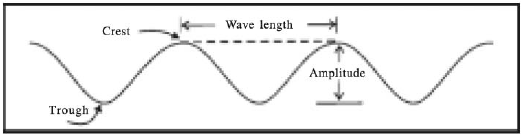
The factors affecting seawater temperature are as follows.
$1.$ Angular length of sun rays:
The lower the angular length of the suns rays over the oceans at the equator, the higher the surface temperature.
When the angular length of the sun is greater at the Polar Regions, the rays travel longer distances to reach sea level.
Hence the surface temperature of the oceans at the Polar Regions is lower.
The surface water temperature of the oceans generally decreases from the equator to the poles.
It decreases at a rate of $0.5$ degrees Celsius at approximately every latitude.
$2.$ Geographical location, area and shape of the sea:
Temperatures in the closed and marginal seas are higher or lower than those in the open seas.
It is based on submerged mountains and coastal plains.
The Baltic Sea and Hudson Bay have lower temperatures than the open seas due to the impact of the surrounding continents.
As the sea is surrounded by deserts at night, its temperature remains high.
$3.$ Winds:
The annual difference in temperature is recorded at $18$ degrees Celsius due to the cold winter winds blowing from the continents over the North Pacific and North Atlantic Oceans.
The southwest angular monsoon winds that blow over the Indian Ocean in summer increase sea level temperatures.
In winter, the northeast angular monsoon winds from the continents reduce the sea water temperature.
Thus, wind changes the temperature of seawater.
$4.$ Ocean currents:
Ocean temperatures are affected by currents such as the Gulfstream named warm currents which increase the surface temperature of the Atlantic Ocean.
While the cold flow of Labrador lowers the temperature.