MCQ 11 Mark
Which of the following is not a polysaccharide?
AnswerLactose is a disaccharide made up of glucose and galactose.
View full question & answer→MCQ 21 Mark
Proteins perform many physiological functions. For example, some functions as enzymes. Which of the following represents an additional function that some proteins discharge?
- A
- B
Pigment conferring colour to skin.
- C
Pigments making colours of flowers.
- ✓
AnswerAntibiotics which contain enzymes do contain protein but many antibiotics may not contain enzymes or protein. Pigments are not proteins.
View full question & answer→MCQ 31 Mark
Many elements are found in living organisms either free or in the form of compounds. Which of the following is not found in living organisms?
AnswerIron is found in haemoglobin, sodium and magnesium play important role in some metabolic activities.
View full question & answer→MCQ 41 Mark
Enzymes concerned with transfer of electrons are:
AnswerDehydrogenases catalyze dehydrogenation reactions, which involve addition or removal of electrons.
Addition or removal of electrons will lead to reduction or oxidation of substrates.
Dehydrogenases are a type of oxidoreductases.
View full question & answer→MCQ 51 Mark
Esterase enzyme belongs to which of the following class:
AnswerEsterases are the enzyme which hydrolyse ester linkage.
Hence, esterases belong to class Hydrolase.
Hydrolases are the enzymes catalysing hydrolysis.
View full question & answer→MCQ 61 Mark
- A
Glucose $+$ glucose.
- B
Glucose $+$ fructose.
- C
Fructose $+$ galactose.
- ✓
Glucose $+$ galactose.
AnswerCorrect option: D. Glucose $+$ galactose.
Glucose $+$ galactose.
View full question & answer→MCQ 71 Mark
implified diagrams of macromolecules are given. What is the function of the molecule of diagram $C$ 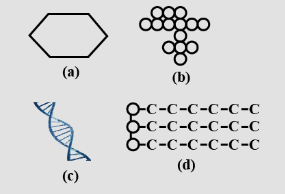
- A
Store energy for future use.
- ✓
Carry genetic information.
- C
Act as an enzyme in chemical reactions.
- D
Provide "quick energy' for cells.
AnswerCorrect option: B. Carry genetic information.
The molecule $C$ represents a part of double helical molecule of $\text{DNA.}$
The $\text{DNA}$ is a repository of genetic information.
It is capable of making its own copies by the process of replication and also code for proteins by specifying the sequence of amino acids.
View full question & answer→MCQ 81 Mark
Which among the following are the largest physical and chemical molecules:
AnswerProteins are body building molecules and provide the structural framework for cells.
They are biopolymers of amino acids.
They are the largest physical and chemical components of a cell.
No other biomolecule possesses such immense structural and physiological diversity as proteins.
View full question & answer→MCQ 91 Mark
Spoilage of oil can be detected by which fatty acid?
MCQ 101 Mark
Hydrolysis of starch occurs with the help of:
MCQ 111 Mark
A polysaccharide, which is synthesized and stored in liver cells, is:
MCQ 121 Mark
The enormous diversity of protein molecules is due mainly to the diversity of:
AnswerCorrect option: A. Amino acid sequences within the protein molecule.
Amino acid sequences within the protein molecule.
View full question & answer→MCQ 131 Mark
Which group contains biocatalysts?
- ✓
Peptidase, amylase, rennin.
- B
Glucose, amino acids, fatty acids.
- C
Rhodopsin, pepsin, steapsin.
- D
Myosin, oxytocin, adrenalin.
AnswerCorrect option: A. Peptidase, amylase, rennin.
Peptidase, amylase, rennin.
View full question & answer→MCQ 141 Mark
Which of the following is a milk protein:
AnswerProteins are a very versatile biomolecules performing a variety of structural and functional roles.
Pepsin is a proteolytic enzyme secreted as pepsinogen in the stomach.
Myosin is a protein found in muscle tissue.
Lactogen is milk sugar and casein is milk protein.
View full question & answer→MCQ 151 Mark
Which is the first step in analysis of biomolecules?
MCQ 161 Mark
How many essential amino acids are known?
MCQ 171 Mark
The primary structure of a protein molecule has.
AnswerPrimary structure of a protein is simply the amino acid sequence of it which has two ends the carboxyl and amino terminals.
View full question & answer→MCQ 181 Mark
The similarity between $\text{DNA}$ and $\text{RNA}$ is that both are:
- A
- B
- ✓
- D
Having similar pyrimidines
Answer$\text{DNA}$ and $\text{RNA}$ are polynucleotides.
They are polymers made up of nucleotides.
They are synthesized by joining together of a large number of nucleotides with the help of ester bonds.
Consecutive nucleotides in $\text{DNA}$ and $\text{RNA}$ are joined with the help of phosphodiester bonds.
View full question & answer→MCQ 191 Mark
Sugars are technically called carbohydrates, referring to the fact that their formulae are only multiple of $\ce{C(H_2O)}$. Hexoses therefore have six carbons, twelve hydrogens and six oxygen atoms. Glucose is a hexose. Choose from among the following another hexose.
AnswerSix carbon sugars having formula $\ce{C_6H_{12}O_6}$ Erythrose is a four carbon sugar. Ribulose and ribose are both five carbon sugars.
View full question & answer→MCQ 201 Mark
When we homogenise any tissue in an acid the acid soluble pool represents.
AnswerThe function and shape of a protein is affected by sequence of $20$ types of amino acids, each having an amino group $\ce{-NH_2}$, a carboxylic acid group $\text{-COOH,}$ a hydrogen atom each attached to carbon located next to $\text{-COOH}$ group and a side chain $R$ which varies from one amino acid to other. $($It can be hydrogen or an aliphatic group, an aromatic or heterocyclic group$)$.
View full question & answer→MCQ 211 Mark
View full question & answer→MCQ 221 Mark
Nucleic acids are made up of:
AnswerNucleic acids are long chain polymers of nucleotides.
The nucleotides, in turn, are phosphoric acid esters of nucleosides which mainly consists of a nitrogenous base, Sugar, and phosphate.
The nitrogenous base includes purines and pyrimidines while the sugar contains ribose and deoxyribose sugar. phosphate is formed of phosphoric acid.
View full question & answer→MCQ 231 Mark
For growth of body and its repair one needs which of the following component:
MCQ 241 Mark
Which of the following is not a pyrimidine?
MCQ 251 Mark
The most abundant component of living organisms is:
AnswerWater composes about $70\%$ of body weight of humans. This should give clue for 'water' as the correct answer.
View full question & answer→MCQ 261 Mark
A compound formed of a sugar and a nitrogen base, is called a:
MCQ 271 Mark
Which of the following is not a co$-$enzyme:
- A
$\text{NAD}$
- B
$\text{NADP}$
- C
$\text{FAD}$
- ✓
$\text{ATP}$
AnswerCorrect option: D. $\text{ATP}$
$\text{ATP}$ or adenosine triphosphate is a nucleotide.
View full question & answer→MCQ 281 Mark
- ✓
Fats that are generally liquid at room temperature.
- B
Glycerol that possesses three hydroxyl groups.
- C
- D
AnswerCorrect option: A. Fats that are generally liquid at room temperature.
Fats that are generally liquid at room temperature.
View full question & answer→MCQ 291 Mark
Due to discovery of which of the following in $1980$ the evolution was termed as $\text{RNA}$ world?
- A
$\text{mRNA, tRNA, rRNA}$ synthesize proteins.
- B
In some virus $\text{RNA}$ is genetic material.
- ✓
$\text{RNA}$ have enzymatic property.
- D
$\text{RNA}$ is not found in all cells.
AnswerCorrect option: C. $\text{RNA}$ have enzymatic property.
$\text{RNA}$ have enzymatic property.
View full question & answer→MCQ 301 Mark
Which is distributed more widely in a cell?
- A
$\text{DNA.}$
- ✓
$\text{RNA.}$
- C
- D
AnswerCorrect option: B. $\text{RNA.}$
$\text{RNA.}$
View full question & answer→MCQ 311 Mark
An organic substance bound to an enzyme and essential for its activity is called as:
AnswerEnzymes are simple if they are made up of only proteins, e.g., pepsin, amylase, etc., while conjugate enzymes have an additional non$-$protein cofactor, e.g., dehydrogenase enzymes.
The cofactor can be organic or inorganic.
Loosely attached organic cofactor are called coenzymes, e.g., $\text{NAD, FAD}$ etc., while firmly attached one is prosthetic group, e.g., haeme, biotin etc.
View full question & answer→MCQ 321 Mark
The helical structure of protein is stabilized by:
MCQ 331 Mark
Primary metabolites are always found in animal cells. Which of the following is not an example of primary metabolite?
MCQ 341 Mark
An example of competitive inhibition of enzymes is the inhibition of:
AnswerCorrect option: A. Succinic dehydrogenase by malonate.
Succinic dehydrogenase by malonate.
View full question & answer→MCQ 351 Mark
It is said that elemental composition of living organisms and that of inanimate objects $($like earth’s crust$)$ are similar in the sense that all the major elements are present in both. Then what would be the difference between these two groups? Choose a correct answer from among the following:
- A
Living organisms have more gold in them than inanimate objects
- B
Living organisms have more water in their body than inanimate objects
- ✓
Living organisms have more carbon, oxygen and hydrogen per unit mass than inanimate objects.
- D
Living organisms have more calcium in them than inanimate objects.
AnswerCorrect option: C. Living organisms have more carbon, oxygen and hydrogen per unit mass than inanimate objects.
A comparison of elements present in non$-$living and living matter is given in the table below:
|
Element
|
$%$ Weight of
|
|
Earth crust
(Non living matter)
|
Human Body
(living mater)
|
|
Hydrogen
|
$0.14$ |
$0.5$ |
|
Carbon
|
$0.03$ |
$18.5$ |
|
Nitrogen
|
$46.6$ |
$65.0$ |
|
Sulphur
|
Very little
|
$3.3$ |
|
Sodium
|
$0.03$ |
$0.3$ |
|
Calcium
|
$3.6$ |
$1.5$ |
|
Magnesium
|
$2.1$ |
$0.1$ |
|
Silicon
|
$27.7$ |
Negligible
|
View full question & answer→MCQ 361 Mark
Cellulose, the most important constituent of plant cell wall is made of:
- A
Unbranched chain of glucose molecules linked by $\alpha\ 1, 4$ glycosidic bond.
- B
Branched chain of glucose molecules linked by $\beta\ 1, 4$ glycosidic bond in straight chain and $\alpha\ 1, 6$ glycosidic bond at the site of branching.
- ✓
Unbranched chain of glucose molecules linked by $\beta\ 1, 4$ glycosidic bond.
- D
Branched chain of glucose molecules linked by $\alpha\ 1, 6$ glycosidic bond at the site of branching.
AnswerCorrect option: C. Unbranched chain of glucose molecules linked by $\beta\ 1, 4$ glycosidic bond.
Unbranched chain of glucose molecules linked by $\beta\ 1, 4$ glycosidic bond.
View full question & answer→MCQ 371 Mark
Chitin, forming the exoskeleton of arthropods is a:
AnswerCorrect option: B. $N-$containing structural polysaccharide.
$N-$containing structural polysaccharide.
View full question & answer→MCQ 381 Mark
What is the name of heterocyclic carbon compound attached to sugar?
MCQ 391 Mark
The sequence of amino acids in a protein is called:
MCQ 401 Mark
The fact that all biomolecules undergo turnover is known as:
MCQ 411 Mark
Protein synthesis in a cell takes place.
- ✓
In cytoplasm as well as in mitochondria.
- B
In the nucleolus as well as in cytoplasm.
- C
Only on ribosomes attached to the nuclear envelope.
- D
AnswerCorrect option: A. In cytoplasm as well as in mitochondria.
In cytoplasm as well as in mitochondria.
View full question & answer→MCQ 421 Mark
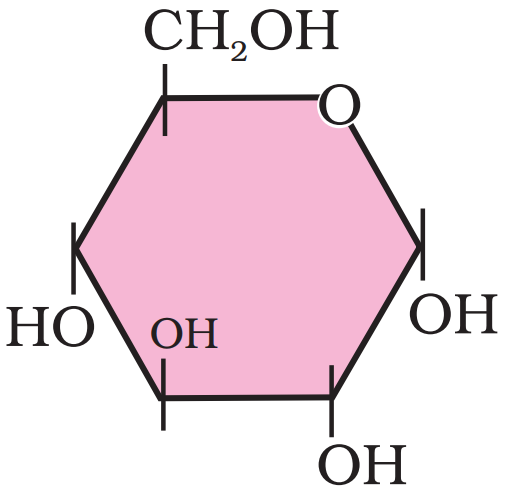
The structure shown above is:
MCQ 431 Mark
- A
Carbon, hydrogen, chlorine, sulphur
- ✓
Carbon, hydrogen, oxygen, nitrogen
- C
Carbon, manganese, phosphorus, nitrogen
- D
Carbon, iodine, oxygen and inorganic phosphate
AnswerCorrect option: B. Carbon, hydrogen, oxygen, nitrogen
Carbon, hydrogen, oxygen, nitrogen
View full question & answer→MCQ 441 Mark
Enzyme first used for nitrogen fixation is:
MCQ 451 Mark
In $\text{RNA,}$ thymine is replaced by:
View full question & answer→MCQ 461 Mark
Feedback inhibition of an enzymatic reaction is caused by:
MCQ 471 Mark
Radioactive thymidine when added to the medium surrounding living mammalian cells gets incorporated into the newly synthesized $\text{DNA.}$ Which of the following types of chromatin is expected to become radioactive if cells are exposed radioactive thymidine as soon as they enter the $S-$phase?
- A
- ✓
- C
Both $(a)$ and $(b).$
- D
Neither heterochromatin nor euchromatin but only the nucleolus.
View full question & answer→MCQ 481 Mark
Feedback inhibition of enzymes is affected by which of the following:
- A
- B
- ✓
- D
Intermediate end products
View full question & answer→MCQ 491 Mark
Which of the following elements is highest in percentage composition in the human body?
MCQ 501 Mark
Which of the following statements regarding enzyme inhibition is correct?
AnswerCorrect option: C. Competitive inhibition is seen when the substrate and the inhibitor compete for the active site on the enzyme.
Competitive inhibition is seen when the substrate and the inhibitor compete for the active site on the enzyme.
View full question & answer→MCQ 511 Mark
$\text{DNA}$ is composed of repeating units of:
View full question & answer→MCQ 521 Mark
The $K$ value of an enzyme is the substrate concentration at:
- A
$\text{V}_{\text{max}}$
- ✓
$\frac{1}{2}\text{V}_{\text{max}}$
- C
$\frac{1}{4}\text{V}_\text{max}$
- D
$\frac{3}{4}\text{V}_{\text{max}}$
AnswerCorrect option: B. $\frac{1}{2}\text{V}_{\text{max}}$
$\frac{1}{2}\text{V}_{\text{max}}$
View full question & answer→MCQ 531 Mark
Which of the following is an organic compound found in most cells:
MCQ 541 Mark
Enzymes that catalyse inter$-$conversion of optical, geometrical or positional isomers are:
AnswerLigases are the enzymes which catalyze joining together of two $\text{DNA}$ segments.
Lyases catalyze the breaking of chemical bonds without hydrolysis while hydrolases catalyze hydrolytic cleavage of bonds.
Isomerases catalyze interconversion of optical, geometrical or positional isomers of a particular enzyme.
View full question & answer→MCQ 551 Mark
Which one of the following pair is wrongly matched:
AnswerCorrect option: B. Alcohol $-$ nitrogenase
This question relates to the industrial applications of enzymes.
Alcohol is not produced by the use of nitrogenase.
Nitrogenase performs complex functions of nitrogen fixation by bacteria.
Alcohol is produced by the fermentation process of sugars carried out by Yeast.
View full question & answer→MCQ 561 Mark
Enzymes, vitamins and hormones are common in:
- A
Enhancing oxidative metabolism.
- B
Being synthesised in the body of organisms.
- C
- ✓
View full question & answer→MCQ 571 Mark
View full question & answer→MCQ 581 Mark
Which of the following enzyme digests other enzymes:
AnswerMost of the enzymes are proteins.Proteins are biological macromolecules made up of amino acids joined together by peptide bonds.
Peptidases are enzymes, which cleave or break peptide bonds.
The action of peptidase enzymes will cleave or break peptide bonds, thus breaking the primary structure of enzymes or digestion of enzyme.
View full question & answer→MCQ 591 Mark
Cleavage of specific covalent bonds and removal of groups without hydrolysis is the property of:
MCQ 601 Mark
The type of linkage present in carbohydrates is:
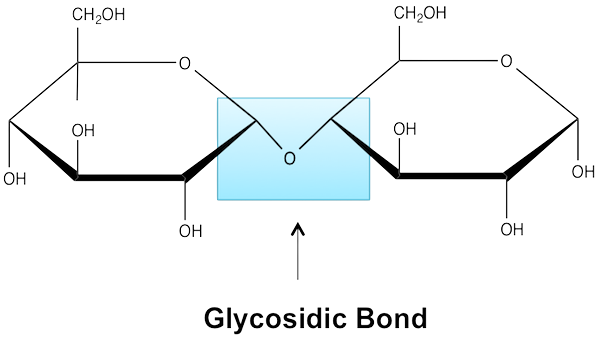
AnswerGlycosidic bonds are the bonds formed between hemiacetal or hemiketal group of carbohydrates and hydroxyl group of another molecule.
It is a condensation reaction which leads to release of water molecules.
View full question & answer→MCQ 611 Mark
In which one of the following groups, all the three are examples of polysaccharides?
- ✓
Starch, glycogen, cellulose.
- B
Sucrose, maltose, glucose.
- C
Glucose, fructose, lactose.
- D
Galactose, starch, sucrose.
AnswerCorrect option: A. Starch, glycogen, cellulose.
Starch, glycogen, cellulose.
View full question & answer→MCQ 621 Mark
The function of enzymes in the living system is to:
- A
- B
- ✓
Catalyse biochemical reaction
- D
AnswerCorrect option: C. Catalyse biochemical reaction
The function of enzymes in the living system is to catalysed biochemical reactions without involving in the reaction.
It means enzymes speed up the rate of reaction by lowering activation energy, so the reaction proceeds faster and at the end same enzymes can are obtained without any changes in it.
View full question & answer→MCQ 631 Mark
Coenzyme of a conjugate enzyme is more often a/ an:
- ✓
- B
- C
- D
Both $(b)$ and $(c).$
View full question & answer→MCQ 641 Mark
- ✓
Reduction in activation energy.
- B
Increase in activation energy.
- C
Increase in reaction time.
- D
Decrease in reaction time.
AnswerCorrect option: A. Reduction in activation energy.
Reduction in activation energy.
View full question & answer→MCQ 651 Mark
Aminoacids, have both an amino group and a carboxyl group in their structure. Which one of the following is an amino acid?
AnswerGlycine is the simplest amino acid with hydrogen as $R$ group. Formic acid is simplest carboxylic acid molecule. It is chemically $\text{HCOOH.}$ Glycerol is a polyol compound, which is chemically propane$-1, 2, 3-$triol and glycolic acid is chemically, $2-$hydroxyethanoic acid.
View full question & answer→MCQ 661 Mark
Most abundant organic compound on earth is:
MCQ 671 Mark
The enzymes hexokinase which catalyses glucose to glucose$-6-$phosphate in glycolysis is inhibited by glucose$-6-$phosphate. This is an example of:
AnswerCorrect option: A. Feedback allosteric inhibition.
Feedback allosteric inhibition.
View full question & answer→MCQ 681 Mark
Inulin is made up of $.............$ and $.............$
AnswerInulin is a polysaccharide made up of glucose and fructose.
View full question & answer→MCQ 691 Mark
Which is not consistent with double helical structure of $\text{DNA}?$
AnswerCorrect option: A. $\ce{A = T, C = G.}$
$\ce{A + T/ C + G}$ is not constant.
View full question & answer→MCQ 701 Mark
Amino acids are also known as:
- ✓
$\alpha-$amino acid.
- B
$\beta-$amino acid.
- C
$\gamma-$amino acid.
- D
$\delta-$amino acid.
AnswerCorrect option: A. $\alpha-$amino acid.
$\alpha-$amino acid.
View full question & answer→MCQ 711 Mark
Which of the following enzyme can form $\ce{RNA}$ from $\ce{DNA:}$
- A
- B
$\ce{DNA}$ polymerase
- ✓
$\ce{RNA}$ polymerase
- D
AnswerCorrect option: C. $\ce{RNA}$ polymerase
$\ce{RNA}$ polymerase
View full question & answer→MCQ 721 Mark
Which one contains four pyrimidine bases?
- ✓
$\ce{GATCAATGC.}$
- B
$\ce{GCUAGACAA.}$
- C
$\ce{UAGCGGUAA.}$
- D
$\ce{TGCCTAACG.}$
AnswerCorrect option: A. $\ce{GATCAATGC.}$
$\ce{GATCAATGC.}$
View full question & answer→MCQ 731 Mark
Two free ribonucleotide units are interlinked with:
MCQ 741 Mark
Which of the following is capable of self replication:
AnswerMiescher discovered nucleic acids from pus cells in discarded surgical bands.
He observed that these were acidic in nature.
The two types of nucleic acid were $\text{DNA}$ and $\text{RNA.}$
These are considered as the hereditary unit of the cell.
These carry characters from one generation to the other.
A nucleic acid molecule can act as genetic material because nucleic acids possess the ability of self$-$replication,
i.e., capacity to generate their own copies.
View full question & answer→MCQ 751 Mark
Which of the following is a fat?
MCQ 761 Mark
Insulin is made up of $..........$ and $.........$
AnswerInsulin is a polysaccharide made up of glucose and fructose.
View full question & answer→MCQ 771 Mark
Purines and pyrimidines polymerise to form:
AnswerNucleic acids are polymers of nucleotides.
They are formed by joining together of long chains of nucleotides.
$\text{RNA} ($ribonucleic acid$)$ is a polymer of ribonucleotides and is made up of ribonucleotides joined together by phosphodiester bonds.
$\text{DNA} ($deoxyribonucleic acid$)$ is a polymer of deoxyribonucleotides and is made up of deoxyribonucleotides joined together by phosphodiester bonds.
View full question & answer→MCQ 781 Mark
Nitrogen is the main constituent of:
AnswerProteins are the linear chain of amino acids formed by joining together of a number of amino acids through peptide bonds.
The peptide bond between two amino acids is formed by a condensation reaction between amino group of one amino acid and carboxylic group of another amino acid.
The amino acids are amphoteric compounds having both basic $($amino$)$ as well as acidic $($carboxylic$)$ groups.
The amino acids are rich in nitrogen because of the amino group. Protein contains $16\%$ of nitrogen.
View full question & answer→MCQ 791 Mark
Which of the following cannot be traced in proteins?
MCQ 801 Mark
Genes are packaged into a bacterial chromosome by:
MCQ 811 Mark
Which of the following influence feedback inhibition of enzyme?
MCQ 821 Mark
The nitrogenous organic base purine occurring in $\text{RNA}$ is:
View full question & answer→MCQ 831 Mark
One of the similarities between $\text{DNA}$ and $\text{RNA}$ is that both.
- ✓
Are polymers of nucleotides.
- B
Are capable of replicating.
- C
- D
Have similar pyrimidine bases.
AnswerCorrect option: A. Are polymers of nucleotides.
Are polymers of nucleotides.
View full question & answer→MCQ 841 Mark
Which one of the following statements about cytochrome $450$ is wrong?
- A
- ✓
- C
It has an important role in metabolism.
- D
It is an enzyme involved in oxidation reactions.
View full question & answer→MCQ 851 Mark
Which of the following groups consists only of polysaccharides?
- ✓
Cellulose, Starch, Glycogen.
- B
Starch, Lactose, Cellulose.
- C
Lactose, Starch, Glycogen.
- D
Starch, Maltose, Cellulose.
AnswerCorrect option: A. Cellulose, Starch, Glycogen.
Cellulose, Starch, Glycogen.
View full question & answer→MCQ 861 Mark
What replaces thymine in $\text{RNA:}$
AnswerIn $\text{RNA,}$ uracil binds to adenine via two hydrogen bonds.
In $\text{DNA,}$ the uracil nucleobase is replaced by thymine.
Uracil could be considered a demethylated form of thymine.
Each nucleotide in $\text{RNA}$ contains a ribose sugar, with carbons numbered $1'$ through $5'$. A base is attached to the $1'$ position, in general, adenine $(A),$ cytosine $(C),$ guanine $(G),$ or uracil $(U).$
Adenine and guanine are purines, cytosine and uracil are pyrimidines.
View full question & answer→MCQ 871 Mark
Which is wrong about nucleic acids?
- A
$\text{DNA}$ is single stranded in some viruses.
- B
$\text{RNA}$ is double stranded occasionally.
- ✓
Length of one helix is $45 \mathring A$ in $\text{B-DNA.}$
- D
One turn of $\text{Z-DNA}$ has $12$ bases.
AnswerCorrect option: C. Length of one helix is $45 \mathring A$ in $\text{B-DNA.}$
Length of one helix is $45 \mathring A$ in $\text{B-DNA}.$
View full question & answer→MCQ 881 Mark
Conjugated proteins containing carbohydrates as prosthetic group are known as:
MCQ 891 Mark
The minimum amount of energy required to initiate a chemical reaction is called:
AnswerThe minimum amount of energy required to initiate a chemical reaction is called activation energy.
View full question & answer→MCQ 901 Mark
- ✓
Transfer of amino group from amino acid to keto acid
- B
- C
- D
AnswerCorrect option: A. Transfer of amino group from amino acid to keto acid
Transamination reaction is the transfer of amino groups from an amino acid to a keto acid.
The enzyme is transaminase.
It helps in formation of different amino acids which are not formed by reductive amination.
View full question & answer→MCQ 911 Mark
The plant proteinases or endopeptidases enzyme is:
AnswerPapain is the only protein that is not found in humans.
It is found in plants like papaya and the main function of papain is breakdown of peptide bonds in protein.
View full question & answer→MCQ 921 Mark
$...............$ causes protein to denature:
AnswerOne of the common methods of protein denaturation is heat.
For example, boiling of egg denatures egg white.
A denatured protein can no longer perform its normal biological role.
View full question & answer→MCQ 931 Mark
The $\text{RNA}$ that picks up specific amino acids from the amino acid pool in the cytoplasm to ribosome during protein synthesis is called:
- A
$\text{mRNA.}$
- ✓
$\text{tRNA.}$
- C
$\text{rRNA.}$
- D
Carrier $\text{RNA.}$
AnswerCorrect option: B. $\text{tRNA.}$
$\text{tRNA.}$
View full question & answer→MCQ 941 Mark
What is a prosthetic group of a protein:
- A
- B
- C
- ✓
Non$-$protein component
AnswerCorrect option: D. Non$-$protein component
Prosthetic groups are cofactors that bind tightly to proteins or enzymes.
It is a specific non$-$polypeptide required for the biological function of some proteins.
The prosthetic group may be organic $($such as vitamin, sugar or lipid$)$ or inorganic $($such as metal ion$),$ but is not composed of amino acids.
View full question & answer→MCQ 951 Mark
Which one of the following is body building material:
AnswerProteins are building blocks of life.Sugar $($meaning carbohydrate$)$ is required for energy.
Mineral salts can be used for various functions like building strong bones, etc.
Fats are also required for energy.
Fats can be stored in the body and can be used when carbohydrates are exhausted.
View full question & answer→MCQ 961 Mark
Bonds that do not exist in tertiary structure of proteins.
MCQ 971 Mark
A nucleotide is formed of:
- ✓
Nitrogen base, sugar and phosphate.
- B
Pyrimidine, sugar and phosphate.
- C
Purine, sugar and phosphate.
- D
Purine, pyrimidine and phosphate.
AnswerCorrect option: A. Nitrogen base, sugar and phosphate.
Nitrogen base, sugar and phosphate.
View full question & answer→MCQ 981 Mark
Cofactor $($coenzyme$)$ is a part of holoenzyme it is:
AnswerCorrect option: C. Loosely attached organic part.
Loosely attached organic part.
View full question & answer→MCQ 991 Mark
When you take cells or tissue pieces and grind them with an acid in a mortar and pestle, all the small biomolecules dissolve in the acid. Proteins, polysaccharides and nucleic acids are insoluble in mineral acid and get precipitated. The acid soluble compounds include aminoacids, nucleosides, small sugars etc. When one adds a phosphate group to a nucleoside, one gets another acid soluble biomolecule called.
AnswerWhen a phosphate group is added to a nucleoside, it becomes a nucleotide.
View full question & answer→MCQ 1001 Mark
Which of the following is not a part of enzyme but it activates the enzyme?
MCQ 1011 Mark
The four elements making $99\%$ of living system are:
- A
$\text{CHOS}$
- B
$\text{CHOP}$
- ✓
$\text{CHON}$
- D
$\text{CNOP}$
AnswerCorrect option: C. $\text{CHON}$
$\text{CHON}$
View full question & answer→MCQ 1021 Mark
Inhibitor binds to the active site of the enzyme. Hence blocking the reaction. This is an example of:
- A
- B
- C
Uncompetitive inhibition.
- ✓
AnswerWhen substrate binds to the active site of the enzyme, it completes the. reaction. When inhibitor binds to the active site of the enzyme, it blocks the reaction.
View full question & answer→MCQ 1031 Mark
The number of ‘ends’ in a glycogen molecule would be.
- ✓
Equal to the number of branches plus one.
- B
Equal to the number of branch points.
- C
- D
Two, one on the left side and another on the right side.
AnswerCorrect option: A. Equal to the number of branches plus one.
Glycogen is the multi branched polysaccharide of glucose units popularly known as animal starch, as it is chemically similar to starch.
It has $30,000$ glucose residues and a molecular weight of about $4.8$ million.
Glucose residues in glycogen are arranged in a highly branched bush like chains.
There are two main linkage patterns, observed in glycogen,
i.e., a $1-4$ linkage in the straight part and a $1-6$ linkage in the area of branching.
The distance between two branching points is $10-14$ glucose residues.
Glycogen has as many non$-$reducing endsas branches plus one.
View full question & answer→MCQ 1041 Mark
Aromatic amino acids contain which reactive group?
MCQ 1051 Mark
Essential amino acids include.
MCQ 1061 Mark
Most diverse macromolecules, found in the cell both physically and chemically are:
MCQ 1071 Mark
Enzymes are biocatalysts. They catalyse biochemical reactions. In general they reduce activation energy of reactions. Many physico$-$chemical processes are enzyme mediated. Which of the following reactions is not engyme$-$mediated in biological system?
AnswerCorrect option: A. Dissolving $\ce{CO_2}$ in water.
Dissolving $\ce{CO_2}$ in water does not require any enzyme. $\ce{CO_2}$ has higher solubility in water than $\ce{O_2}$. Solubility of $\ce{CO_2}$ in water can be increased with decrease in temperature, a principle used in carbonated drinks.
View full question & answer→MCQ 1081 Mark
AnswerEnzymes are large biological molecules responsible for the thousands of metabolic processes that sustain life.
They are highly selective catalysts, greatly accelerating both the rate and specificity of metabolic reactions, from the digestion of food to the synthesis of $\text{DNA.}$
Most enzymes are proteins.
View full question & answer→MCQ 1091 Mark
A protein having both structural and enzymatic traits is:
MCQ 1101 Mark
Carrier ions like $Na$ facilitate the absorption of substances like:
- ✓
- B
- C
Fatty acids and glycerol.
- D
Fructose and some amino acid.
View full question & answer→MCQ 1111 Mark
What is common among amylase, rennin and trypsin?
MCQ 1121 Mark
An aminoacid under certain conditions have both positive and negative charges simultaneously in the same molecule. Such a form of aminoacid is called.
AnswerThe term 'zwitterion' comes from a German word which means a neutral molecule with positive and negative charges.
View full question & answer→MCQ 1131 Mark
If all the peptide bonds of protein are broken, then the remaining part is:
AnswerProteins are polypeptide macromolecules.
They are composed of amino acids joined together with the help of peptide bonds.
If peptide bonds of a protein are cleaved amino acids will be released.
This is exactly what happens during digestion of dietary proteins.
The proteins are hydrolyzed by breaking of peptide bonds and resulting amino acids are absorbed.
View full question & answer→MCQ 1141 Mark
The pyrenoids are made up of:
- ✓
Proteinaceous centre and starchy sheath.
- B
Core of protein surrounded by fatty sheath.
- C
Core of starch surrounded by sheath of protein.
- D
Core of nucleic acid surrounded by protein sheath.
AnswerCorrect option: A. Proteinaceous centre and starchy sheath.
Proteinaceous centre and starchy sheath.
View full question & answer→MCQ 1151 Mark
$\text{DNA}$ synthesis can be specifically measured by estimating the incorporation of radio labelled.
View full question & answer→MCQ 1161 Mark
AnswerEnzymes are proteins. Enzymes are in general globular proteins.
Like all proteins, enzymes are long, linear chains of amino acids that fold to produce a three-dimensional product.
Most enzymes can be denatured-that is, unfolded and inactivatedby heating or chemical denaturants, which disrupt the three dimensional structure of the protein.
Depending on the enzyme, denaturation may be reversible or irreversible.
View full question & answer→MCQ 1171 Mark
- A
$\text{RNA}$ with additional phosphate.
- B
$\text{RNA}$ without sugar.
- C
$\text{RNA}$ without uracil.
- ✓
$\text{RNA}$ acting as enzyme.
AnswerCorrect option: D. $\text{RNA}$ acting as enzyme.
A ribozyme is an $\text{RNA}$ molecule with a well$-$defined tertiary structure that enables it to act like a protein enzyme in catalyzing biochemical and metabolic reactions within a cell.
These $\text{RNA}$ molecules are enzymes that are not composed of proteins.
Ribozymes function as part of the large subunit ribosomal $\text{RNA}$ to link amino acids during protein synthesis.
View full question & answer→MCQ 1181 Mark
Glycogen is a homopolymer made of.
AnswerGlycogen is the storage polysaccharide present in animals. Glycogen consist of glucose molecule linked together with $\alpha(1\rightarrow4)$ linkages with $\alpha(1\rightarrow6)$ branch points occurring every $8-12$ residues. Galactose, on the other hand is a monosaccharide, and combines with glucose through condensation reaction, resulting in the formation of disaccharide, lactose. Ribose is a pentose monosaccharide which has all hydroxyl groups on the same side in fisher projection. It forms a part of backbone in $\text{RNA}$ and $\text{DNA.}$ Amino acids are the monomers of proteins.
View full question & answer→MCQ 1191 Mark
Assertion: Arachidic acid is an unsaturated fatty acid.
Reason: There are one or more double bonds between carbon atoms in unsaturated fatty acids.
- A
Both Assertion and Reason are true and Reason is the correct Explanation of the Assertion.
- B
Both Assertion and Reason are true but the Reason is not the correct Explanation of Assertion.
- C
Assertion is true, but Reason is false.
- ✓
Both Assertion and Reason are false.
AnswerCorrect option: D. Both Assertion and Reason are false.
Both Assertion and Reason are false.
View full question & answer→MCQ 1201 Mark
Living cell contains $60-75\%$ water. Water present in human body is:
- ✓
$60-65\%$
- B
$50-55\%$
- C
$75-80\%$
- D
$65-70\%$
AnswerCorrect option: A. $60-65\%$
$60-65\%$
View full question & answer→MCQ 1211 Mark
Which among the following is a homopolysaccharide?
MCQ 1221 Mark
Nucleic acids are polymer of:
AnswerNucleic acids are long$-$chain polymers of nucleotides.
The nucleotides, in turn, are phosphoric acid esters of nucleosides which mainly consist of a nitrogenous base, sugar, and phosphate.
The nitrogenous base includes purines and pyrimidines while the sugar contains ribose and deoxyribose sugar. phosphate is formed of phosphoric acid.
View full question & answer→MCQ 1231 Mark
Protein synthesis in an animal cell takes place.
- A
- B
In the nucleolus as well as in cytoplasm.
- ✓
In cytoplasm as well as in mitochondria.
- D
Only on ribosomes attached to the nuclear envelope.
AnswerCorrect option: C. In cytoplasm as well as in mitochondria.
In cytoplasm as well as in mitochondria.
View full question & answer→MCQ 1241 Mark
Types of $\text{RNA}$ polymerase required in nucleus for $\text{RNA}$ synthesis.
View full question & answer→MCQ 1251 Mark
A segment of $\text{DNA}$ has $120$ adenine and $120$ cytosine bases. The total number of nucleotides present in the segment is:
View full question & answer→MCQ 1261 Mark
The $Km$ value of the enzyme is the value of the substrate concentration at which the reaction reaches to:
AnswerCorrect option: A. $\frac{1}{2}\text{Vmax}.$
$\frac{1}{2}\text{Vmax}.$
View full question & answer→MCQ 1271 Mark
Endopeptidase of plant kingdom is:
AnswerEndopeptidase are the proteolytic enzymes which cleave the peptide chain at internal locations.
They break peptide bonds of non terminal amino acids $($i.e. within the molecule$),$ in contrast to exopeptidases, which break peptide bonds from their end$-$pieces.
One example is papain obtained from unripe papaya.
View full question & answer→MCQ 1281 Mark
Nucleic acid is found in which of the following cell organelles:
- A
- B
- C
- ✓
Mitochondria and Chloroplast
AnswerCorrect option: D. Mitochondria and Chloroplast
Mitochondria and Chloroplast
View full question & answer→MCQ 1291 Mark
Glycogen is a polymer of:
MCQ 1301 Mark
With reference to enzymes, which one of the following statements is true?
- A
Apoenzyme $=$ Holoenzyme $+$ Coenzyme.
- ✓
Holoenzyme $=$ Apoenzyme $+$ Coenzyme.
- C
Coenzyme $=$ Apoenzyme $+$ Holoenzyme.
- D
Holoenzyme $=$ Coenzyme $-$ Apoenzyme.
AnswerCorrect option: B. Holoenzyme $=$ Apoenzyme $+$ Coenzyme.
Holoenzyme $=$ Apoenzyme $+$ Coenzyme.
View full question & answer→MCQ 1311 Mark
An example of competitive inhibition of an enzyme is the inhibition of:
AnswerCorrect option: A. Succinic dehydrogenase by malonic acid.
Succinic dehydrogenase by malonic acid.
View full question & answer→MCQ 1321 Mark
The fastest enzyme known is:
- A
$\text{DNA}$ polymerase.
- ✓
- C
- D
$\text{DNA}$ ligase.
AnswerThe fastest enzyme known is carbonic anhydrase. It converts $10^6$ molecules of carbon dioxide molecules per second.
View full question & answer→MCQ 1331 Mark
The transfer $\text{RNA}$ molecule in $3D$ appears.
- A
$L-$shaped.
- ✓
$E-$shaped.
- C
$Y-$shaped.
- D
$S-$shaped.
AnswerCorrect option: B. $E-$shaped.
$E-$shaped.
View full question & answer→MCQ 1341 Mark
AnswerLecithin is a phospholipid.
View full question & answer→MCQ 1351 Mark
$\text{ATP}$ is a:
View full question & answer→MCQ 1361 Mark
Enzymes having slightly different molecular structure but performing identical activity are:
MCQ 1371 Mark
Which of the following sets contains polysaccharides?
- ✓
Starch, glycogen, cellulose.
- B
Sucrose, maltose, cellulose.
- C
Galactose, starch, sucrose.
- D
Glucose, fructose, lactose.
AnswerCorrect option: A. Starch, glycogen, cellulose.
Starch, glycogen, cellulose.
View full question & answer→MCQ 1381 Mark
Enzymes enhance the rate of reaction by:
- A
Forming a reactant-product complex.
- B
Changing the equilibrium point of the reaction.
- C
Combining with the product as soon as it is formed.
- ✓
Lowering the activation energy of the reaction.
AnswerCorrect option: D. Lowering the activation energy of the reaction.
Lowering the activation energy of the reaction.
View full question & answer→MCQ 1391 Mark
$\text{NADP}$ contains vitamin $.............$
Answer$B3$ also named as niacin.
View full question & answer→MCQ 1401 Mark
In plants, inulin and pectin are:
- ✓
- B
- C
- D
Insect-attracting material.
View full question & answer→MCQ 1411 Mark
A homopolymer has only one type of building block called monomer repeated $'n\ ’ $number of times. A heteropolymer has more than one type of monomer. Proteins are heteropolymers usaally made of.
- ✓
$20$ types of monomers.
- B
$40$ types of monomers.
- C
$30$ types of monomers.
- D
only one type of monomerually made of.
AnswerCorrect option: A. $20$ types of monomers.
The function and shape of a protein is affected by sequence of $20$ types of amino acids, each having an amino group $\ce{-NH_2}$, a carboxylic acid group $\text{-COOH}$, a hydrogen atom each attached to carbon located next to $\text{-COOH}$ group and a side chain $R$ which varies from one amino acid to other. $($It can be hydrogen or an aliphatic group, an aromatic or heterocyclic group$)$.
View full question & answer→MCQ 1421 Mark
AnswerCorrect option: B. $Fe$ containing porphyrin pigment.
$Fe$ containing porphyrin pigment.
View full question & answer→MCQ 1431 Mark
$..........$ is polymerized to form proteins:
AnswerProteins are body building molecules and provide the structural framework for cells.
They are biopolymers of amino acids.
View full question & answer→MCQ 1441 Mark
Which is an essential amino acid?
MCQ 1451 Mark
Which of the following is a basic amino acid?
MCQ 1461 Mark
Enzymes that catalyse removal of groups from substrates by mechanisms other than hydrolysis, and addition of groups to double bonds, are called:
MCQ 1471 Mark
The most basic amino acid is:
MCQ 1481 Mark
Enzymes increase the rate of reaction by:
AnswerCorrect option: A. Lowering activation energy.
Enzymes increase the rate of reaction by decreasing the activation energy.
View full question & answer→MCQ 1491 Mark
The basic unit of nucleic acid is:
MCQ 1501 Mark
Lactic dehydrogenase $\text{(LDH)}$ which catalyzes pyruvate to lactate is an example of:
AnswerSome enzymes have several molecular forms, example: $16$ for $\alpha -$amylase and $5$ for lactate dehydrogenase $\text{(LDH).}$
They are called as isoenzymes or isozymes.
They differ in substrate affinity, maximum activity and regulatory properties.
View full question & answer→MCQ 1511 Mark
Length of one turn of the helix in a $B-$form $\text{DNA}$ is approximately?
- ✓
$3.4\ nm.$
- B
$0.34\ nm.$
- C
- D
AnswerCorrect option: A. $3.4\ nm.$
$3.4\ nm.$
View full question & answer→