Question 14 Marks
Answer
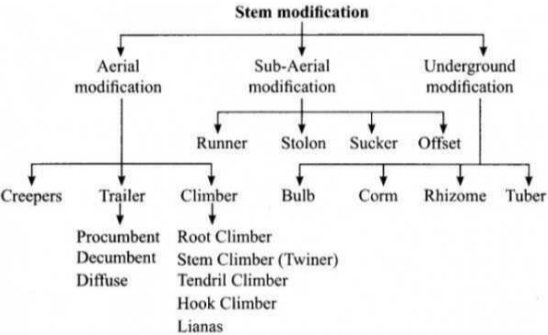
View full question & answer→i. • Rhizome - Ginger, turmeric.Banana
• Bulb - Tulips, Lilies, Daffodils, Onion, Garlic
• Corm - Colocasia, Yam, Saffron
• Tuber Potato, Artichokes
ii. It has nodes and internodes. Such nodes and internodes are not found in the roots.
iii. Modified stem in the potato is underground and it becomes swollen because food gets accumulated to form tubers.
OR
No. Many different parts of plants, like the stem, leaves and fruits, get modified to act as underground structures that can perform functions other than those of roots.
• Bulb - Tulips, Lilies, Daffodils, Onion, Garlic
• Corm - Colocasia, Yam, Saffron
• Tuber Potato, Artichokes
ii. It has nodes and internodes. Such nodes and internodes are not found in the roots.
iii. Modified stem in the potato is underground and it becomes swollen because food gets accumulated to form tubers.
OR
No. Many different parts of plants, like the stem, leaves and fruits, get modified to act as underground structures that can perform functions other than those of roots.