Question 14 Marks
The androecium is composed of stamens. Each stamen that represents the male reproductive organ consists of a stalk or a filament and an anther. Each anther is usually bilobed and each lobe has two chambers, the pollen-sacs. Stamens of flowers may be united with other members such as petals or among themselves. The stamens may be epipetalous or epiphyllous. A flower is a modified shoot wherein the shoot apical meristem changes to floral meristem. Internodes do not elongate and the axis gets condensed. The apex produces different kinds of floral appendages laterally at successive nodes instead of leaves. The arrangement of flowers on the floral axis is termed an inflorescence.
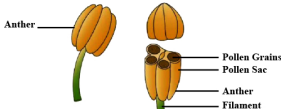
i. Observe the figure and mention what is androecium composed of. (1)
ii. The pollen grains are produced in pollen-sacs. What is a sterile stamen is called? (1)
iii. Is salvia and mustard show variation in the length of filaments within a flower? (2)
OR
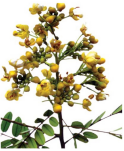
Mention statement justifies that the given figure is racemose inflorescence. (2)
i. Observe the figure and mention what is androecium composed of. (1)
ii. The pollen grains are produced in pollen-sacs. What is a sterile stamen is called? (1)
iii. Is salvia and mustard show variation in the length of filaments within a flower? (2)
OR
Mention statement justifies that the given figure is racemose inflorescence. (2)
Answer
View full question & answer→i. An androecium is the male part of the flower which is composed of a long filament and an anther attached to its tip.
ii. Sterile stamen is called staminode.
iii. Yes, salvia and mustard show variation in the length of filaments within a flower.
OR
a. The main axis continues to grow.<br>b. The flowers are borne laterally in an acropetal succession.
ii. Sterile stamen is called staminode.
iii. Yes, salvia and mustard show variation in the length of filaments within a flower.
OR
a. The main axis continues to grow.<br>b. The flowers are borne laterally in an acropetal succession.