Questions

3 Marks Question

Take a timed test

8 questions · self-marked practice — reveal the answer and mark yourself.

Question 13 Marks
Why does the nerve impulse flow more rapidly in myelinated nerve fibres than in the non-myelinated fibres?
Answer
In non-myelinated fibres myelin sheath is absent and ionic changes take place all along the length of the nerve fibres. While as in myelinated nerve fibres (fibres which are surrounded by a myelin sheath) depolarization of ionic changes takes place only in myelin free areas called Nodes of Ranvier; because the myelin sheath insulates the nerve fibres and prevents its depolarization. So action potential jumps from one node to another. This is known as saltatory conduction. The nerve impulse flows more rapidly in myelinated nerve fibre than in non-myelinated nerve fibre.
View full question & answer
Question 23 Marks
Difference between Heartbeat and Pulse.
Answer
Heart beatPulse
Alternate systole and diastole of heart chambers.Alternate contraction and expansion of superficial arteries in the body.
Hormones, autonomic nervous system, exercise and emotions, etc., influence heartbeat.Related to the rate of heartbeat.
Occurs due to impulses produced by SA and AV nodes.Rhythmic pumping of oxygenated blood into the arterial system by the left ventricle.
Heartbeat is created by cardiac muscles.Rhythmic distension of the arteries is related to the smooth muscle fibres.
View full question & answer
Question 33 Marks
Write a short note on electrocardiogram (ECG).
Answer
It is a graphical representation of the electrical activity of the heart during a single cardiac cycle. The electrocardiogram is obtained by a machine known as an electrocardiograph. The study or the process of recording of the electrocardiogram is called electrocardiography.
Einthoven (1903) is known as 'father of electrocardiography'.
The impulse generated by the SA node causes contraction and relaxation of heart chambers. To obtain an ECG, a patient is connected to the machine with three electrical leads (i.e., one to each wrist and one to the left ankle), monitoring the activity of the heart continuously and heart's functioning is evaluated by attaching multiple leads to the chest region.
View full question & answer
Question 43 Marks
Give the name of the bones present in the lower leg in humans.
Answer
Hind limb: It consists of 30 bones. The femur is thigh bone. It is the longest bone of the body. Its upper end is called a head. The head fits into the acetabulum of the pelvic girdle. The patella is a small, sesamoid bone found on the anterior surface of the knee forming knee cap (patella).
Two bones lie in the shank region of the leg
i. tibia and
ii. fibula
Seven tarsal bones make ankle. The foot possesses 7 tarsals.
Metatarsals: Phalanges are five in number. There are only two phalanges in the first digit called hallux and three in each of the rest toes.
View full question & answer
Question 53 Marks
Can you alter the rate of growth in an organism? If so, how?
Answer
Yes, we can alter the rate of growth by making variations in the factors affecting growth. These factors are light and temperature. A plant grows quicker during the night than during the day. During the night the retarding or inhibiting action of light is absent and the rate of growth of a plant gradually increases until dawn while during the day the rate of growth gradually decreases until about sunset.
View full question & answer
Question 63 Marks
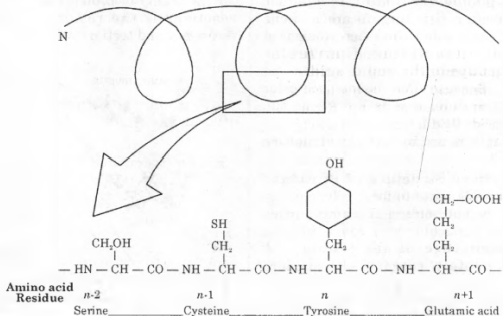
Proteins have a primary structure. If you are given a method to know which amino acid is at either of the two termini (ends) of a protein, can you connect this information to purity or homogeneity of a protein?
View full question & answer
Question 73 Marks
Give general characters of Phylum Arthropoda.
Answer
General characters of Phylum Arthropoda: (Arthropoda = "jointed foot"). It is the largest group of animals comprising of about 900,000 species. The animals of this phylum are found all over the world in all climates and conditions. Distinguishing characters:
i. The body is metamerically segmented.
ii. The body is jointed outwardly and bilaterally symmetrical.
iii. Typically each segment has a pair of jointed appendages.
iv. Coelomata and triploblastic.
v. A hard, non-living, exoskeleton is present. It is usually made up of chitin.
vi. Body divided into head, thorax and abdomen.
View full question & answer
Question 83 Marks
Distinguish between Red, Brown and Green Algae.
Answer
Red AlgaeBrown AlgaeGreen Algae
Mainly marine.Marine forms.Chiefly freshwater.
Only a few are unicellular.Unicellular forms do not exist.Unicellular species are more.
Thylakoids unstacked.Occur in groups of three.Stacked in groups of 2-20.
Only chlorophyll-a present.Chlorophyll 'a' and 'c' present.Chlorophyll 'a' and 'b' is present
Fucoxanthin presentFucoxanthin is present.Fucoxanthin is absent.
Phycobilins presentAbsentPhycobilins absent.
Reserve food is Floridean starch.Reserve food is Laminarin.Reserve food is starch.
Motile stages are not observed.Present.The motile stage is present.
View full question & answer