Questions

5 Marks Questions

Take a timed test

6 questions · self-marked practice — reveal the answer and mark yourself.

Question 15 Marks
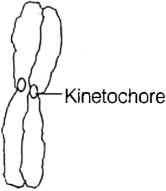
What is a centromere? How does the position of centromere form the basis of classification of chromosomes. Support your answer with a diagram showing the position of centromere on different types of chromosomes.
Answer
The centromere is a narrow non-stainable area, which joins two similar threads or chromatids of late prophase or metaphase chromosome. The two parts of the chromosome on either side of the centromere are known as an arm. They may be isobranchial (equal) or heterobranchial (unequal in length). Depending upon the position of the centromere, the chromosomes are classified as follows
i. Acrocentric chromosome: The centromere is sub-terminal, at anaphasic stage appear J-shaped.
ii. Sub-metacentric chromosome: The centromere is sub-median and the anaphasic chromosome appears L-shaped.
iii. Metacentric chromosomes: The centromere is in the middle and the chromosome appears V-shaped in anaphase.
iv. Telocentric chromosome: Centromere is terminal, the anaphasic state is I-shaped. Depending upon the number of centromeres a chromosome possess, it may be monocentric, dicentric (two centromeres), polycentric (many centromeres), acentric chromosome (having no centromere).
Image
View full question & answer
Question 25 Marks
Eukaryotic cells have organelles which may
i. not be bound by a membrane
ii. bound by a single membrane
iii. bound by a double membrane
Group the various sub-cellular organelles into these three categories.
Answer
i. Ribosome are the organelles which are not bound by a membrane. Rather ribosome is composed of two subunits and lie interspersed in the protoplasm. Ribosomes are also found attached to the surface of the Rough Endoplasmic Reticulum. They are also found in mitochondria and plastids.
ii. Lysosome is the cell organelle which is bound by a single membrane. It is a small sac-like structure. Lysosomes are found in animal cells but not in prokaryotes. Lysosome play an important role in destroying harmful substances and foreign materials.
iii. Most of the cell organelles are bound by double membranes. Mitochondria, plastids, nucleus, endoplasmic reticulum are the examples of double-membrane cell organelles. These organelles serve important functions in the cell.
View full question & answer
Question 35 Marks
How do plants manage the exchange of gases? Give an overview of respiration in plants.
Answer
Plant Respiration
• Plants, unlike animals, have no specialized organs for gaseous exchange but they have stomata and lenticels for this purpose. There are several reasons why plants can get along without respiratory organs.
• Each plant part takes care of its own gas-exchange needs. There is very little transport of gases from one plant part to another.
• Plants do not present great demands for gas exchange. Roots, stems and leaves respire at rates far lower than animals do. Only during photosynthesis are large volumes of gases exchanged and, each leaf is well adapted to take care of its own needs during these periods. When cells photosynthesize, availability of $O _2$ is not a problem in these cells since $O _2$, is released within the cell.
Overview of respiration in plants
Plants undergo aerobic respiration. Glucose is broken down into Pyruvic acid during glycolysis. Pyruvic acid is transported into the mitochondria where it is converted into acetyl CoA with the release of $CO _2$. Acetyl CoA then enters the tricarboxylic acid pathway or Kreb's cycle. NADH + H + and FADH2 are generated in the Krebs cycle. The energy in these molecules as well as that in the NADH + H + synthesised during glycolysis are used to synthesise ATP. This is accomplished through electron transport system (ETS) located on the inner membrane of the mitochondria of the plant cell. The electrons, as they move through the
system, release enough energy that are trapped to synthesise ATP. This is called oxidative phosphorylation. In this process, $O _2$ is the ultimate acceptor of electrons and it gets reduced to water.
View full question & answer
Question 45 Marks
Describe the pentose phosphate pathway.
Answer
Pentose Phosphate Pathway: The glucose is broken down into $CO _2$ and water during aerobic respiration. It is the principal pathway of respiration. Oxidation of glucose also takes place by another pathway called the pentose phosphate pathway. In this pathway, glucose 6-phosphate (6C) produced during the early stages of glycolysis (photosynthates produced during photosynthesis are oxidized to give rise to 6-phosphogluconate). The reaction occurs in the presence of the enzyme called
glucose-6-phosphate dehydrogenase. It generates NADPH. The 6-phosphogluconate molecule is again oxidized by the enzyme.
6-phosphogluconate dehydrogenase. After this one molecule, each of ribulose-5-phosphate, carbon dioxide, and NADPH are formed. Ribulose-5-phosphate undergoes many changes to produce intermediates like glyceraldehyde-3-phosphate and fructose-6- phosphate. All these reactions occur in the cytoplasm of the cells.
View full question & answer
Question 55 Marks
Describe prophase I of meiotic cell division. How is it different from prophase II of meiosis?
Answer
Prophase I. Prophase of the first meiotic division is typically longer and more complex. It has been further subdivided into the following five phases based on chromosomal behaviour:
- Leptotene Zygotene
- Pachytene
- Diplotene and
- Diakinesis.
- Leptotene. During leptotene stage the chromosomes become gradually visible under the light microscope. The compaction of chromosomes continues throughout leptotene.
Zygotene:
- During this stage chromosomes start pairing together and this process of association is called synapses. Such paired chromosomes are called homologous chromosomes.
- The chromosome synapses is accompanied by the formation of complex structure called synaptonemal complex.
- The complex formed by a pair of synapsed homologous chromosomes is called a bivalent or a tetrad.
- The first two stages of prophase I are relatively short-lived compared to the next stage that is pachytene.
Pachytene:
- During this stage bivalent chromosomes now clearly appear as tetrads.
- This stage is characterized by the appearance of recombination nodules, the sites at which crossing over occurs between non- sister chromatids of the homologous chromosomes.
- Crossing over is the exchange of genetic material between two chromosomes. Crossing over is also an enzyme-mediated process and the enzyme involved is called recombinase.
- Crossing over leads to recombination of genetic material on the two chromosomes.
- Recombination between homologous chromosomes is completed by the end of pachytene, leaving the chromosomes linked at the sites of crossing over.
Diplotene. The beginning of diplotene is recognized by the dissolution of the synaptonemal complex and the tendency of the recombined homologous chromosomes of the bivalents to separate from each other except at the sites of crossovers. These X- shaped structures are called chiasmata.
Diakinesis. The final stage of meiotic prophase I is diakinesis. This is marked by terminalisation of chiasmata. During this phase the chromosomes are fully condensed and the meiotic spindle is assembled to prepare the homologous chromosomes for separation. By the end of diakinesis, the nucleolus disappears and the nuclear envelope also breaks down. Diakinesis represents transition to metaphase.
Difference between prophase I and prophase II. During prophase I recombination of genes takes place, while in prophase II no such event happens. Prophase I is longer and more complicated compared to prophase II.
View full question & answer
Question 65 Marks
What do you mean by cell cycle? Explain cell cycle and interphase in detail.
Answer
Cell Cycle:
The cell cycle is an orderly sequence of events or a set of stages by which a cell duplicates its genome, synthesises the other constituents (important for the cell) of the cell and eventually divides into two daughter cells.
Interphase:
It is the period between the end of one cell division to the beginning of the next cell division, i.e., (between two successive M- phase).
During this phase, the cell prepares itself for both cell growth and DNA replication in an orderly manner. So, it is also known as the preparation phase. It lasts for about 90-96%, i.e., more than 95% of the total duration of the cell cycle. In a cell cycle of human cell, only about one hour is taken by the dividing phase out of 24 hours duration of one cell cycle. Interphase is further divided into following three substages on the basis of various synthetic activities
i. G₁(Gap-1)-phase
It corresponds to the duration between the mitosis (M-phase) and initiation of replication of DNA. The cell becomes metabolically very active during this period. It grows continuously and prepares itself for DNA replication. Thus synthesising enzymes and proteins needed for this process.
ii. S (Synthesis)-phase
It is known to be the phase in which actual synthesis or replication of DNA takes place. The overall amount of DNA doubles per cell, but no increase in chromosome number takes place during this phase. If the initial amount of DNA is 2C, it will become 4C.
In the case of an animal cell, during S-phase DNA replication begins inside the nucleus while the duplication of centrioles takes place in the cytoplasm.
iii. G2 (Gap-2)-phase This phase is also called post-synthetic or pre-mitotic phase. During this stage, the synthesis of DNA stops and proteins required for mitosis are being synthesised while the growth of cell continues. It prepares the cell to undergo division.
View full question & answer