Question 14 Marks
Answer
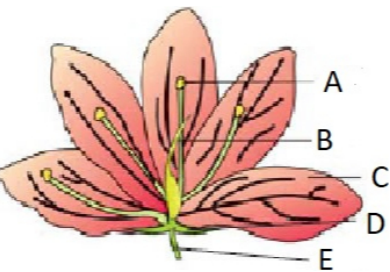
View full question & answer→i. A-androecium, B-gynoecium, C-corolla, D-calyx
Androecium: It contains pollen grains, which are responsible for reproduction in the male part of the plant.
Gynoecium: It holds ovary, which is transformed into fruit after fertilization.
Corolla: The corolla promotes pollination and protects the reproductive organs.
Calyx: The main function of the calyx is to protect the floral shoot during the bud stage.
ii. • Ganosepalous: Plants with many fused sepals are known as Gamosepalous. Eg, Hibiscus, Periwinkle, etc.
• Polypetalous: Polysepalous plants are also categorized based on sepals. Eg, Rose, Southern magnolia, etc.
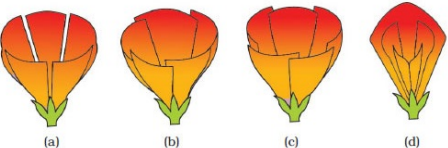
• When the margins of the petals are in contact with each other without overlapping, it is called valvate aestivation. For example, Calotropis.
• Contoured or twisted estivation occurs when the margin of one petal overlaps the margin of the next. Example - Hibiscus.
OR
Figure (c), Imbricate aestivation occurs when the margins of sepals or petals overlap without a clear direction. There is an irregular overlapping of petals by each other in this type of aestivation.
Androecium: It contains pollen grains, which are responsible for reproduction in the male part of the plant.
Gynoecium: It holds ovary, which is transformed into fruit after fertilization.
Corolla: The corolla promotes pollination and protects the reproductive organs.
Calyx: The main function of the calyx is to protect the floral shoot during the bud stage.
ii. • Ganosepalous: Plants with many fused sepals are known as Gamosepalous. Eg, Hibiscus, Periwinkle, etc.
• Polypetalous: Polysepalous plants are also categorized based on sepals. Eg, Rose, Southern magnolia, etc.
• When the margins of the petals are in contact with each other without overlapping, it is called valvate aestivation. For example, Calotropis.
• Contoured or twisted estivation occurs when the margin of one petal overlaps the margin of the next. Example - Hibiscus.
OR
Figure (c), Imbricate aestivation occurs when the margins of sepals or petals overlap without a clear direction. There is an irregular overlapping of petals by each other in this type of aestivation.