Questions

3 Marks Question

Take a timed test

3 questions · self-marked practice — reveal the answer and mark yourself.

Question 13 Marks
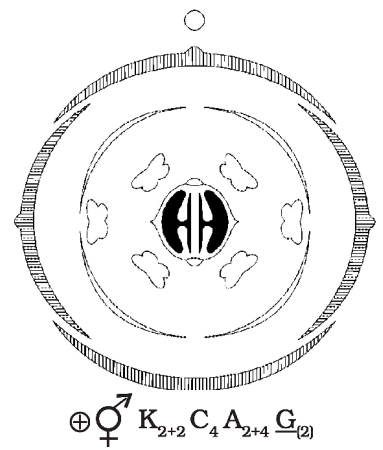
What is aestivation? Make a picture of the flowers of mustard plant (family Brassicaceae) and write the flower formula.
Answer
Aestivation: The mode of arrangement of sepals or petals in floral bud with respect to the other members of the same whorl is known as aestivation.
Image
View full question & answer
Question 23 Marks
Define placentation. Write any three differences between axile placentation and parietal placentation
Answer
Placentation: The arrangement of ovules within the ovary is known as placentation.
S. N.Axile PlacentationParietal Placentation
1.Ovules appear on the central axis.Ovules are attached to the inner wall of the ovary.
2.There are many chambers in the ovary, the number of chambers is equal to the number of carpels.Ovary is one-chambered, the number of ovules is equal to the number of carpels.
3.Example: Tomato, lemon.Example: Mustard, radish.
View full question & answer
Question 33 Marks
Write a short note on fruit.
Answer
The fruit is a characteristic feature of the flow- ering plants. It is a mature or ripened ovary, developed after fertilisation. If a fruit is formed without fertilisation of the ovary, it is called a parthenocarpic fruit. Generally, the fruit consists of a wall or pericarp and seeds. The pericarp may be dry or fleshy. When pericarp is thick and fleshy, it is dif- ferentiated into the outer epicarp, the middle mesocarp and the inner endocarp.
In mango and coconut, the fruit is known as a drupe. They develop from monocarpellary superior ovaries and are one seeded. In mango the pericarp is well differentiated into an outer thin epicarp, a middle fleshy edible mesocarp and an inner stony hard endocarp. In coconut which is also a drupe, the mesocarp is fibrous.
View full question & answer