Questions

3 Marks Question

Take a timed test

3 questions · self-marked practice — reveal the answer and mark yourself.

Question 13 Marks
Briefly describe the prokaryotic cell.
Answer
The prokaryotic cells are represented by bacteria, blue-green algae, mycoplasma and PPLO (Pleuro Pneumonia Like Organisms) and lack a membrane-bound well-organised nucleus and double-layered membrane-bound organelles. There is no well-defined nucleus. The genetic material is basically naked, not enveloped by a nuclear membrane. In addition to the genomic DNA (the single chromosome/circular DNA), many bacteria have small circular DNA outside the genomic DNA. These smaller DNA are called plasmids. Lack of histone protein and there is no mitosis and sexual division in them. There is no complete development of membrane containing organelles in the cytoplasm.
Ribosomes are also of 70S type. The structure of flagella is also not 9 + 2. They lack mitochondria but due to infoldings of plasma membrane, mesosome are formed, through which respiration takes place. Nucleolus, nuclear membrane and nucleus are absent. Therefore, the genetic material remains scattered in the centre of the cell.
View full question & answer
Question 23 Marks
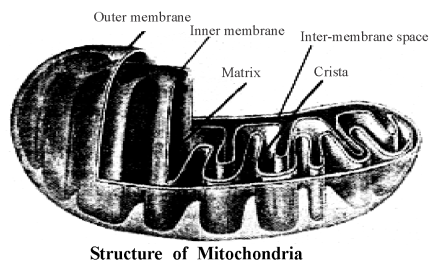
What is called the powerhouse of the cell? Draw its picture and write any three of its functions.
Answer
The powerhouse of the cell is called mitochondria. It has the following functions:
1. It is called the powerhouse of the cell. It is called powerhouse because the energy released during oxygen respiration is stored in the form of ATP. Whenever energy is required for biological functions, this ATP is used only. On the breakdown of one ATP, 7.3KCal energy is released.
Image

2. During respiration, glycolysis occurs in the cytoplasm. At this time two pyruvic acid molecules are formed from the glucose molecule. Pyruvic acid enters the mitochondria and produces ATP, CO2 and H2O through the Krebs cycle.
3. It is the main organelle involved in the process of photorespiration
View full question & answer
Question 33 Marks
Who discovered the nucleus? Write any five works of nuclear membrane.
Answer
The nucleus was discovered by Robert Brown in 1831.The following are the functions of the nuclear membrane:
(i) To keep the genetic material DNA separated and protected from the cytoplasm.
(ii) Control over the free exchange of substances between the cytoplasm and the nucleus.
(iii) Permission of many substances through selective method.
(iv) To maintain the difference in pH between cytoplasm and nucleus.
(v) To make changes in its own structure according to the physiological condition of the cell and to maintain the shape of the nucleus.
(vi) The outer membrane of the nuclear membrane takes part in the synthesis of specific proteins, enzymes, antibiotics and other chemicals. Ribosomes are attached to it.
View full question & answer