MCQ 14 Marks
Collagen is
- ✓Fibrous protein
- BGlobular protein
- CLipid
- DCarbohydrate
Answer
View full question & answer→Correct option: A.
Fibrous protein
(A) Fibrous protein
Collagen is Fibrous protein
Collagen is Fibrous protein
45 questions · 40 auto-graded MCQ + 5 self-marked written.
| Compositae | - | Basal placentation |
| Brassicaceae | - | Parietal placentation |
| Malvaceae | - | Twisted aestivation |
| Poaceae | - | Vexillary aestivation |
| Compositae | - | Basal placentation |
| Brassicaceae | - | Parietal placentation |
| Malvaceae | - | Basal placentation |
| Fabaceae | - | Vexillary aestivation |
| A. UAU | I. Arginine |
| B. CAU | II. Alanine |
| C. CGU | III. Histidine |
| D. GCC | IV. Tyrosine |
| A. UAU | IV. Tyrosine |
| B. CAU | III. Histidine |
| C. CGU | I. Arginine |
| D. GCC | II. Alanine |
| A. The template with polarity 3'$\rightarrow$5' | Continous replication |
| B. The template with polarity 5'$\rightarrow$3' | Discontinous replication |
| C. DNA replication | Energy expensive process |
| D. Okazaki fragment | Discontinous synthesis |
| A. The template with polarity 3'$\rightarrow$5' | Continous replication |
| B. The template with polarity 5'$\rightarrow$3' | Discontinous replication |
| C. DNA replication | Energy expensive process |
| D. Okazaki fragment | Discontinous synthesis |
| (A) 1869 | I. Friedrich meischer |
| (B) 1953 | II. Watson and crick |
| (C) 1928 | III. Griffith |
| (D) 1952 | IV. Hershey and chase |
| (A) 1869 | I. Friedrich meischer |
| (B) 1953 | II. Watson and crick |
| (C) 1928 | III. Griffith |
| (D) 1952 | IV. Hershey and chase |
A. | I. Female |
B. | II. Male |
C. | III. Sex unspecified |
D. | IV. Consanguineous mating |
| A. | II. Male |
| B. | I. Female |
| C. | III. Sex unspecified |
| D. | IV. Consanguineous mating |
| Total Chromosome | |
| A. Turner syndrome | I. 47 |
| B. Down syndrome | II. 45 |
| C. Male honey bee | III. 32 |
| D. Female honey bee | IV. 16 |
| A. Turner syndrome | II. 45 |
| B. Down syndrome | I. 47 |
| C. Male honey bee | IV. 16 |
| D. Female honey bee | III. 32 |
| A. RRYY | I. Round Yellow |
| B. Rryy | II. Round green |
| C. rryy | III. Wrinkled green |
| D. rrYY | IV. Wrinkled yellow |
| A. RRYY | I. Round Yellow |
| B. Rryy | II. Round green |
| C. rryy | III. Wrinkled green |
| D. rrYY | IV. Wrinkled yellow |
| A. Multiload 375 | I. Pills |
| B. Vasectomy | II. Sterilisation |
| C. Saheli | III. IUD |
| A. Multiload 375 | III. IUD |
| B. Vasectomy | II. Sterilisation |
| C. Sahel | I. Pill |
| Swollen leaf base | - | Pulvinus |
| Lamina | - | Green expanded part of leaf |
| Trimerous | - | The floral appendages are in multiple of 5 |
| Rachis | - | Represents the midrib of the leaf |
| Swollen leaf base | - | Pulvinus |
| Lamina | - | Green expanded part of leaf |
| Trimerous | - | The floral appendages are in multiple of 5 |
| Rachis | - | Represents the midrib of the leaf |
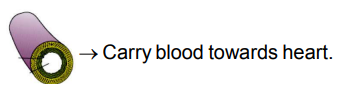
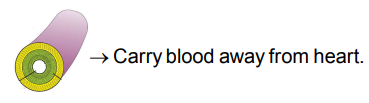

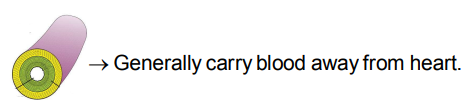
| Cholera | - | A type of disease |
| Mycorrhiza | - | A type of disease |
| Lichen | - | A type of pathogen |
| BSE | - | A type of symbiotic association |
| Cholera | - | A type of disease |
| Mycorrhiza | - | A type of symbiotic association |
| Lichen | - | A type of symbiotic association |
| BSE | - | A type of disease |
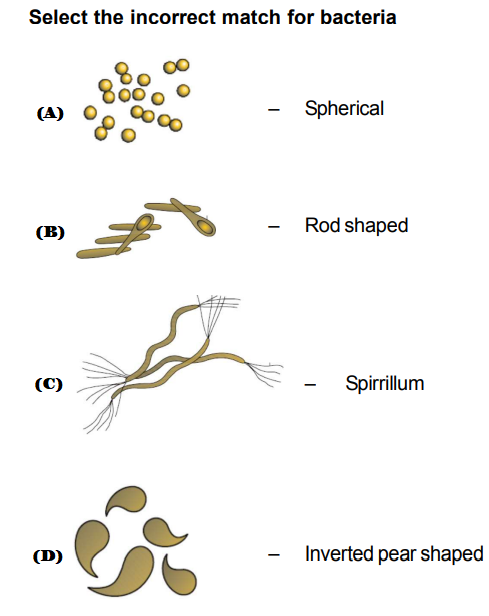
| A. Glycine | I. Amino acid |
| B. Triglyceride | II. Lipids |
| C. Uridine | III. Nucleoside |
| D. Inulin | IV. Carbohydrate |
| A. Glycine | I. Amino acid |
| B. Triglyceride | II. Lipids |
| C. Uridine | III. Nucleoside |
| D. Inulin | IV. Carbohydrate |

