MCQ 14 Marks
$[ X ]+ H _2 SO _4 \rightarrow[ Y ]$ a colourless gas with irritating smell
$[ Y ]+ K _2 Cr _2 O _7+ H _2 SO _4 \rightarrow$ green solution [X] and [Y] is
- A
$Cl ^{-}, HCI$
- B
$S _2^{-}, H _2 S$
- C
$CO _{32-}, CO _2$
- D
$SO _3{ }^{2-}, SO _2$
AnswerD. $SO _3{ }^{2-}, SO _2$
Explanation:
$[ X ]$ and $[ Y ]$ are $SO _{32}{ }^{-}$and $SO _2$ respectively.
$SO _{32^{-}}$reacts with sulphuric acid to form sulphur dioxide which is a colourless gas with an irritating smell. $SO _{32}^{-}+ H _2 SO _4 \rightarrow SO _2$ (a colourless gas with irritating smell) $+ H _2 O$ Potassium dichromate oxidises sulphur dioxide to the green solution of chromium sulphate.
$SO_2+K_2 Cr_2 O_7+H_2 SO_4 \rightarrow Cr_2\left(SO_4\right)_3 \text { (greensolution) }+K_2 SO_4+H_2 O .$
View full question & answer→MCQ 24 Marks
A liquid compound (x) can be purified by steam distillation only if it is __________ .
- A
steam volatile, miscible with water
- B
not steam volatile, immiscible with water
- C
not steam volatile, miscible with water
- D
steam volatile, immiscible with water
AnswerD. steam volatile, immiscible with water
Explanation:
steam volatile,imssiscible with water
View full question & answer→MCQ 34 Marks
Aqueous solution of which of the following compounds is the best conductor of electric current?
- A
Acetic acid, $C _2 H _4 O _2$
- B
- C
Ammonia, $NH _3$
- D
Fructose, $C _6 H _{12} O _6$
AnswerB. Hydrochloric acid, HCl
Explanation:
Hydrochloric acid is a strong electrolyte that is almost completely ionized in its aqueous solution. Hence, among the given options, an aqueous solution of HCl is the best conductor of electric current.
View full question & answer→MCQ 44 Marks
- A
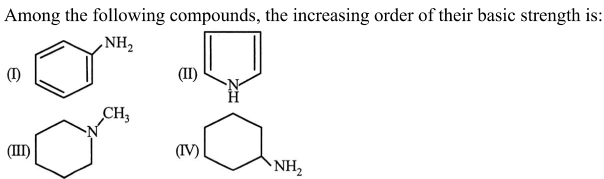
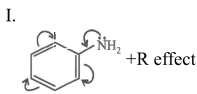
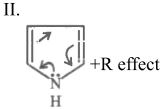
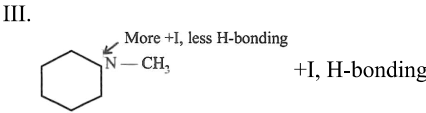
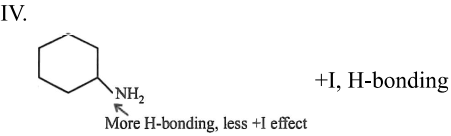
(I) $<$ (II) $<$ (IV) $<$ (III)
- B
(I) $<$ (II) $<$ (III) $<$ (IV)
- C
(II) $<$ (I) $<$ (IV) $<$ (III)
- D
(II) $<$ (I) $<$ (III) $<$ (IV)
View full question & answer→MCQ 54 Marks
Which one is the complimentary base of adenine in one strand to that in the other strand of DNA?
AnswerC. Thymine
Explanation:
Thymine
View full question & answer→MCQ 64 Marks
Which of the following monosaccharides is a pentose?
AnswerC. Ribose
Explanation:
Ribose
View full question & answer→MCQ 74 Marks
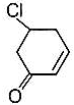
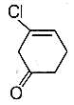
Which compound undergoes nitration readily?
MCQ 84 Marks
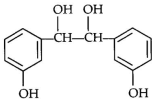
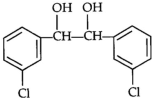
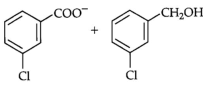
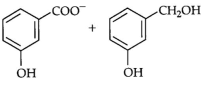
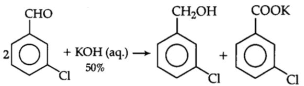
When m -chlorobenzaldehyde is treated with $50 \% KOH$ solution, the product(s) obtained is (are):
View full question & answer→MCQ 94 Marks
View full question & answer→MCQ 104 Marks
The alcohol which is most readily dehydrated is:
MCQ 114 Marks
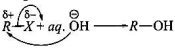
An alkyl halide may be converted into an alcohol by:
MCQ 124 Marks
Removal of an electron from an antibonding molecular orbital
- A
- B
- C
- D
increases the intemuclear distance
AnswerB. increases the bond order
Explanation:
increases the bond order
View full question & answer→MCQ 134 Marks
Aqueous solution of nickel sulphate on treating with pyridine and then adding a solution of sodium nitrite gives dark blue crystals of:
- A
$\left.Ni (\text { py })_3\left( NO _2\right)\right]_2 SO _4$
- B
$\left.Ni (\text { py })_2\left( NO _2\right)_2\right]$
- C
$\left[ Ni ( py )_4\right] SO _4$
- D
$\left[ Ni (\text { py })_4\right]\left( NO _2\right)_2$
AnswerD. $\left[ Ni (\text { py })_4\right]\left( NO _2\right)_2$
Explanation:
$\left[ Ni (\text { py })_4\right]\left( NO _2\right)_2$
View full question & answer→MCQ 144 Marks
Select complex in which metal have primary valency $=2$, secondary valency $=4$ and shows stereoisomerism:
- A
$PtCl _4 \cdot 2 NH _3$
- B
$PtCl _2 \cdot 3 NH _3$
- C
$PtCl _2 \cdot 2 NH _3$
- D
$PtCl _2 \cdot 4 NH _3$
AnswerC. $PtCl _2 \cdot 2 NH _3$
Explanation:
$\begin{array}{l}{\left[ Pt \left( NH _3\right)_2 Cl _2\right]} \\ \text { O.N. }=+2, C . N .=4 \text {, shows } 2 \text { G.I. }\end{array}$
View full question & answer→MCQ 154 Marks
Among the following compounds the one that is polar and has the central atom with $sp ^2$-hybridization is:
- A
$BF _3$
- B
$SiF _4$
- C
$H _2 CO _3$
- D
$HClO _2$
AnswerC. $H _2 CO _3$
Explanation:
Carbon in $H _2 CO _3$ has $sp ^2$ - hybridization and is polar as individual bond dipoles do not cancel each other.
$BF _3$ has $sp ^2$ - hybridized but is non-polar. $SiF _4$ has $sp ^3$ - hybridization. $HClO _2$ has $sp ^3-$ hybridization.
View full question & answer→MCQ 164 Marks
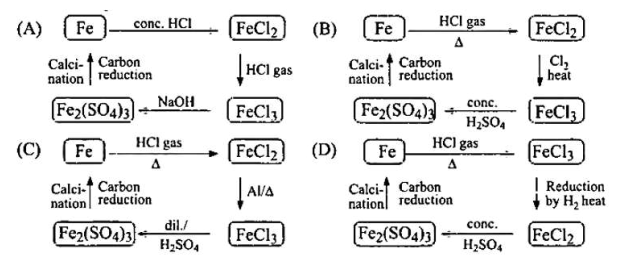
AnswerC. Only (B)
Explanation:
$\begin{array}{l} Fe +2 HCl \longrightarrow FeCl _2+ H _2 \\ Cl _2+ FeCl _2 \xrightarrow{\Delta} FeCl _3 \xrightarrow{ H _2 SO _4} Fe _2\left( SO _4\right)_3 \underset{\text { carbon }}{\stackrel{\Delta \text { with }}{\rightleftharpoons}} Fe \end{array}$
View full question & answer→MCQ 174 Marks
In the presence of a catalyst, the heat evolved or absorbed during the reaction:
AnswerB. remains unchanged
Explanation:
Catalyst does not change heat of reaction.
View full question & answer→MCQ 184 Marks
Which of the following statements is incorrect for the collision theory of chemical reaction?
- A
Colliding species must be properly oriented with sufficient threshold energy for effective collision.
- B
A number of effective collisions determine the rate of reaction.
- C
It considers reacting species to be hard spheres and ignores their structural aspects.
- D
Collision of species possessing sufficient threshold energy results in product formation.
AnswerD. Collision of species possessing sufficient threshold energy results in product formation.
Explanation:
According to collision theory, successful conversion of reactant(s) to product(s) takes place when,
i. reactant molecules possess sufficient threshold energy, and
ii. are properly oriented with respect to each other at the time of the collision.
View full question & answer→MCQ 194 Marks
The conductivity of pure water at $25^{\circ} C$ is $5.55 \times 10^{-8} ohm ^{-1} cm^{-1} \cdot \Lambda_{H^{+}}^{\circ}=350 ohm ^{-1}$ $cm ^2 mol^{-1}$ and $\Lambda_{ OH ^{-}}^{\circ}=200 ohm ^{-1} cm^2 mol^{-1}$. Determine dissociation constant of water.
- A
$10^{-14}$
- B
$1.8 \times 10^{-16}$
- C
$1.8 \times 10^{-12}$
- D
$1.018 \times 10^{-14}$
AnswerC. $1.8 \times 10^{-12}$
Explanation:
$1.8 \times 10^{-16}$
View full question & answer→MCQ 204 Marks
Which one of the following pairs of substances on reaction will not evolve $H _2$ gas?
AnswerC. Copper and $HCl _{( aq )}$
Explanation:
As copper is placed below hydrogen in the electrochemical series, thus copper does not give hydrogen with dilute acids. While all other will give hydrogen.
$\begin{array}{l}
Fe+\text { dilute } H_2 SO_4 \rightarrow FeSO_4+H_2 \uparrow \\
3 Fe+4 H_2 O \rightarrow Fe_3 O_4+4 H_2 \uparrow \\
2 Na+C_2 H_5 OH \rightarrow 2 C_2 H_5 ONa+H_2 \uparrow
\end{array}$
$Cu +$ dil. $HCl \rightarrow$ No reaction
View full question & answer→MCQ 214 Marks
In which of the following half cells, electrochemical reaction is pH dependent?
- A
$Ag | AgCl | Cl ^{-}$
- B
$Pt \mid Fe ^{3+}, Fe ^{2+}$
- C
$\left.\frac{1}{2} F_2 \right\rvert\, F ^{-}$
- D
$MnO _4^{-} \mid Mn ^{2+}$
AnswerD. $MnO _4^{-} \mid Mn ^{2+}$
Explanation:
Reduction of $MnO _4^{-}$is pH dependent.
In acidic medium
$MnO_4^{-}+5 e^{-} \longrightarrow Mn^{2+}$
In neutral medium
$MnO_4^{-}+3 e^{-} \longrightarrow Mn^{4+}$
In basic medium
$MnO_4^{-}+e^{-} \longrightarrow Mn^{6+}$
So, according to pH , the reaction and potential of cell changes.
View full question & answer→MCQ 224 Marks
The solubility of NaCl is $36 g / 100 g$ water at $20^{\circ} C$. If three systems $A , B$ and C contain 40 g, 36 g and 20 g of NaCl in 100 g water respectively, the correct decreasing order of vapour pressure of systems will be:
- A
$C > A = B$
- B
A $>$ B $>$ C
- C
$C = B = A$
- D
A $=$ B $>$ C
AnswerA. $C > A = B$
Explanation:
$C > A = B$
View full question & answer→MCQ 234 Marks
The vapour pressure of two liquids $P$ and $Q$ are 80 torr and 60 torr respectively. The total vapour pressure obtained by mixing 3 mole of P and 2 mole of Q would be:
AnswerC. 72 torr
Explanation:
$\begin{array}{l}P_M=80 \times \frac{3}{5}+60 \times \frac{2}{5} \\ =48+24=72 \text { torr }\end{array}$
View full question & answer→MCQ 244 Marks
15 g of a solute in 100 g of water makes a solution to freeze at $-1^{\circ} C$. $30 g$ of a solute in 100 g of water will give a depression in f.pt. equal to:
- A
$0.5^{\circ} C$
- B
$2^{\circ} C$
- C
$-2^{\circ} C$
- D
$1^{\circ} C$
AnswerB. $2^{\circ} C$
Explanation:
$\Delta T \propto w$, if other factors are constant. Thus $\frac{\Delta T}{1}=\frac{30}{15}$
$\therefore \Delta T=2$
View full question & answer→MCQ 254 Marks
Pure water boils at $-99.725^{\circ} C$ at Shimla. If $K _{ b }$ for water is $0.51 K mol ^{-1} kg$, the boiling point of 0.69 molal urea solution will be:
AnswerD. 100.08
Explanation:
$\begin{array}{l}\Delta T _{ b }= K \times \text { molality }=0.51 \times 0.69=0.352 \\ \therefore \text { boiling point }=99.725+0.352=100.077^{\circ} C \end{array}$
View full question & answer→MCQ 264 Marks
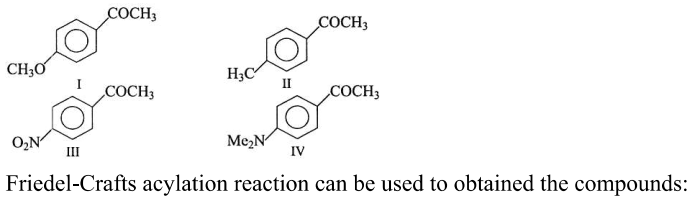
AnswerA. I, II and IV
Explanation:
$- NO _2$ is deactivating group, so it cannot give Friedel-Crafts reaction.
View full question & answer→MCQ 274 Marks
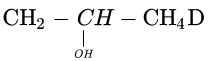
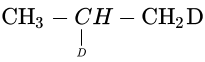
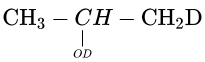
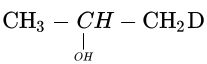
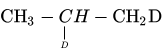
$CH _3- CH = CH _2 \xrightarrow[ H _2 O _2 / O H^{-}]{B D_3}$ product $X, X$ is :
AnswerB.
Explanation:
View full question & answer→MCQ 284 Marks
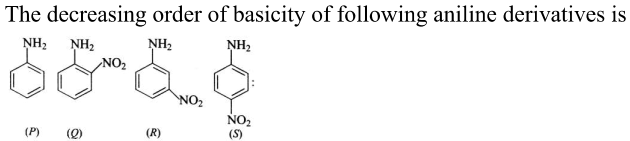
- A
R $>$ Q $>$ P $>$ S
- B
P $>$ Q $>$ R $>$ S
- C
P $>$ R $>$ S $>$ Q
- D
S $>$ R $>$ Q $>$ P
AnswerC. P $>$ R $>$ S $>$ Q
Explanation:
$P > R > S > Q$
View full question & answer→MCQ 294 Marks
In which of the following processes hybridization is not affected?
- A
$NH _3+ H _2 O \longrightarrow NH _2 OH$
- B
$LiH + AlH _3 \longrightarrow LiAlH _4$
- C
$PCl _5(s) \xrightarrow{\text { melt }} PCl _4^{+}+ PCl _6^{-}$
- D
$BeF _2(g) \xrightarrow{\text { Hoar frosting }} BeF _2(s)$
AnswerA. $NH _3+ H _2 O \longrightarrow NH _2 OH$
Explanation:
In $NH _3+ H _2 O \longrightarrow NH _2 OH$ Process hybridization is not affected. In this process both the nitrogen in the reactant and product are in $sp ^3$ hybrid state.
i. $\underset{s p^3 d}{P C l_5} \longrightarrow \underset{s p^3}{ PCl _4^{+}}+\underset{s p^3 d^2}{ PCl _6^{-}}$
ii. $\underset{s p^2}{ AlH _3} \longrightarrow \underset{s p^3}{ AlH _4^{-}}$
iii. $\underset{s p}{B e F_2} \longrightarrow \underset{s p^3}{B e F_2(s)}$
iv. $\underset{s p^3}{ NH _3} \longrightarrow \underset{s p^3}{ NH _4^{+}}$
View full question & answer→MCQ 304 Marks
The stability of +1 oxidation state among $Al , Ga , In$ and Tl increases in the sequence:
- A
$Al < Ga < In < Tl$
- B
TI $<$ In $< Ga < Al$
- C
$Ga < In < Al < Tl$
- D
In $<$ TI $< Ga < Al$
AnswerA. $Al < Ga < In < Tl$
Explanation:
In group 13 elements, the stability of +3 oxidation state decreases down the group while that of +1 oxidation state increases due to the inert pair effect. Hence, stability of +1 oxidation state increases in the sequence: $Al < Ga < In < Tl$.
View full question & answer→MCQ 314 Marks
Hydrogen peroxide in aqueous solution decomposes on warming to give oxygen according to the equation $2 H _2 O _2$ (aq) $\rightarrow 2 H _2 O ( l )+ O _2$ (g) under conditions where one mole of gas occupies $24 dm ^3, 100 cm^3$ of XM solution of $H _2 O _2$ produces $3 dm ^3$ of $O _2$. Thus X is:
AnswerB. 2.5
Explanation:
$\begin{array}{l}\text { Mole of } O _2 \text { formed }=\frac{3}{24}=\frac{1}{8} \\ \therefore \text { Mole of } H _2 O _2=\frac{1}{8} \times 2=\frac{1}{4} \\ \therefore 100 \times X =\frac{1}{4} \times 1000(m \text { mole }= m \times V ) \\ \therefore X =2.5\end{array}$
View full question & answer→MCQ 324 Marks
Experimentally it was found that a metal oxide has formula $M _{0.98} O$. Metal M is present as $M ^{2+}$ and $M ^{3+}$ in its oxide. Fraction of the metal which exists as $M ^{3+}$ would be:
- A
$6.05 \%$
- B
$5.08 \%$
- C
$7.01 \%$
- D
$4.08 \%$
AnswerD. $4.08 \%$
Explanation:
Average oxidation no. of $M =+\frac{200}{98}$ (lies between 2 and 3 )
Let $\%$ of $M ^{2+}$ be a and of $M ^{3+}$ be b
or $\frac{2 \times a+(100-a) \times 3}{100}=2.04(\because a + b =100)$
$\begin{array}{l}
\therefore 2 a+300-3 a=\frac{200}{98} \\
\therefore+a=300-2.04 \times 100 \\
=300-204=96
\end{array}$
$\text { Thus } M^{2+}=96 \%$
$M^{2+}=4 \%$
View full question & answer→MCQ 334 Marks
Which substance serves as a reducing agent in the following reaction,
$14 H^{+}+Cr_2 O_4^{2-}+3 Ni \longrightarrow 2 Cr^{3+}+7 H_2 O+3 Ni^{2+} ?$
- A
- B
$Cr _2 O _7^{2-}$
- C
$H _2 O$
- D
$H ^{+}$
View full question & answer→MCQ 344 Marks
What is the pH of the resulting solution when equal volumes of 0.1 M NaOH and 0.01 M HCl are mixed?
AnswerD. 12.65
Explanation:
$\begin{array}{l}\text { meq. of } HCl =0.01 \times V \\ \text { meq. of } NaOH =0.1 \times V \\ \therefore \text { meq. of } NaOH \text { left }=0.1 V-0.01 V \\ \therefore[ NaOH ] \operatorname{left}=\frac{0.09 V}{2 V}=0.045 M \\ \therefore \text { pOH }=-\log \left[ OH ^{-}\right]=-\log [0.045]=1.35 \\ \therefore pH =12.65\end{array}$
View full question & answer→MCQ 354 Marks
One mole of ice is converted into the water at 273 K . The entropies of $H _2 O ( s )$ and $H _2 O (1)$ are 38.20 and $60.01 J mol ^{-1} K^{-1}$ respectively. The enthalpy change for the conversion is:
- A
$59.54 J mol ^{-1}$
- B
$5954 J mol ^{-1}$
- C
$595.4 J mol ^{-1}$
- D
$320.6 J mol ^{-1}$
AnswerB. $5954 J mol ^{-1}$
Explanation:
$\begin{array}{l}\Delta G =\Delta H - T \Delta S ; \text { at equilibrium } \\ \Delta G =0 \\ \therefore \Delta H = T \Delta S \\ \text { or } \Delta H =273 \times(60.01-38.20)=5954.13 J mol ^{-1}\end{array}$
View full question & answer→MCQ 364 Marks
Standard state Gibbs energy changes for the isomerization reaction, cis-2-pentene $\rightarrow$ trans-2-pentene is $-3.67 kJ / mol$ at 400 K . If more trans-2-pentene is added to the reaction vessel, then:
- A
more cis-2-pentene is formed
- B
additional trans-2-psntene is formed
- C
equilibrium is shifted in forward direction
- D
equilibrium remains unaffected
AnswerA. more cis-2-pentene is formed
Explanation:
more cis-2-pentene is formed
View full question & answer→MCQ 374 Marks
Stability of the species $Li _2, Li _2^{-}$and $Li _2^{+}$increases in the order of
- A
$Li _2< Li _2^{-}< Li _2^{+}$
- B
$Li _2^{-}< Li _2< Li _2^{+}$
- C
$Li _2< Li _2^{+}< Li _2^{-}$
- D
$Li _2^{-}< Li _2^{+}< Li _2$
AnswerD. $Li _2^{-}< Li _2^{+}< Li _2$
Explanation:
$Li_2(3+3=6)=\sigma ls^2, \stackrel{*}{\sigma} 1 ls^2, \sigma 2 s^2$
Bond order $=\frac{N_b-N_a}{2}=\frac{4-2}{2}=1$
$Li_2^{+}(3+3-1=5)=\sigma 1 s^2, \stackrel{*}{\sigma} 1 s^2, \sigma 2 s^1$
Bond order $=\frac{3-2}{2}=\frac{1}{2}=0.5$
$Li_2^{-}(3+3+1=7)=\sigma s^2, \stackrel{*}{\sigma} 1 s^2, \sigma 2 s^2 \stackrel{*}{\sigma} 2 s^1$
Bond order $=\frac{4-3}{2}=\frac{1}{2}=0.5$
Stability order is $Li _2< Li _2^{+}< Li _2$ (because $Li _2^{-}$has more number of electrons in antibonding orbitals which destabilises the species).
View full question & answer→MCQ 384 Marks
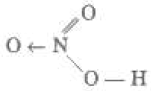
Which one of the following formulae does not correctly represent the bonding capacities of the atoms involved?
AnswerC.
Explanation:
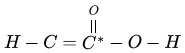
The asterick $\left({ }^*\right)$ marked carbon has a valency of 5 and hence this formula is not correct because carbon has a maximum valency of 4. View full question & answer→MCQ 394 Marks
In the complex, $BH _3 PF _3$, what is the type of back bond from B to P ?
- A
$\sigma \rightarrow d$
- B
$\pi \rightarrow \pi^*$
- C
$\pi^* \rightarrow d$
- D
$\sigma \rightarrow \pi$
AnswerA. $\sigma \rightarrow d$
Explanation:
$\sigma \rightarrow d$
View full question & answer→MCQ 404 Marks
Which of the following generally decreases in going down the halogen group?
AnswerA. Ionisation potential
Explanation:
Ionic radii = Increases
Atomic radii $=$ Increases
I.E. $=$ Decreases
View full question & answer→MCQ 414 Marks
The angular momentum of electron in nth orbit is given by:
- A
$\frac{n^2 h}{2 \pi}$
- B
- C
$\frac{h}{2 \pi n}$
- D
$\frac{n h}{2 \pi}$
AnswerD. $\frac{n h}{2 \pi}$
Explanation:
Angular momentum of electron in an orbit $=n \frac{h}{2 \pi}$
View full question & answer→MCQ 424 Marks
If $S _1$ be the specific charge $\left(\frac{e}{m}\right)$ of cathode rays and $S _2$ be that of positive rays then which is true?
- A
S $_1<$ S $_2$
- B
$S _1> S _2$
- C
$S _1 \neq S _2$
- D
$S_1=S_2$
AnswerB. $S _1> S _2$
Explanation:
Mass of positively charged ions in positive rays is more than mass of electrons.
View full question & answer→MCQ 434 Marks
For which of the following, the radius will be same as for hydrogen atom having $n =1$?
- A
$Li ^{2+}, n =2$
- B
$Li ^{2+}, n =3$
- C
$Be ^{3+}, n =2$
- D
$He ^{+}, n =2$
AnswerC. $Be ^{3+}, n =2$
Explanation:
$r_2 Be ^{3+}=\frac{r_1 H }{4} \times 2^2\left(\because r_2 H =r_{1 H } \times 2^2\right.$ and $\left.r_n Be ^{3+}=\frac{r_n H }{n}\right)$
View full question & answer→MCQ 444 Marks
One mole of any substance contains $6.022 \times 10^{23}$ atoms $/ molec$. molecules of $H _2 SO _4$ present in 100 mL of $0.02 M H _2 SO _4$ solution is:
- A
$12.044 \times 10^{20}$ molecules
- B
$1 \times 10^{23}$ molecules
- C
$12.044 \times 10^{23}$ molecules
- D
$6.022 \times 10^{23}$ molecules
AnswerA. $12.044 \times 10^{20}$ molecules
Explanation:
$\begin{array}{l}\text { Milli mole }= M \times V _{ mL } \\ =0.02 \times 100=2 \\ \therefore \text { molecules }=2 N \times 10^{-3} \\ =2 \times 6.02 \times 10^{23} \times 10^{-3}=12.044 \times 10^{20}\end{array}$
View full question & answer→MCQ 454 Marks
A gaseous mixture contains oxygen and nitrogen in the ratio of $1: 4$ by weight. Therefore, the ratio of their number of molecules is
- A
$7: 32$
- B
$1: 8$
- C
$3: 16$
- D
$1: 4$
AnswerA. $7: 32$
Explanation:
Let mass of oxygen $=1 g$, Then mass of nitrogen $=4 g$
Mol. wt. of $N ^2=28 g, Mol$. wt. of $O ^2=32 g$
28 g of $^2$ has $=6.02 \times 10^{23}$ molecules of nitrogen
4 g of $N ^2$ has $=\frac{6.02 \times 10^{23}}{28} \times 4$ molecules of nitrogen
$=\frac{6.02 \times 10^{23}}{7}$ molecules of nitrogen
32 g of $O ^2$ has $=6.02 \times 10^{23}$
$\therefore 1 g$ of O $^2$ has $=\frac{6.02 \times 10^{23}}{32} \times 1$
$=\frac{6.02 \times 10^{23}}{32}$ molecules of oxygen
View full question & answer→