Questions

3 Marks Question

Take a timed test

8 questions · self-marked practice — reveal the answer and mark yourself.

Question 13 Marks
Alien species invasion has been a threat to biodiversity. Justify with the help of a suitable example. List any other three causes responsible for such a loss.
Answer
Alien species invasion has been a threat to biodiversity. Example of Alien species invasion are as follows:
i. Nile Perch, introduced into lake Victoria (in East Africa), led to the extinction of Cichlid fish (more than 200 species) in the lake
ii. Introduction of African catfish (Clarias gariepinus), for aquaculture, posing threat to indigenous catfish
iii. Introduction of carrot grass (Parthenium) I Lantana I Water hyacinth (Eichhornia), which are invasive weed, that pose threat to native species or any other appropriate example.
Other Causes of biodiversity loss
i. Habitat loss and fragmentation
ii. Over exploitation
iii. Co-extinction
View full question & answer
Question 23 Marks
What are the misconceptions about the transmission or acquiring AIDS?
Answer
There are many wrong beliefs and misconceptions about the AIDS. AIDS cannot be acquired by the following activities:
i. Insect bites
ii. Crowded transport
iii. Shaking hands
iv. Sharing towels
v. Coughing and sneezing
vi. Kissing and embracing
vii. Sharing utilities and telephone
viii. Swimmingpools and toilets.
View full question & answer
Question 33 Marks
How did Louis Pasteur successfully demolish the popular theory of spontaneous generation? What were his conclusions?
Answer
He used particular type of flasks in his experiment.
His flasks were pre-sterilised and heat-killed yeast culture was kept in them.
- One flask was kept closed and the other was left open.
- He showed that in the closed pre-sterilised flask, life did not come from the killed yeast, in the other flask that was kept open, life appeared from killed yeast. This dismissed the theory of spontaneous generation.
- He concluded that life can come from pre-existing life.
View full question & answer
Question 43 Marks
Differentiate between in situ and ex situ approaches of conserving biodiversity.
Answer
  In situ conservation   Ex situ conservation
1. It means conservation on site. An endangered species is protected in its natural habitat by maintaining the habitat itself and defending the species from predators and poachers. 1. It means off site conservation. An endangered species is
protected by removing it from the threatened habitat and placing it under the care of humans.
2. This approach emphasizes on the protection of total ecosystem. 2. This approach restricts to the protection of genetic resources at population and species level.
3. This approach includes methods of protection like establishing hot spots, national parks, wildlife sanctuaries and biosphere reserves. 3. It is done through live collections of animals and plants in zoos, botanical gardens, seed banks, etc.
View full question & answer
Question 53 Marks
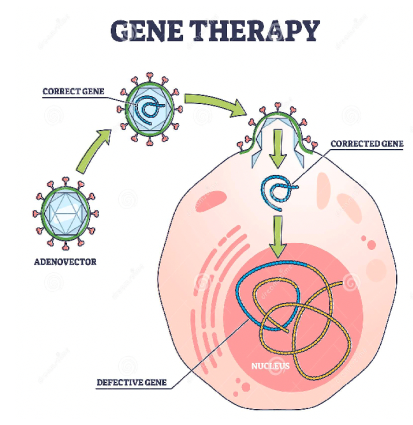
The image below describes the process of Gene Therapy.
Image
i. What is gene therapy?
ii. Name the first clinical case in which it was used.
Answer
Gene therapy is a corrective therapy or technique of genetic engineering that is used to replace a faulty or non-functional gene with a normal healthy functional gene.
The first clinical gene therapy was given to a 4-year-old girl with ADA (Adenosine Deaminase) deficiency in 1900. It is caused due to the deletion of the gene coding for ADA, which adversely affects the functioning of the immune system.
View full question & answer
Question 63 Marks
Name the type of curve that characterizes most populations growing in favourable environment. Define carrying capacity.
Answer
→ Sigmoid curve
→ In nature a given habitat has enough resources to support a maximum possible number of population, beyond which no further growth of the population is possible. This limit is called as natures carrying capacity (K) for that species in that habitat.
View full question & answer
Question 73 Marks
List any four symptoms of Down's syndrome. What is the basis of this disorder?
Answer
Four symptoms of Down's syndrome are:
(a) feeble minded
(b) retarded growth
(c) rounded face and broad forehead
(d) permanently open mouth.
It is an autosomal aneuploidy or 21 trisomy. In this case the egg possesses 24 chromosome instead of 23 and the offspring has 47 chromosomes. (45+ XY in male, 445 + XX in female) instead of 46.
View full question & answer
Question 83 Marks
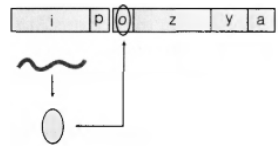
Given below is a schematic representation of a lac operon. Answer the following questions:

i. Identify i and p.
ii. Name the inducer for this operon.
iii. Explain the function of inducer for this operon.
Answer
i. i-Regulatory gene, p-Promoter gene.
ii. The Inducer is lactose.
iii. Functions of Lactose
a. Enters the cell and binds to the repressor and inactivates it.
b. As a result, repressor cannot bind to the operator. This allows RNA polymerase to have access to the promoter and transcription proceeds.
View full question & answer