Question 13 Marks
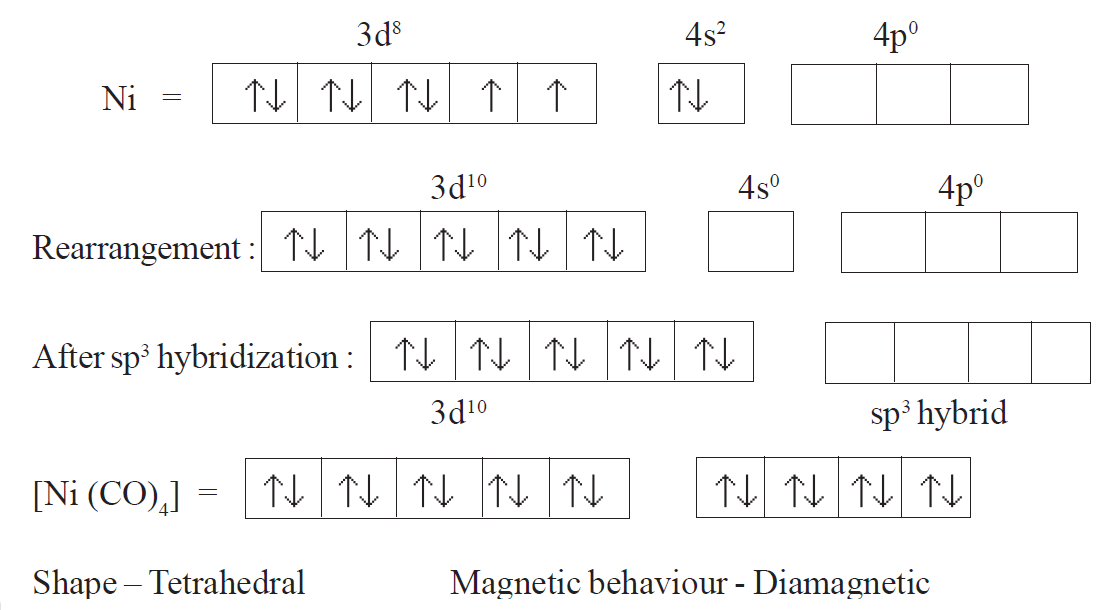
- Using valence bond theory, predict the shape and magnetic character of
[Ni(CO)4]. [Ni = 28].
- Give one example of application of coordination compounds-in medicine.
50 questions · timed · auto-graded
[Ni(CO)4]. [Ni = 28].
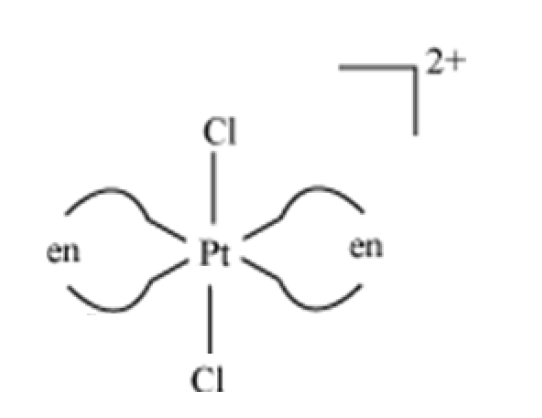
(Atomic number of Fe = 26)
(en= ethane-1,2-diamine)
(At. nos.: Cr= 24, Co=27, Ni= 28)
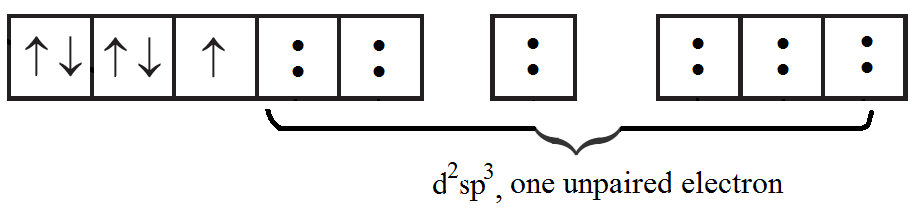
In [Ni(CO)4]; CO acts as strong ligand therefore, causes forced pairing, thus electrons will become paired hence diamagnetic.
(Atomic no. of Ni = 28)
[Co(NH3)6]3+, [Cr(NH3)6]3+, Ni(CO)4.
(At. Nos.: Co = 27, Cr = 24, Ni = 28).| [Co(NH2)6]3+ | Octahedral | Diamagnetic | d2sp3 |
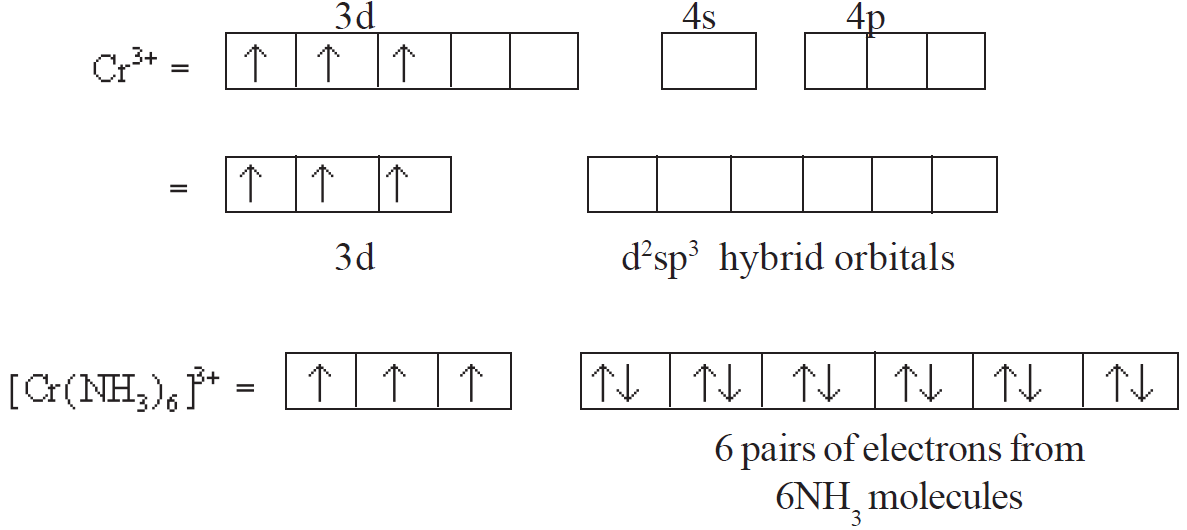
| [Cr(NH3)6]3+ | Octahedral | Paramagnetic | d2sp3 |
| [Ni(CO)4] | Tetrahedral | Diamagnetic | sp3 |
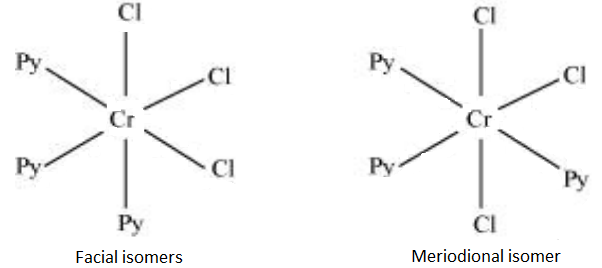
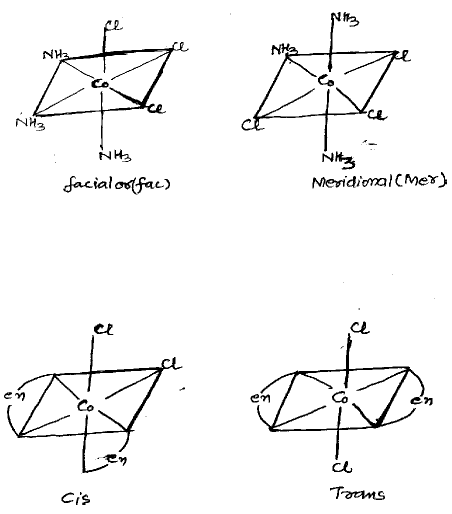
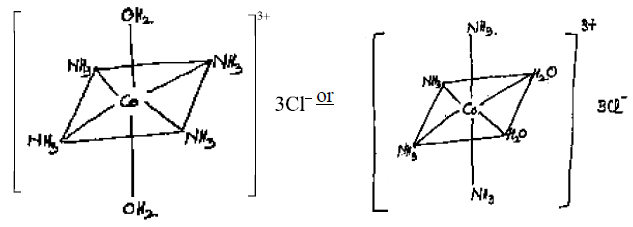
[Co(NH3)3Cl3] and [CoCl2(en)2]+.
(en = ethylenediamine and atomic number of Co is 27).
(At. no. of Co = 27)
(At. number: Fe=26).
(At. no. of Ni = 28)
(At. nos. Co = 27, Ni = 28).
Diamagnetic.
Paramagnetic.
ex. of bidentate ligand- ethane-1,2-diamine or oxalate ion.
Ni(CO)4, sp3 hybridization-
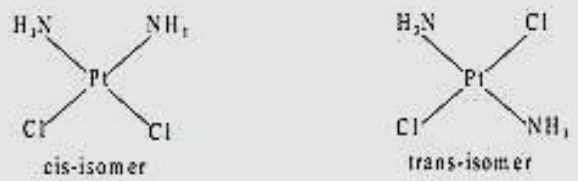
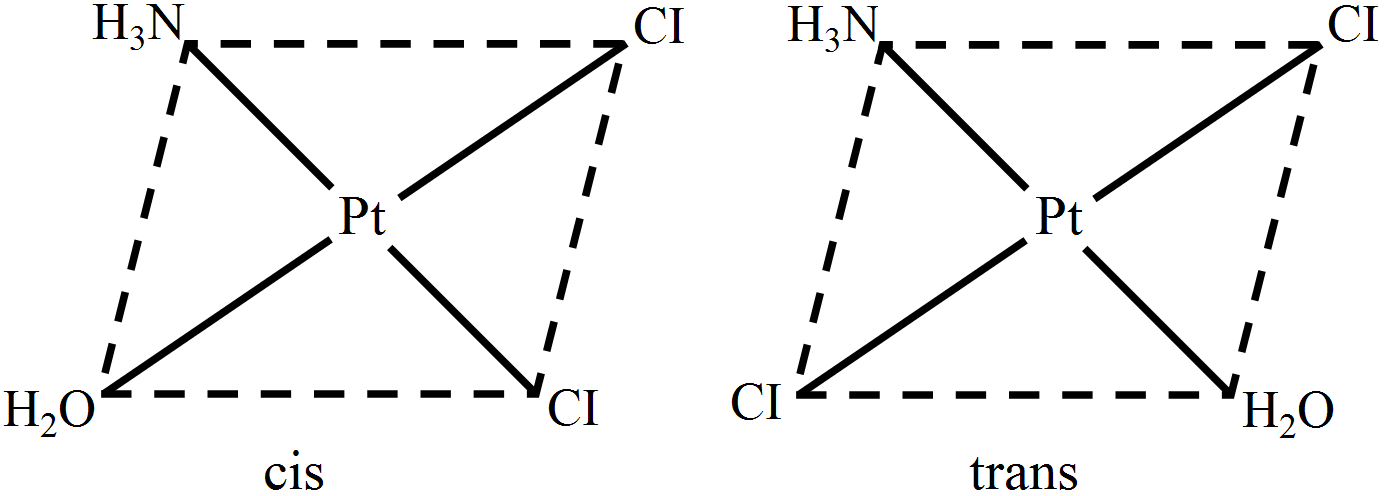
[Pt(NH3)2Cl2].
Iron(III) hexacyanoferrate(II)
Hybridisation: sp3d2
No. of unpaired electrons: 4.

$2\text{CH}_3-\text{CO}-\text{Cl}+(\text{C}_6\text{H}_5-\text{CH})\xrightarrow{\ \ \ \ \ \ \ \ \ \ \ }2\text{CH}_3-\text{CO}-\text{CH}_2-\text{C}_6\text{H}_5+\text{CdCl}_2\\\ \ \ \ \ \ \ \ \ \ \ \ \ \ \ \ \ \ \ \ \ \ \ \ \ \ \ \ \ \ \ \ \ \ \ \ \ \ \ \ \ \ \ \ \ \ \ \ \ \ \ \ \ \ \ \ \ \ \ \ \ \ \ \ \ \ \ \ \ ^{ \text{1}-\text{Phenylpropan}-2-\text{One}}$
$\ \ \ \ \ \ \ \ \ \ \ \ \text{CH}_3\ \ \ \ \ \ \ \ \ \ \ \ \ \ \ \ \ \ \ \ \ \ \ \ \ \ \ \ \ \ \ \ \ \ \ \ \ \ \ \ \ \ \ \ \ \ \ \ \ \ \ \ \ \ \ \ \ \ \text{CH}_3\ \ \\ \ \ \ \ \ \ \ \ \ \ \ \ \ \ \ \ |\ \ \ \ \ \ \ \ \ \ \ \ \ \ \ \ \ \ \ \ \ \ \ \ \ \ \ \ \ \ \ \ \ \ \ \ \ \ \ \ \ \ \ \ \ \ \ \ \ \ \ \ \ \ \ \ \ \ \ \ \ \ \ |\\\text{CH}_3-\text{CH}-\text{COOH}\xrightarrow[(\text{ii})\ \text{H}_2\text{O}]{\ \ \ \ \ \ {(\text{i})\ \text{Br}_2/ \text{ Red P}_4} \ \ \ \ \ \ \ }\text{CH}_3-\text{C}-\text{COOH}\\ \ \ \ \ \ \ \ \ \ \ \ \ \ \ \ \ \ \ \ \ \ \ \ \ \ \ \ \ \ \ \ \ \ \ \ \ \ \ \ \ \ \ \ \ \ \ \ \ \ \ \ \ \ \ \ \ \ \ \ \ \ \ \ \ \ \ \ \ \ \ \ \ \ \ \ \ \ \ \ \ \ |\\ \ \ \ \ \ \ \ \ \ \ \ \ \ \ \ \ \ \ \ \ \ \ \ \ \ \ \ \ \ \ \ \ \ \ \ \ \ \ \ \ \ \ \ \ \ \ \ \ \ \ \ \ \ \ \ \ \ \ \ \ \ \ \ \ \ \ \ \ \ \ \ \ \ \ \ \ \ \ \ \text{Br}$


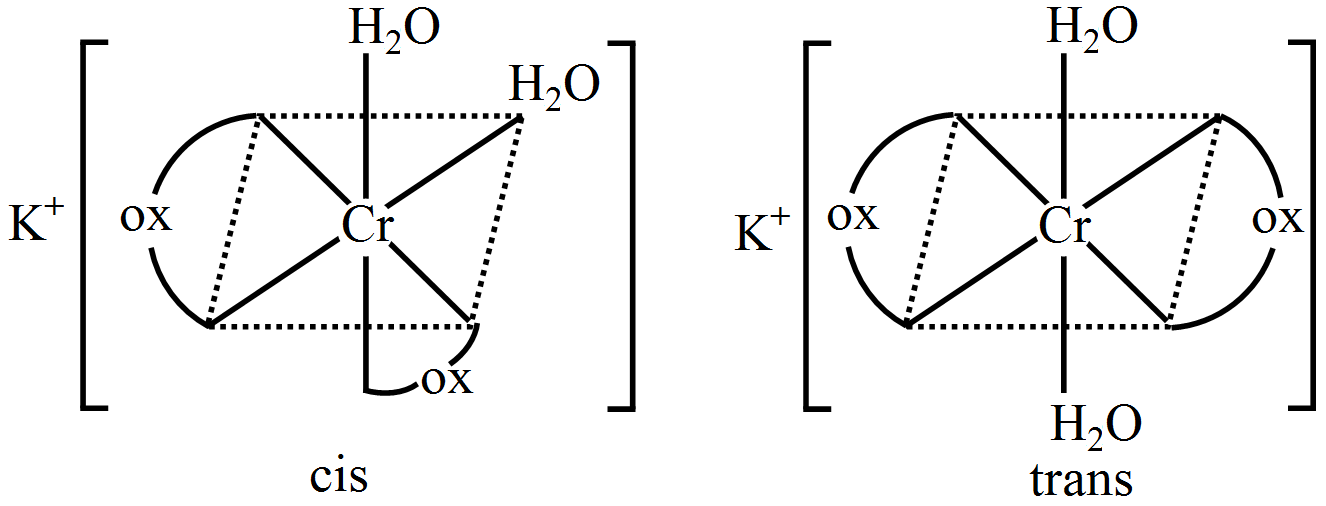
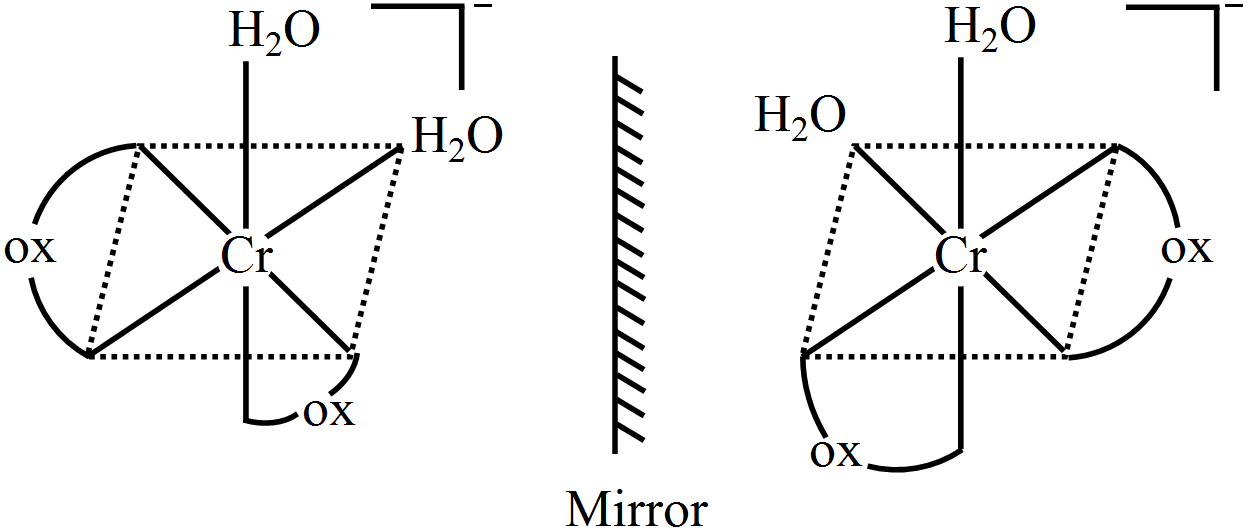
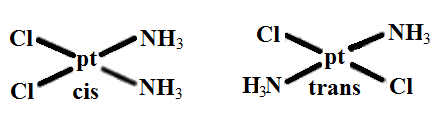
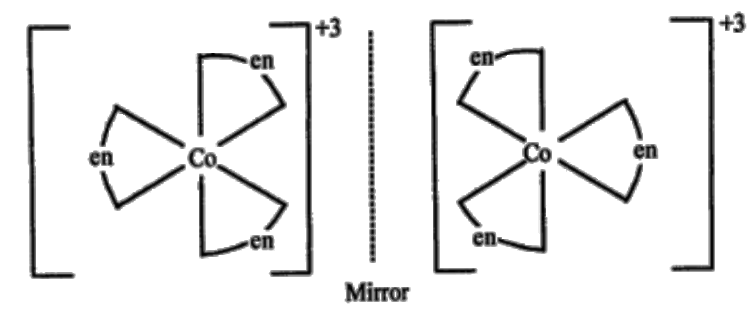
Four types of structural isomerism are as follows:
Potassium trioxalatoferrate(III).
Potassium tetrachloridopalladate(II).
µ$=\sqrt{\text{n}(\text{n}+2)}$
$=\sqrt{1(1+2)}$
$=\sqrt{3}$
$=1.732$
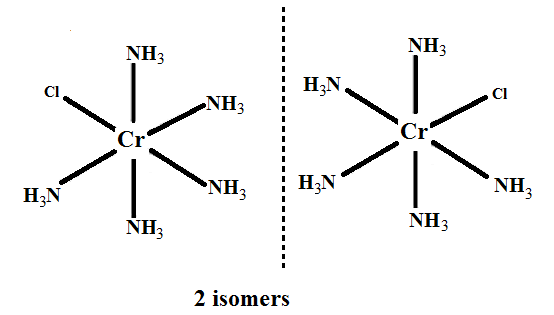
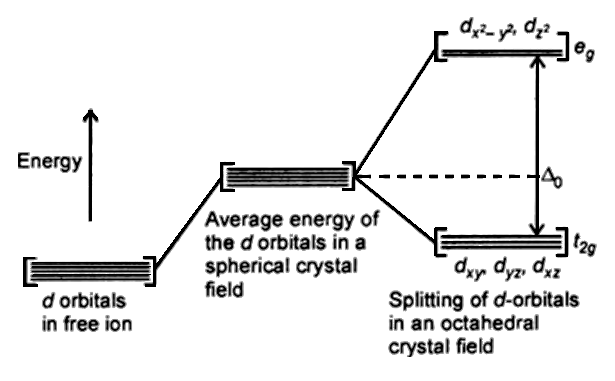
| Weak field ligand | Strong field ligand | |
| 1. | They are formed when the crystal field stabilisation energy (Δ0) in octahedral complexes is less than the energy required for an electron pairing in a single orbital (p). | They are formed when the crystal field stabilisation energy (Δ0) is greater than the p. |
| 2. | They are also called high spin complexes. | They are called low spin complexes. |
| 3. | They are mostly paramagnetic in nature complex. | They are mostly diamagnetic or less paramagnetic than weak field. |