Questions

M.C.Q. [1 Marks Each]

Take a timed test

16 questions · auto-graded multiple-choice test.

MCQ 11 Mark
In a school, only $2$ out of $5$ students can participate in a quiz. What is the chance that a student picked at random makes it to the competition?
  • A
    $20\%$
  • $40\%$
  • C
    $50\%$
  • D
    $30\%$
Answer
Correct option: B.
$40\%$
Total number of outcomes = Total number of students $= 5$
Number of possible outcomes = Students participating in a quiz $= 2$
$\therefore\text{Probability}=\frac{\text{Number of possible outcomes}}{\text{Total number of outcomes}}=\frac{2}{5}$
to To find percentage, we havemultiply it by hundred $=\frac{2}{5}\times100=40\%$

View full question & answer
MCQ 21 Mark
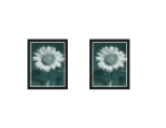
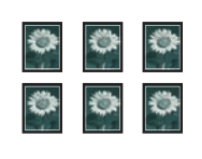
There are $2$ aces in each of the given set of cards placed face down. From which set are you certain to pick the two aces in the first go?
  • A
  • B
  • D
Answer
Correct option: C.


From third set, we are certain to pick the two aces in the first go because it has only 2 cards and it is given that every set has $2$ aces.
View full question & answer
MCQ 31 Mark
Which of the following has the same mean, median and mode?
  • A
    $6, 2, 5, 4, 3, 4, 1$
  • B
    $4, 2, 2, 1, 3, 2, 3$
  • C
    $2, 3, 7, 3, 8, 3, 2$
  • $4, 3, 4, 3, 4, 6, 4$
Answer
Correct option: D.
$4, 3, 4, 3, 4, 6, 4$
$a.$ Data $($in ascending order$) \rightarrow 1, 2, 3, 4, 4, 5, 6$
Here, $n = 7 ($odd$)$
Median $=$ Value of $\Big(\frac{\text{n+1}}{2}\Big)^\text{th}$ observation $=$ Value of $\Big(\frac{8}{2}\Big)^\text{th}$ observation $= 4$
$\text{Mean}=\frac{\text{Sum of observation}}{\text{n}}$
$=\frac{1+2+3+4+4+5+6}{7}$
$=\frac{25}{7}$
$=3.57$
Mode $=$ Most frequent observation $= 4$
Hence,
Mean $\neq $ Median $=$ Mode
$b.$ Data $($in ascending order$) \rightarrow 1, 2, 2, 2, 3, 3, 4$
Here, $n = 7 ($odd$)$
Median $=$ Value of $\Big(\frac{\text{n+1}}{2}\Big)^\text{th}$ observation $=$ Value of $\Big(\frac{7+1}{2}\Big)^\text{th}$ observation $= 2$
$\text{Mean}=\frac{\text{Sum of observation}}{\text{n}}$
$=\frac{1+2+2+2+3+3+4}{7}$
$=\frac{17}{7}$
$=2.428$
Mode $=$ Most frequent observation $= 2$
Hence,
Mean $\neq$ Median $=$ Mode
$c.$ Data $($in ascending order$) \rightarrow 2, 2, 3, 3, 3, 7, 8$
Here, $n = 7 ($odd$)$
Median $=$ Value of $\Big(\frac{\text{n+1}}{2}\Big)^\text{th}$ observation $=$ Value of $\Big(\frac{7+1}{2}\Big)^\text{th}$ observation $= 3$
$\text{Mean}=\frac{\text{Sum of observation}}{\text{n}}$
$=\frac{2+2+3+3+3+7+8}{7}$
$=\frac{28}{7}$
$=4$
Hence,
Mean $\neq$ Median $=$ Mode
$d.$ Data $($in ascending order$) \rightarrow 3, 3, 4, 4, 4, 4, 6$
Here, $n = 7 ($odd$)$
Median $=$ Value of $\Big(\frac{\text{n+1}}{2}\Big)^\text{th}$ observation $=$ Value of $\Big(\frac{7+1}{2}\Big)^\text{th}$ observation $= 4$
$\text{Mean}=\frac{\text{Sum of observation}}{\text{n}}$
$=\frac{3+3+4+4+4+4+6}{7}$
$=\frac{28}{7}$
$=4$
Hence,
Mean $=$ Mode $=$ Median
View full question & answer
MCQ 41 Mark
The mean of three numbers is $40$. All the three numbers are different natural numbers. If lowest is $19$, what could be highest possible number of remaining two numbers?
  • $81$
  • B
    $40$
  • C
    $100$
  • D
    $71$
Answer
Correct option: A.
$81$
Mean of three numbers $= 40$ and lowest number $= 19...[$given$]$
Let the three observations be $19, x$ and $y,$ respectively.
$\text{Mean}=\frac{\text{Sum of all observations}}{\text{Total number of observations}}$
$\Rightarrow40=\frac{19+\text{x}+\text{y}}{3}$ [$\because$ mean = 40, given]
$\Rightarrow3\times40=19+\text{x}+\text{y}$
$\Rightarrow120=19+\text{x}+\text{y}$
$\Rightarrow\text{x}+\text{y}=120-19$
$\Rightarrow\text{x}+\text{y}=101\ ...(\text{i})$
Since, $19$ is the lowest observation.
Hence, for highest possible value of remaining two numbers, one must be 20.
Let $x = 20$
From Eq.$(i)$, we get
$20 + y = 101$
$\Rightarrow y = 101 - 20$
$\Rightarrow y = 81$
View full question & answer
MCQ 51 Mark
The range of the data : $21, 6, 17, 18, 12, 8, 4, 13$ is:
  • $17$
  • B
    $12$
  • C
    $8$
  • D
    $15$
Answer
Correct option: A.
$17$
Here,
Highest observation $= 21$
Lowest observation $= 4$
Range = Highest observation - Lowest observation
$= 21 - 4 = 17$
View full question & answer
MCQ 61 Mark
Khilona earned scores of $97, 73$ and $88$ respectively in her first three examinations. If she scored $80$ in the fourth examination, then her average score will be:
  • A
    Increased by $1$
  • B
    Increased by $1.5$
  • C
    Decreased by $1$
  • Decreased by $1.5$
Answer
Correct option: D.
Decreased by $1.5$
$\text{Average score}=\frac{\text{Sum of scores in all exams}}{\text{Total number of exams}}$
$\therefore$ Average score in first three examination $=\frac{97+73+88}{3}=\frac{258}{3}=86$
Also, average score in four examination $=\frac{97+73+88+80}{4}=\frac{338}{4}=84.5$
Hence, average score is decreased by $(86 - 84.5) = 1.5$
View full question & answer
MCQ 71 Mark
The number of trees in different parks of a city are $33, 38, 48, 33, 34, 34, 33$ and $24$. The mode of this data is:
  • A
    $24$
  • B
    $34$
  • $33$
  • D
    $48$
Answer
Correct option: C.
$33$
We have, $33, 38, 48, 33, 34, 34, 33$ and $24.$
On arranging the data in ascending order, we get $24, 33, 33, 33, 34, 34, 38$ and $48.$
Here, $33$ occurs more frequently, i.e. $3$ times.
Mode of data $= 33$
Note: Mode is the observation that occurs most frequently in the data.
View full question & answer
MCQ 81 Mark
Let x, y, z be three observations. The mean of these observations is:
  • A
    $\frac{\text{x}\times\text{y}\times\text{z}}{3}$
  • $\frac{\text{x}+\text{y}+\text{z}}{3}$
  • C
    $\frac{\text{x}-\text{y}-\text{z}}{3}$
  • D
    $\frac{\text{x}\times\text{y}+\text{z}}{3}$
Answer
Correct option: B.
$\frac{\text{x}+\text{y}+\text{z}}{3}$
Here $x, y$ and $z$ be three observations.
We know that, $\text{Mean}=\frac{\text{Sum of observations}}{\text{Number of observations}}$
$=\frac{\text{x+y+z}}{3}$
View full question & answer
MCQ 91 Mark
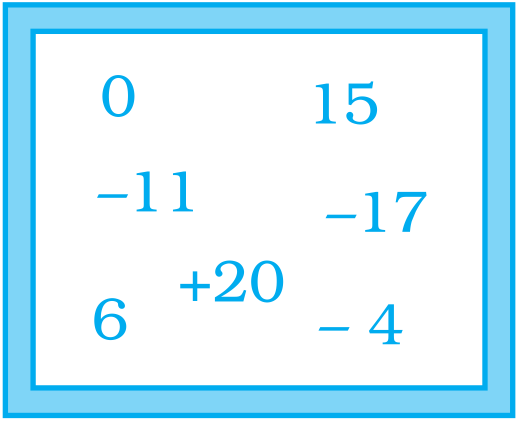
Some integers are marked on a board. What is the range of these integers?
  • A
    $31$
  • $37$
  • C
    $20$
  • D
    $3$
Answer
Correct option: B.
$37$
Here, highest observation $= +20$ and lowest observation $= -17$
As we know,
Range = Highest observation – Lowest observation $= +20 - (-17) = 20 + 17 = 37$
View full question & answer
MCQ 101 Mark
The difference between the highest and the lowest observations in a data is its:
  • A
    Frequency.
  • B
    Width.
  • Range.
  • D
    Mode.
Answer
Correct option: C.
Range.
The difference between the highest and the lowest observations in a data is its range.
View full question & answer
MCQ 111 Mark
On tossing a coin, the outcome is:
  • A
    Only head.
  • B
    Only tail.
  • C
    Neither head nor tail.
  • Either head or tail.
Answer
Correct option: D.
Either head or tail.
When we toss a coin, two outcomes are possible, i.e. head or tail.
View full question & answer
MCQ 121 Mark
Which measures of central tendency get affected if the extreme observations on both the ends of a data arranged in descending order are removed?
  • Mean and mode.
  • B
    Mean and Median.
  • C
    Mode and Median.
  • D
    Mean, Median and Mode.
Answer
Correct option: A.
Mean and mode.
Mean is defined as follows:
$\text{Mean}=\frac{\text{Sum of observation}}{\text{Number of observations}}$
So, if we remove the extrema values that both sum and total number of observations will change. Hence, mean wiii aiso change.
Mode is that observation which occurs the most. So, if extreme value of those values which occurs mostly than mode can affect it they are removed.
Median is the mid value. So, if extreme values are removed than the mid value remains same. Hence, median will not change.
View full question & answer
MCQ 131 Mark
Out of $5$ brands of chocolates in a shop, a boy has to purchase the brand which is most liked by children. What measure of central tendency would be most appropriate if the data is provided to him?
  • A
    Mean.
  • Mode.
  • C
    Median.
  • D
    Any of the three.
Answer
Correct option: B.
Mode.
Mode is the most appropriate central tendency because it is the observation that occurs most frequently.
Here, by the measurement of mode, we can find out the chocolates which is most liked by children.
View full question & answer
MCQ 141 Mark
The median of the data $3, 4, 5, 6, 7, 3, 4$ is:
  • $5$
  • B
    $3$
  • C
    $4$
  • D
    $6$
Answer
Correct option: A.
$5$
We know that, median is the middle most observation.
For finding the median of the data firstly, we arrange the data in ascending order, i.e. Ascending order
i.e $3, 3, 4, 4, 5, 6, 7.$
$n = 7$ (odd)
$\therefore$ Median = Value of $\Big(\frac{\text{n+1}}{2}\Big)^{\text{th}}$ observation = Value of $\Big(\frac{7+1}{2}\Big)^{\text{th}}$ observation
$= 4th$ observation $= 4$
View full question & answer
MCQ 151 Mark
In the previous question, what is the probability of picking up an ace from set $(d)$?
  • A
    $\frac{1}{6}$
  • $\frac{2}{6}$
  • C
    $\frac{3}{6}$
  • D
    $\frac{4}{6}$
Answer
Correct option: B.
$\frac{2}{6}$
$\text{Probability}=\frac{\text{Number of possible outcomes}}{\text{Total number of outcomes}}$
Total number of cards in set $(d) = 6$
Number of possible outcomes $= 2$ [$\because$ $2$ aces in every set, given]
So, probability $=\frac{2}{6}$
View full question & answer
MCQ 161 Mark
Which measure of central tendency best represents the data of the most popular politician after a debate?
  • A
    Mean.
  • B
    Median.
  • Mode.
  • D
    Any of the above.
Answer
Correct option: C.
Mode.
Mode is the most frequent observation in a data. So, the measure of central tendency best represents the data of most popular politician after a debate.
View full question & answer