Questions · Page 1 of 2

1 Marks Question

🎯

Test yourself on this topic

50 questions · timed · auto-graded

Question 11 Mark
Name the stage next to caterpillar in the life cycle of silk moth.
Answer
The stage next to caterpillar in the life cycle of silk moth is called pupa.
View full question & answer
Question 21 Mark
Why do people prefer wearing cotton clothes in humid weather?
Answer
In humid weather, people tend to sweat more. Cotton fabric being a good absorber absorbs sweat faster than any other fabric and hence keeps people comfortable.
View full question & answer
Question 31 Mark
Why are two thick cotton sheets warmer than one single blanket?
Answer
The air captured between two thick cotton sheets is much more than in a single blanket. Therefore, there is more insulation in cotton sheets and thus they are warmer.
View full question & answer
Question 41 Mark
Define a fibre.
Answer
A fibre is a long strong thread, which is obtained from natural sources like plants or manmade sources like synthetic fibres, e.g: Rayon.
View full question & answer
Question 61 Mark
What do you mean by carding?
Answer
Carding is a process in which ‘carding’ machine combs the loose wool fibres into a sheet.
View full question & answer
Question 71 Mark
Give reasons for the following: Light coloured cotton clothes are preferred to be worn in summers.
Answer
Light colours are poor absorbers of heat. So, in summers they keep us cool.
View full question & answer
Question 81 Mark
Define sericulture.
Answer
The rearing breeding and management of silkworms for obtaining silk is called sericulture.
View full question & answer
Question 91 Mark
Why sheep have a thick coat of hair on their body?
Answer
The thick coat of hair on their body traps a lot of air. Air is a poor conductor of heat, thus, hair keeps sheep warm.
View full question & answer
Question 101 Mark
Name the goats which are found in Tibet and Ladakh.
Answer
In Tibet and Ladakh, angora goats are found.
View full question & answer
Question 111 Mark
Fill in the blanks in the following statements. Wool yielding animals bear ________ on their body.
Answer
Wool yielding animals bear fleece (hair) on their body.
View full question & answer
Question 121 Mark
State whether the following statements are True or False. If false, correct them. In India, camels and goats are generally reared for obtaining wool.
Answer
False.
Sheep are mostly reared for wool in India.
View full question & answer
Question 131 Mark
In which part, the wool yielding animals liama and alpaca are found?
Answer
Liama and alpaca are found in South America.
View full question & answer
Question 141 Mark
What do you mean by cocoon?
Answer
Caterpillar in its later stage of development completely covers itself by silk fibres and turns into pupa. This covering is known as cocoon.
View full question & answer
Question 151 Mark
Rampur bushair and Bakharwal are the breeds of which animal-sheep or goat?
Answer
Rampur bushair and Bakharwal are the breeds of sheep.
View full question & answer
Question 181 Mark
Fill in the blanks in the following statements. Hair trap a lot of ________, which is a poor _________ of heat.
Answer
Hair trap a lot of Air, which is a poor conductor of heat.
View full question & answer
Question 201 Mark
What are the different sources of wool?
Answer
The fleece of sheep is the main source of wool .Apart from that, Angora wool is obtained from angora goats. The fur (hair) on the body of camels is also used as wool like Llama and Alpaca.
View full question & answer
Question 211 Mark
Define the term ‘selective breeding’.
Answer
The process of breeding of selective parents for obtaining special characters in their offspring such as soft under hair in sheep, is termed as selective breeding.
View full question & answer
Question 221 Mark
Mention the steps in silk production.
Answer
The steps in silk production include gathering of cocoons, killing of moths inside them, taking out of threads, i.e., reeling and spinning the fibre into yarn, i.e., throwing.
View full question & answer
Question 241 Mark
Which stage in the life cycle of silk moth is called cocoon?
Answer
The covering of silk fibres inside which the caterpillar covers itself is called cocoon.
View full question & answer
Question 251 Mark
Out of scouring or shearing, which process comes first in the production of wool from sheep?
Answer
The first step is shearing then scouring.
View full question & answer
Question 281 Mark
Name the process of taking out silk fibres from the cocoon for use as silk.
Answer
The process of taking out threads from the cocoons for use as silk is called reeling the silk.
View full question & answer
Question 291 Mark
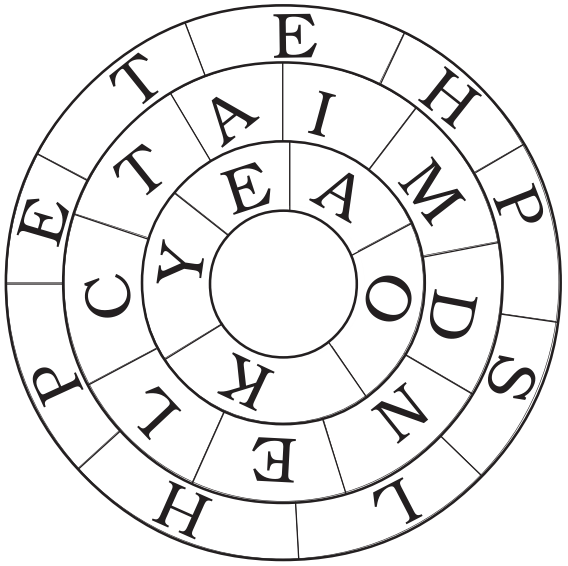
Figure shows three rings of circles with letters in them. Some of these letters in each ring can form the name of one wool yielding animal. Find the names of these animals.
Answer
These animals are yak, camel and sheep.
View full question & answer
Question 301 Mark
To which class, animal fibre or plant fibre, artificial silk belongs to?
Answer
Artificial silk is a plant fibre.
View full question & answer
Question 311 Mark
Sheep are herbivores, so which type of feed (or food) is provided by shepherds?
Answer
Sheep are herbivores, and prefer grass and leaves of various trees. Their food also contain a mixture of pulses, corn, jowar, oil cakes (material left after taking out oil from seeds) and minerals.
View full question & answer
Question 321 Mark
State whether the following statements are True or False. If false, correct them.Yak hair are not used to make woollen fabric.
Answer
False. Explanation: Wool can be made from sheep, yak, llama, camel, alpaca and goats.
View full question & answer
Question 331 Mark
What term is used for the following process? Washing of sheep’s fleece to remove dust, dirt, dried sweat and grease.
Answer
Scouring.
View full question & answer
Question 341 Mark
Write the maximum length of continuous silk thread that can be obtained from a cocoon.
Answer
The maximum length of continuous silk thread that can be obtained from a cocoon is more than that of 1000 feet (1000 to 1500 feet) continuous in length.
View full question & answer
Question 371 Mark
Out of the following, which are the two terms related to silk production? Sericulture, floriculture, moriculture, apiculture and silviculture.

Hints:

  1. Silk production involves cultivation of mulberry leaves and rearing silkworms.
  2. Scientific name of mulberry is Morus alba.
Answer
Sericulture and moriculture.
View full question & answer
Question 411 Mark
Name some Indian breed of sheep.
Answer
Lohi, Rampur, bushair, Nali, Bakharwal, Marwari and Patanwadi.
View full question & answer
Question 421 Mark
Various steps involved to obtain wool from fleece are given here.
  1. Picking out the burrs.
  2. Dyeing in various colours.
  3. Shearing.
  4. Scouring.
  5. Sorting.
Write the above steps in the correct sequence in which they are carried out.
Answer
The correct sequence is: Shearing → Scouring → Sorting → Picking out the burrs → Dyeing in various colours.
View full question & answer
Question 441 Mark
What do you mean by scouring?
Answer
The sheared skin with hair is thoroughly washed in tanks to remove grease, dust and dirt. This process is known as scouring.
View full question & answer
Question 461 Mark
Does shearing hurts the sheep?
Answer
Shearing does not hurt the sheep because the uppermost layer of the skin is dead. Also, the hair of sheep grows again just as our hair does.
View full question & answer
Question 471 Mark
Two fibres are made up of proteins. Name them.
Answer
Silk and wool are two fibres which are made up of proteins.
View full question & answer
Question 481 Mark
Define weaving.
Answer
Weaving is the process of arranging two sets of yarns together to make a fabric.
View full question & answer
Question 501 Mark
Name some wool yielding animals.
Answer
Wool yielding animals are sheep, yak, llama, alpaca, angora goat, angora rabbit and camel.
View full question & answer