Questions

M.C.Q. [I MARKS]

🎯

Test yourself on this topic

37 questions · timed · auto-graded

MCQ 21 Mark
In the list of animals given below, hen is the odd one out. Human being, cow, dog, hen. The reason for this is
  • A
    it undergoes internal fertilisation
  • it is oviparous
  • C
    it is viviparous
  • D
    it undergoes external fertilisation
Answer
Correct option: B.
it is oviparous
B
View full question & answer
MCQ 31 Mark
Aquatic animals in which fertilisation occurs in water are said to be
  • A
    viviparous without fertilisation
  • oviparous with external fertilisation
  • C
    viviparous with internal fertilisation
  • D
    oviparous with internal fertilisation
Answer
Correct option: B.
oviparous with external fertilisation
B
View full question & answer
MCQ 41 Mark
Animals exhibiting external fertilisation produce a large number of gametes. Pick the appropriate reason from the following
  • A
    The animals are small in size and want to produce more offspring
  • B
    Food is available in plenty in water
  • To ensure better chance of fertilisation
  • D
    Water promotes production of large number of gametes
Answer
Correct option: C.
To ensure better chance of fertilisation
C
View full question & answer
MCQ 51 Mark
In human beings, the correct sequence of events during reproduction is
  • gamete formation, fertilisation, zygote formation embryo
  • B
    embryo, zygote formation, fertilisation, gamete formation
  • C
    fertilisation, gamete formation, embryo, zygote formation
  • D
    gamete formation, fertilisation, embryo, zygote formation
Answer
Correct option: A.
gamete formation, fertilisation, zygote formation embryo
A
View full question & answer
MCQ 61 Mark
After fertilisation, the resulting cell which gives rise to a new individual is the
  • A
    embryo
  • B
    ovum
  • C
    foetus
  • zygote
Answer
Correct option: D.
zygote
D
View full question & answer
MCQ 71 Mark
Sets of reproductive terms are given below. Choose the set that has an Incorrect combination.
  • A
    Sperm, testis, sperm duct, penis
  • B
    Menstruation, egg, oviduct, uterus
  • Sperm, oviduct, egg, uterus
  • D
    Ovulation, egg, oviduct, uterus
Answer
Correct option: C.
Sperm, oviduct, egg, uterus
C
View full question & answer
MCQ 81 Mark
Where does the fertilisation of eggs occur in the process of In Vitro Fertilisation (IVF) ?
  • A
    Ovary
  • B
    Water
  • C
    Uterus
  • Petri dish
Answer
Correct option: D.
Petri dish
D
View full question & answer
MCQ 91 Mark
Which of these animals reproduce by external fertilisation ?
  • A
    Snake
  • Frog
  • C
    Horse
  • D
    Elephant
Answer
Correct option: B.
Frog
B
View full question & answer
MCQ 101 Mark
Assertion (A) Cloning of an animal was successfully performed for the first time by lan Wilmut and his colleagues.
Reason (R) Cloning is the production of different copy of a cell or any living part or a complete organism.
  • A
    Both A and R are true and R is the correct explanation of A
  • B
    Both A and R are true but R is not the correct explanation of A
  • A is true, but R is false
  • D
    A is false, but R is true
Answer
Correct option: C.
A is true, but R is false
C
View full question & answer
MCQ 111 Mark
Assertion (A) During metamorphosis tadpole is transformed into caterpiliar.
Reason (R) Metamorphosis is a process in which a larva is transformed into an adult.
  • Both A and R are true and R is the correct explanation of A
  • B
    Both A and R are true but R is not the correct explanation of A
  • C
    A is true, but R is false
  • D
    A is false, but R is true
Answer
Correct option: A.
Both A and R are true and R is the correct explanation of A
A
View full question & answer
MCQ 121 Mark
The multicellular organism which reproduces by budding is
  • A
    Amoeba
  • B
    yeast
  • C
    Paramecium
  • Hydra
Answer
Correct option: D.
Hydra
D
View full question & answer
MCQ 131 Mark
Select the animal which undergoes metamorphosis during its life cycle.
  • A
    Dog
  • B
    Cat
  • C
    Hen
  • Tadpole
Answer
Correct option: D.
Tadpole
D
View full question & answer
MCQ 141 Mark
Which example correctly depicts the difference between a viviparous and an oviparous animal respectively ?
  • Cats directly give birth to a young one, while hens lay eggs
  • B
    Frogs lay soft shelled eggs, while birds lay hard-shelled eggs
  • C
    Frogs lay unfertilized eggs in the water, while hens lay fertilised eggs
  • D
    Dogs give birth to many puppies, while elephants give birth to just one calf
Answer
Correct option: A.
Cats directly give birth to a young one, while hens lay eggs
A
View full question & answer
MCQ 151 Mark
The process of internal fertilisation differs from external fertilisation as
  • fusion of sperm and ovum takes place inside the female body
  • B
    fusion of sperm and ovum takes place in the ovaries
  • C
    gametes are produced inside the bodies of the parents
  • D
    either of the gametes is released outside the body of the the parents
Answer
Correct option: A.
fusion of sperm and ovum takes place inside the female body
A
View full question & answer
MCQ 161 Mark
Sexual reproduction begins with
  • A
    implantation
  • fertilisation
  • C
    zygote formation
  • D
    development of embryo
Answer
Correct option: B.
fertilisation
B
View full question & answer
MCQ 171 Mark
Assertion (A) Binary fission and budding are two methods of asexual reproduction.
Reason (R) Only a single parent is involved.
  • Both A and R are true and R is the correct explanation of A
  • B
    Both A and R are true, but R is not the correct explanation of A
  • C
    A is true, but R is false
  • D
    A is false, but R is true
Answer
Correct option: A.
Both A and R are true and R is the correct explanation of A
(a) Both A and R are true R is the correct explanation of A
View full question & answer
MCQ 181 Mark
Assertion (A) Human beings do not undergo metamorphosis.
Reason (R) The body parts in adults are not similar to those of babies.
  • A
    Both A and R are true and R is the correct explanation of A
  • B
    Both A and R are true, but R is not the correct explanation of A
  • A is true, but R is false
  • D
    A is false, but R is true
Answer
Correct option: C.
A is true, but R is false
(c) A is true, but R is false. R can be corrected as The body parts in adults are similar to those of babies
View full question & answer
MCQ 191 Mark
Assertion (A) It is easy to collect the eggs of viviparous animals.
Reason (R) They lay egg outside their body.
  • A
    Both A and R are true and R is the correct explanation of A
  • B
    Both A and R are true, but R is not the correct explanation of A
  • C
    A is true, but R is false
  • A is false, but R is true
Answer
Correct option: D.
A is false, but R is true
(d) A is false, but R is true. A can be corrected as It is easy to collect the eggs of oviparous animals
View full question & answer
MCQ 201 Mark
Assertion (A) Internal fertilisation occurs in many animals including humans, cows, dogs and hens.
Reason (R) Fertilisation which takes place inside the female body in called internal fertilisation.
  • A
    Both A and R are true and R is the correct explanation of A
  • Both A and R are true, but R is not the correct explanation of A
  • C
    A is true, but R is false
  • D
    A is false, but R is true
Answer
Correct option: B.
Both A and R are true, but R is not the correct explanation of A
(b) Both A and R are true and R is not the correct explanation of A
View full question & answer
MCQ 211 Mark
Assertion (A) The animals which undergo external fertilisation lay hundreds of eggs.
Reason (R) to enhance the chances for fertilisation.
  • Both A and R are true and R is the correct explanation of A
  • B
    Both A and R are true, but R is not the correct explanation of A
  • C
    A is true, but R is false
  • D
    A is false, but R is true
Answer
Correct option: A.
Both A and R are true and R is the correct explanation of A
(a) Both A and R are true and R is the correct explanation of A
View full question & answer
MCQ 221 Mark
The production of an exact copy of an animal by asexual reproduction is known as
  • A
    budding
  • B
    mating
  • cloning
  • D
    hatching
Answer
Correct option: C.
cloning
C
View full question & answer
Question 251 Mark
Which table given below correctly represents the classification of the animals into viviparous and oviparous animals ?
(a) Viviparous AnimalsOviparous Animals
$\quad~$Frog, dog, lizardCow, cat, hen
(b) Viviparous AnimalsOviparous Animals
$\quad~$Frog, dog, lizardDog, hen, cow
(c) Viviparous AnimalsOviparous Animals
$\quad~$Frog, dog, lizardFrog, hen, lizard
(d) Viviparous AnimalsOviparous Animals
$\quad~$Frog, dog, lizardLizard, dog, cat
Answer
C
View full question & answer
MCQ 291 Mark
In humans, the development of fertilised egg takes place in the
  • A
    ovary
  • B
    testis
  • C
    oviduct
  • uterus
Answer
Correct option: D.
uterus
D
View full question & answer
MCQ 301 Mark
In human beings, after fertilisation, the structure which gets embedded in the wall of uterus is
  • A
    ovum
  • embryo
  • C
    foetus
  • D
    zygote
Answer
Correct option: B.
embryo
B
View full question & answer
MCQ 311 Mark
Internal fertilisation occurs
  • A
    inside the male body
  • B
    outside the male body
  • inside the female body
  • D
    outside the female body
Answer
Correct option: C.
inside the female body
C
View full question & answer
MCQ 321 Mark
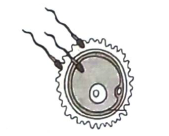
A stage of sexual reproduction is represented below. Select the correct statement describing the process shown in the image.
Image
  • A
    Several ova penetrate the egg cell and fertilise it to form a zygote
  • B
    Several sperms penetrate the egg cell and fertilise it form a zygote
  • C
    A single ova penetrates the egg cell and fertilise it to form a zygote
  • A single sperm penetrates the egg cell and fertilise it to form a zygote
Answer
Correct option: D.
A single sperm penetrates the egg cell and fertilise it to form a zygote
D
View full question & answer
MCQ 331 Mark
Which of the following statements about reproduction in humans is correct ?
  • A
    Fertilisation takes place externally
  • B
    Fertilisation takes place in the testes
  • C
    During fertilisation, egg moves towards the sperm
  • Fertilisation takes place in the human female
Answer
Correct option: D.
Fertilisation takes place in the human female
D
View full question & answer
MCQ 341 Mark
Which of the following is not a part of the human male reproductive system ?
  • A
    Testes
  • Oviducts
  • C
    Seminal vesicles
  • D
    Epididymis
Answer
Correct option: B.
Oviducts
B
View full question & answer
MCQ 351 Mark
The number of nuclei present in a zygote is
  • A
    none
  • one
  • C
    two
  • D
    four
Answer
Correct option: B.
one
(b) In zygote, only one nuclei is present which is formed by the fusion of two nuclei, one from each parent.
View full question & answer
MCQ 361 Mark
A tadpole develops into an adult frog by the process of
  • A
    fertilisation
  • metamorphosis
  • C
    embedding
  • D
    budding
Answer
Correct option: B.
metamorphosis
(b) The process of development of tadpole into an adult frog is known as metamorphosis.
View full question & answer
MCQ 371 Mark
Internal fertilisation occurs
  • in female body
  • B
    outside female body
  • C
    in male body
  • D
    outside male body
Answer
Correct option: A.
in female body
(a) Internal fertilisation occurs in female body.
View full question & answer