Question types

Is Matter Around Us Pure ? question types

578 questions across 8 question groups — pick any mix to generate a Science paper with step-by-step answer keys.

578
Questions
8
Question groups
5
Question types
Sample Questions

Is Matter Around Us Pure ? questions

One sample from each question group in this chapter. Select any group above to see the full set with answer keys.

Q 1M.C.Q. [1 M]1 Mark
White gold used in jewellery contains two elements, gold and palladium. A jeweller has two different samples that are both identical in appearance and have a uniform composition throughout. What can be said about the samples?
  • A
    The materials are heterogeneous mixtures and can be classified by their components
  • B
    These are homogeneous mixture and can be classified as metallic alloys.
  • C
    The samples have variable compositions and are classified as metallic solutions.
  • D
    The samples are heterogeneous mixtures that can be separated by using magnetic properties.
View full solution
The separation of liquids by fractional distillation is based on the difference in their ________. (Boiling points, Freezing points, Molecular mass)
View full solution
Q 13true or false1 Mark
State whether the following statements are true or false:
Alcohol can be separated from a mixture of alcohol and water by a separating funnel.
View full solution
Q 15true or false1 Mark
State whether the following statements are true or false:

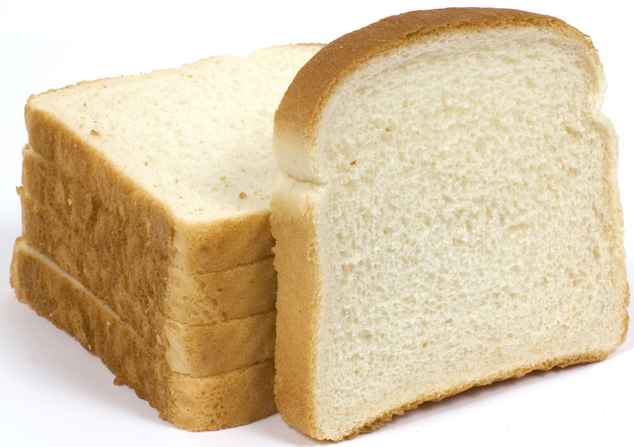
  1. Bread is an example of solid foam.

  1. Sponge is an example of solid sol.

What type of colloids are bread and sponge?

View full solution
Which of the following are chemical changes?
  1. Growth of a plant.
  2. Rusting of iron.
  3. Mixing of iron filings and sand.
  4. Cooking of food.
  5. Digestion of food.
  6. Freezing of water.
  7. Burning of a candle.
View full solution
Classify the following as chemical or physical changes:
  • Cutting of trees.
  • Melting of butter in a pan.
  • Rusting of almirah.
  • Boiling of water to form steam.
  • Passing of electric current, through water and the water breaking down into hydrogen and oxygen gases.
  • Dissolving common salt in water.
  • Making a fruit salad with raw fruits.
  • Burning of paper and wood.
View full solution
Pragya tested the solubility of three different substances at different temperatures and collected the data as given below (results are given in the following table, as grams of substance dissolved in 100 grams of water to form a saturated solution).
Substance Dissolved  Temperature in K
283 293 313 333 353
Solubility
Potassium nitrate 21 32 62 106 167
Sodium chloride 36 36 36 37 37
Potassium chloride 35 35 40 46 54
Ammonium chloride 24 37 41 55
66
  1. What mass of potassium nitrate would be needed to produce a saturated solution of potassium nitrate in 50 grams of water at 313K?
  2. Pragya makes a saturated solution of potassium chloride in water at 353K and leaves the solution to cool at room temperature. What would she observe as the solution cools? Explain.
  3. Find the solubility of each salt at 293K. Which salt has the highest solubility at this temperature?
  4. What is the effect of change of temperature on the solubility of a salt?
View full solution
Which separation techniques will you apply for the separation of the following?
  1. Sodium chloride from its solution in water.
  2. Ammonium chloride from a mixture containing sodium chloride and ammonium chloride.
  3. Small pieces of metal in the engine oil of a car.
  4. Different pigments from an extract of flower petals.
  5. Butter from curd.
  6. Oil from water.
  7. Tea leaves from tea.
  8. Iron pins from sand.
  9. Wheat grains from husk.
  10. Fine mud particles suspended in water.
View full solution
How is water purified on a large scale at water works? Explain with the help of a labelled diagram. Name the substance which is added to kill germs in the drinking water supply?
View full solution
The given mixture contains three constituents A, B and C. The constituent A is a yellow coloured, solid element which dissolves in a liquid D. The constituents B is a blue coloured salt which is insoluble in liquid D but dissolves easily in another liquid E. The constitudent C is a liquid wlich is used in coolking food and forms a solid fat on hydrogenation.
  1. What do you think could (i) constituent A, and (ii) liquid D be?
  2. What could (i) constituent B, and (ii) liquid E be?
  3. What could liquid C be?
  4. How will you separate the mixture containing A, B and C.
View full solution
100ml of water at room temperature of 25°C is taken in a beaker and a little of solid S is dissolved in it by stirring to obtain a solution X. More and more of solid S is added to the solution with constant stirring, while keeping the temperature of solution constant at 30°C. After some time it is observed that no more solid dissolves in water and at the same time some solid is also left undissolved at the bottom of the beaker. The contents of beaker are filtered through a filter paper to obtain solution Y in the form of a filtrate.
  1. What name is given to solutions like X?
  2. What name is given to solution like Y?
  3. What will you observe if the solution Y at 30°C is cooled down to 10°C by keeping the beaker in crushed ice? Why?
  4. What term is used to denote the amount of solid dissolved in 100 grams of water in a solution like Y?
View full solution
When the solid A is added to water, it dissolves with the evolution of a lot of heat and making little explosions to form two products B and C. The properties of products B and C are entirely different from those of solid A as well as water. Moreover, products B and C cannot be reconverted into solid A and water. When another solid D is added to water, it dissolves with the absorption of a little heat to form a product E which cools down. The product E shows the properties of both, solid D as well as water. Moreover, product E can be converted into solid D and water.
  1. What type of change occurs when solid A is dissolved in water? Why?
  2. What type of change occurs when sold D is dissolved in water? Why?
  3. Name a metal which you think could behave like solid A. Also name the products B and C.
  4. Name the solid D if it is the one which is used in making ordinary dry cells.
  5. Name the process by which D can be recovered from E.
View full solution
Tincture of iodine is a mixture of two materials X and Y. The material Y has a property that its solid form can be converted directly into vapours on heating by a process called Z.
  1. What could X be?
  2. What could Y be?
  3. Name the process Z.
  4. Which process would you use to recover both the components X and Y from tincture of iodine?
  5. Which process can be used to recover only component Y from tincture of iodine?
View full solution
The liquid air has three components X, Y and Z whose boiling points are: -186°C, -183°C and -196°C, respectively. When liquid air is fed into a tall fractional distillation column from near its bottom and warmed up slowly:
  1. Which component will be collected from near the bottom of the fraction distillation column? Why?
  2. Which component will be collected from the top part of the fractional distillation column? Why?
  3. Which component will be collected from the middle part of the fractional distillation column? Why?
  4. What could the component X, Y and Z be?
View full solution

Generate a Is Matter Around Us Pure ? paper free

Pick question groups from the list above, set marks and difficulty, and export a branded PDF with step-by-step answer keys. First 3 chapters free — no signup.

Download App