Sample QuestionsREADING COMPREHENSION questions
One sample from each question group in this chapter. Select any group above to see the full set with answer keys.
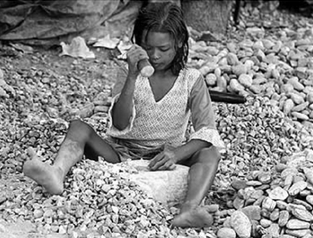
Study the picture given below. Write a story or a description or an account of what it suggests to you. Your composition may be about the subject of the picture or you may take suggestions from it ; however, there must be a clear connection between the picture and your composition.
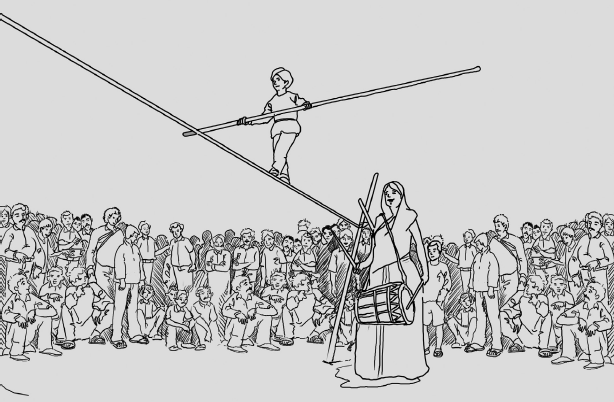
Study the picture given below. Write a story or a description or an account of what it suggests to you. Your composition may be about the subject of the picture or you may take suggestions from it; however, there must be a clear connection between the picture and your composition.
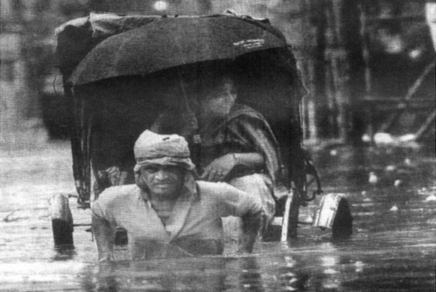
Study the picture given below. Write a story or a description or an account of what it suggests to you. Your composition may be about the subject of the picture or you may take suggestions from it. However, there must be a clear connection between the picture and your composition.
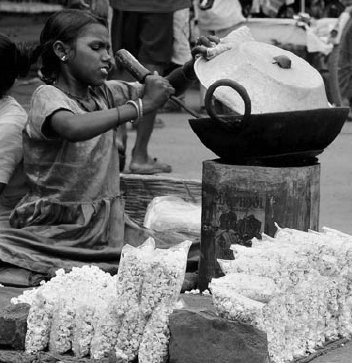
Study the picture given below. Write a story or a description or an account of what it suggests to you. Your composition may be about the subject of the picture or you may take suggestions from it. However, there must be a clear connection between the picture and your composition.
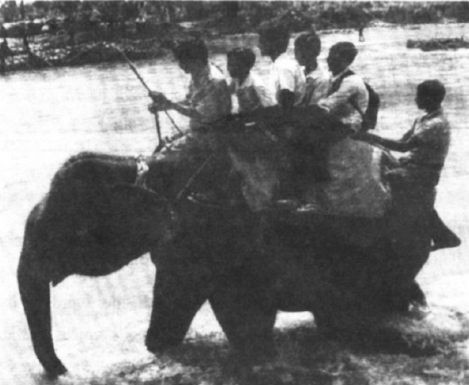
Study the picture given below. Write a short story or description or an account of what the picture suggests to you. Your composition may be about the subject of the picture or you may take suggestions from it; however, your composition must have a clear connection with the picture.
It was a dull autumn day and Jill Pole was crying behind the gym. She was crying because they had been bullying her. This is not going to be a school story, so I shall say as little as possible about Jill’s school, which is not a pleasant subject. It was Co-educational, a school for both boys and girls, what used to be called a “mixed” school. Some said it was not nearly so mixed as the minds of the people who ran it. These people had the idea that boys and girls should be allowed to do what they liked. And unfortunately what ten or fifteen of the biggest boys and girls liked best was bullying the others. All sorts of things, horrid things, went on which at an ordinary school would have been found out and stopped in half a term, but at this school they weren’t. Or even if they were, the people who did them were not expelled or punished. The Head said they were interesting psychological cases and sent for them and talked to them for hours. And if you knew the right sort of things to say to the Head, the main result was that you became rather a favourite than otherwise That was why Jill Pole was crying on that dull autumn day on the damp little path which runs between the back of the gym and the shrubbery. And she hadn’t nearly finished her cry when a boy came round the corner of the gym whistling, with his hands in his pockets. He nearly ran into her. “Can’t you look where you’re going?” said Jill Pole.“All right,” said the boy, “you needn’t start —” and then he noticed her face, “I say, Jill,”he said, “what’s up?”Jill only made faces; the sort you make when you’re trying to say something but find that if you speak you’ll start crying again.“It’s Them, I suppose — as usual,” said the boy grimly, digging his hands further into his pockets.Jill nodded. There was no need for her to say anything, even if she could have said it. They both knew.“Now, look here,” said the boy, “its no use...” He meant well, but he did talk rather like someone beginning a lecture. Jill suddenly flew into a temper (which is quite a likely thing to happen if you have been interrupted in a cry).“Oh, go away and mind you own business,” she said. “Nobody asked you to come barging in, did they? And you’re a nice person to start telling us what we all ought to do, aren’t you? I suppose you mean we ought to spend all our time sucking up to Them, and currying favour, and dancing attendance on Them like you do.” “Oh, Lord!” said the boy, sitting down on the grassy bank at the edge of the shrubbery and very quickly getting up again because the grass was soaking wet. His name unfortunately was Eustace Scrubb, but he wasn’t a bad sort.“Jill!” he said. “Is that fair?” “I d-don’t know and I don’t care,” sobbed Jill.Eustace saw that she wasn’t quite herself yet and very sensibly offered her a peppermint. He had one too. Presently Jill began to see things in a clearer light.
“I’m sorry, Eustace,” she said presently.
(i) Choose the correct meaning (as used in the passage):
(1) "Co-educational" (line 3)
(a) A school for only boys
(b) A school for only girls
(c) A school for boys and girls
(d) A school for teachers
(2) "Currying favour" (line 30)
(a) Cooking a dish$\quad$(b) Asking for help
(c) Trying to win approval$\quad$(d) Cleaning shoes
(ii) Which word in the passage is the opposite of ‘rewarded’?
(a) expelled$\quad$(b) sobbed
(c) damp$\quad$(d) psychological
(iii) Answer the following questions briefly in your own words:
(a) Why was Jill crying behind the gym? (2)
(b) What kind of school did Jill attend? (2)
(c) How did the school authorities react to bullying? (2)
(d) How did Eustace respond to Jill's anger? (1)
(e) How did Jill react when Eustace interrupted her cry? (2)
(iv) Write a short summary (in about 50 words) of the passage.
View full solution →Bency and Benson, the two HIV-infected children who had staged a fast-unto-death last week to get admission to school, have now entered yet another chapter in their struggle for a life more ordinary. Though the hunger strike (in front of the state secretariat) had got the siblings the Chief Minister’s attention, and subsequently admission to a government lower primary school in Kaithakuzhi, they now have to deal with ostracism from their classmates. Worse, most parents have threatened to pull out their wards if the school authorities do not expel Bency, and Benson, “We tried our best to allay the fears of parents. But already 10 children have asked for transfer certificates,” Bency’s class teacher Lathika said. The school now fears an exodus. But even this is not unusual for the orphaned brother and sister. The hunger strike had been a desperate attempt to stay in school when three schools had thrown them out because they were HIV positive. Now, at their new school, Benson sits all alone on a bench meant for five, and no one plays or speaks with Bency. Nevertheless, the siblings – in standards I and II – say they are happy to be back at their studies. Their grandfather, K. Geeverghese, who has fought many battles for the two children, is not giving up yet either. “Their (the parents’) attitude will change slowly. I took a bank loan for my grandchildren’s education. Come what may, I will give them the best education,” he said. “If this is the situation in progressive Kerala what will it be like elsewhere?” he wonders, though. Bency and Benson have been living with their grandfather since their mother died two years ago. Their father had died earlier. Both parents had AIDS. It is the same old story for the HIV positive Bency and her brother Benson . Their fourth school has also disowned them. Now they will not be able to see or play with their schoolmates. Their house will be their new school.Finally, the Kerala government has given up. It has decided to pull out the siblings from the Kaithakuzhi government lower primary school. However, it will start a special school for them at their house. Three teachers will be deputed at the special school to impart education to them. The government will also bear all expenses of their education and treatment.The government was forced to take a decision following stiff resistance from the parents and teachers of the school. In the last three days, except these two, none of the other children had attended the school. “We tried our best to save the situation. This is the only way out now,” State Education Minister N. Soopy pleaded his helplessness on the issue. A meeting was held in the morning on the school premises. The angry parents told State Education Secretary M. Pandian and other officials that they would not send their wards until the HIV infected children were expelled.
(i) Choose the correct meaning (as used in the passage):
(1) Ostracism (line 6)
(a) admiration$\quad$(b) isolation
(c) punishment$\quad$(d) celebration
(2) Exodus (line 10)
(a) entrance$\quad$(b) confusion
(c) mass departure$\quad$(d) attendance
(ii) Which word in the passage is the opposite of ‘acceptance’?
(a) disowned$\quad$(b) positive
(c) schoolmate$\quad$(d) progressive
(iii) Answer the following questions briefly in your own words:
(a) Why did Bency and Benson go on a hunger strike? (2)
(b) What reaction did the parents of other students show to Bency and Benson’s admission? (2)
(c) What was the situation of Benson in class? (2)
(d) What decision did the Kerala government finally take? (1)
(e) What support did the government promise for the children’s future? (2)
(iv) Write a short summary (within 50 words) describing the struggles of Bency and Benson and the government's final decision.
View full solution →There were other boys in Manjari village, but Bisnu was the only one who went to school. His mother would not have fussed if he had stayed at home and worked in the fields. That was what the other boys did; all except lazy Chittru, who preferred fishing in the stream or helping himself to the fruit off other people’s trees. But Bisnu went to school. He went because he wanted to. No one could force him to go; and no one could stop him from going.He had set his heart on receiving a good schooling. He wanted to read and write as well as anyone in the big world and so he walked to school every day.A colony of langoors lived in the forest. They fed on oak leaves, acorns and other green things,and usually remained in the trees, coming down to the ground only to play or sun themselves.They were beautiful, supple-limbed animals, with black faces and silver-grey coats and long, sensitive tails. They leapt from tree to tree with great agility. The young ones wrestled on the grass like boys. A dignified community, the langoors did not have the cheekiness or dishonest habits of the red monkeys of the plains; they did not approach dogs or humans. But they had grown used to Bisnu’s comings and goings and did not fear him. Some of the older ones would watch him quietly, a little puzzled. They did not go near the town; because the boys threw stones at them. And anyways, the forest gave them all the food they required. Coming from another direction was a second path, and at the junction of the two paths, Sarru was waiting for him. Sarru came from a small village about three miles from Bisnu’s and closer to the town They hailed each other, and walked along. They often met at this spot, keeping each other company for the remaining two miles. ‘There was a panther in our village last night,’ said Sarru.This information interested but did not excite Bisnu. Panthers were common enough in the hills and did not usually present a problem except during the winter months, when their natural prey was scarce.‘Did you lose any animals?’ asked Bisnu.‘No. It tried to get into the cowshed but the dogs set up the alarm. We drove it off.’‘It must be the same one which came around last winter. We lost a calf and two dogs in our village.’‘Wasn’t that the one the shikaris wounded? I hope it hasn’t become a cattle-lifter.’ ‘It could be the same. It has a bullet in its leg. These hunters are the people who cause all the trouble. They think it’s easy to shoot a panther. It would be better if they missed altogether, but they usually wound it.’‘And then the panther’s too slow to catch the barking-deer and starts on our own animals.’‘We’re lucky it didn’t become a man-eater. Do you remember the man-eater six years ago? I was very small then. My father told me all about it. Ten people were killed in our valley alone.‘What happened to it?’ ‘I don’t know. Some say it poisoned itself when it ate the headman of the village.’Bisnu laughed. No one liked that old villain. They linked arms and scrambled up the stony path to school.
(i) Choose the correct meaning (as used in the passage):
(1) Fussed (line 2)
(a) dressed up$\quad$(b) became upset or worried
(c) spoke loudly$\quad$(d) cooked food
(2) Agility (line 11)
(a) bravery$\quad$(b) alertness
(c) skill and quickness in movement
(d) loudness
(ii) Which word in the passage is the opposite of ‘cowardly’?
(a) supple-limbed$\quad$(b) common
(c) dignified$\quad$(d) brave
(iii) Answer the following questions briefly in your own words:
(a) Why was Bisnu different from the other boys in Manjari village? (2)
(b) How did the langoors behave with Bisnu? (2)
(c) Why did the panther become dangerous for villagers? (2)
(d) What did Bisnu say about the old man-eating panther? (1)
(e) What is the attitude of Bisnu and Sarru towards wild animals like panthers? (2)
(iv) Summarise the relationship between Bisnu, nature, and animals in not more than 50 words:
View full solution →Richard Parker was so named because of a clerical error A panther was terrorizing the Khulna district of Bangladesh, just outside the Sundarbans. Ithad recently carried off a little girl. She was the seventh person killed in two months by theanimal. And it was growing bolder. The previous victim was a man who had been attacked inbroad daylight in his field. The beast dragged him off into the forest, and his corpse was laterfound hanging from a tree. The villagers kept a watch nearby that night, hoping to surprise the panther and kill it, but it never appeared. The Forest Department hired a professional hunter. He set up a small, hidden platform ina tree near a river where two of the attacks had taken place. A goat was tied to a stake onthe river’s bank. The hunter waited several nights. He assumed the panther would be an old,wasted male with worn teeth, incapable of catching anything more difficult than a human. But it was a sleek tiger that stepped into the open one night: a female with a single cub. The goatbleated. Oddly, the cub, who looked to be about three months old, paid little attention to thegoat. It raced to the water’s edge, where it drank eagerly. Its mother followed it. Of hungerand thirst, thirst is the greater urge. Only once the tiger had quenched her thirst did she turnto the goat to satisfy her hunger. The hunter had two rifles with him: one with real bullets, the other with immobilizing darts.This animal was not the man-eater, but so close to human habitation she might pose a threatto the villagers, especially as she was with cub. He picked up the gun with the darts. He firedas the tiger was about to attack the goat. The tiger reared up and snarled and raced away.But immobilizing darts don’t bring on sleep gently – they knock the creature out without warning. A burst of activity on the animal’s part makes it act all the faster. The hunter calledhis assistants on the radio.They found the tiger about two hundred yards from the river. Shewas still conscious. Her back legs had given way and her balance on her front legs was shaky.When the men got close, she tried to get away but could not manage it. She turned on them,lifting a paw that was meant to kill. It only made her lose her balance. She collapsed and thePondicherry Zoo had two new tigers. The cub was found in a bush close by, meowing withfear.The hunter, whose name was Richard Parker, picked it up with his bare hands and, rememberinghow it had rushed to drink in the river, named it Thirsty. But the shipping clerk at the Howrahtrain station was evidently a man both confused and diligent. All the papers received with the cub clearly stated that its name was Richard Parker, that the hunter’s first name was Thirstyand that his family name was None Given. Richard Parker’s name stuck.
I don’t know if the hunter was ever called Thirsty None Given!
(i) Choose the correct meaning (as used in the passage):
(1) Sleek (line 11)
(a) messy and dirty$\quad$(b) slim and fit
(c) smooth and shiny$\quad$(d) small and cute
(2) Quenched (line 14)
(a) ended violently$\quad$(b) dirty and old
(c) got angry$\quad$(d) stopped suddenly
(ii) Which word in the passage is the opposite of ‘boldly’?
(a) reared$\quad$(b) diligent
(c) meowing$\quad$(d) hesitantly
(iii) Answer the following questions briefly in your own words:
(a) Why were the villagers keeping watch near the forest one night? (2)
(b) What did the hunter expect the man-eater to be like? (2)
(c) Why did the cub rush to the river instead of the goat? (2)
(d) What made the immobilizing dart work faster on the tiger? (1)
(e) How did the cub get the name 'Richard Parker'? ?(2)
(iv) Summarise the incident of the tiger and how it got its name in not more than 50 words:
View full solution →He entered the South African Airways Flight 304 from Cape Town, somewhat uncertain as he looked for seat 21E. He moved slowly, wearing a black T-shirt advertising the 2004 Olympics in Athens, and clutching two 2003 World Cup memento hats and a little bag. Slowly, the face and the name came together. Kip Keino, one of the greatest long-distance runners ever. Then, this correspondent realised that Keino was heading straight towards his row, in fact, to the seat right next to his.A little scar on the right side of the forehead, a broken thumbnail on the left hand. This was the man who had set the track on fire, this man who was so hesitantly opening the packets of food and tea bags.“Excuse me sir, are you Kip Keino?” was the hesitant question. “Yes” came the even more timid reply, and then the smile. Born in 1940, Kipchoge Kip Keino became one of Kenya’s and the world’s top track athletes and a two-time gold medallist at the Olympic Games. At the 1964 Olympics in Tokyo, Keino represented Kenya in their first games as an independent nation, placing fifth in the 5,000 m event. Later in 1964, he set two world records – in the 3,000 m distance with a time of 15 7 minutes 39.6 seconds, and in the 5,000 m distance with a time of 13 minutes 24.2 seconds. But it was in 1968 Olympics at Mexico City that Keino had his most famous victory. After having to jog a mile to the stadium because his taxi was stuck in traffic, he won the 1,500 m 88 Together with in an Olympic record of 3 minutes 34.9 seconds. The mark stood until 1984. He also won the silver medal in the 5000 m despite an acute gall bladder infection. 20 At the 1972 Olympics in Munich, he won his second gold, in the 3,000 m steeplechase, and also won a silver medal in the 1500 m. Keino retired from international running in 1973. Shortly thereafter, he and his wife, Phyllis, purchased a farm in Kenya, on which they began an orphanage, Keino also began coaching Kenyan track and field teams. Back in the aircraft, the discussion shifted to the World Cup Opening Ceremony, where Keino was one of African athletes who marched with the teams. Inevitably, the conversation shifted to Kenya and New Zealand’s decision to boycott their game there.“It is their decision”, Keino said, “But I refuse to believe that they were ever the target. The terrorist attacks were targeting the US and the Israelies.”“But is that not enough for anyone to get scared?” Yes, fear will always be there, but sportsmen are hardly ever the target of terrorists and extremists.” “Whatever the reasons, it is sad that New Zealand refused to play in Nairobi.” Keino added.“The people there were looking forward to the World Cup matches.” Cricket, Keino says, will soon catch up with football in Kenya. “There is a lot of interest, and many youngsters are taking up the game but they need a lot of money to get the game really going.”Then he had his own set of questions. “There are so many talented women athletes in India, why don’t they come up to international levels? And what is happening to hockey? You were
so good at it.”
(i) Choose the correct meaning (as used in the passage):
(1) Hesitantly (line 8)
(a) bravely$\quad$(b) confidently
(c) nervously$\quad$(d) quickly
(2) Boycott (line 28)
(a)) to support something
(b) to ignore completely
(c) to attend actively
(d) to refuse participation
(ii) Which word in the passage is the opposite of 'confidently'?
(a) timidly$\quad$(b) slowly
(c) nervously$\quad$(d)hesitantly
(iii) Answer the following questions briefly in your own words:
(a) What helped the correspondent recognize Kip Keino? (2)
(b) What made Kip Keino’s 1968 Olympic victory in the 1500 m remarkable? (2)
(c) What did Kip Keino and his wife do after he retired from running (2)
(d) What was Keino’s opinion about the World Cup boycott by Kenya and New Zealand? (1)
(e) What concerns did Kip Keino express about Indian sports? (2)
(iv) Summarise Kip Keino’s achievements and views in not more than 50 words:
View full solution →